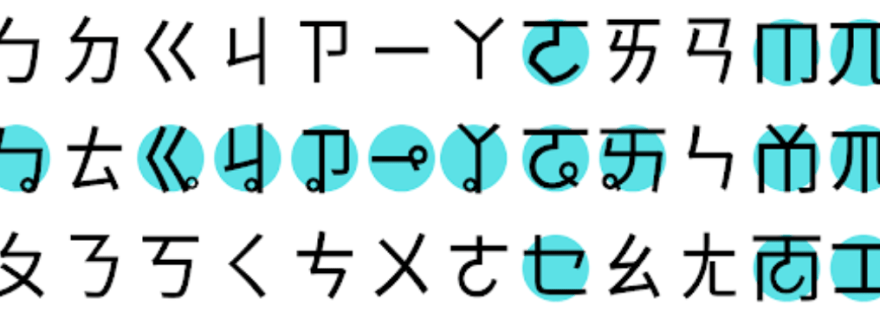
Very few people seem to know this, but there is a system known as Taiwanese Bopomofo (臺語注音符號), or more accurately Taiwanese Bopomo, as the “f” sound does not exist in Taiwanese. This phonetic alphabet enables efficient transcription of Taiwanese characters’ pronunciation. In this article, I will teach you Standard Taiwanese Bopomo. However, there are four additional letters used for transcribing certain Taiwanese dialects, which will not be covered here.
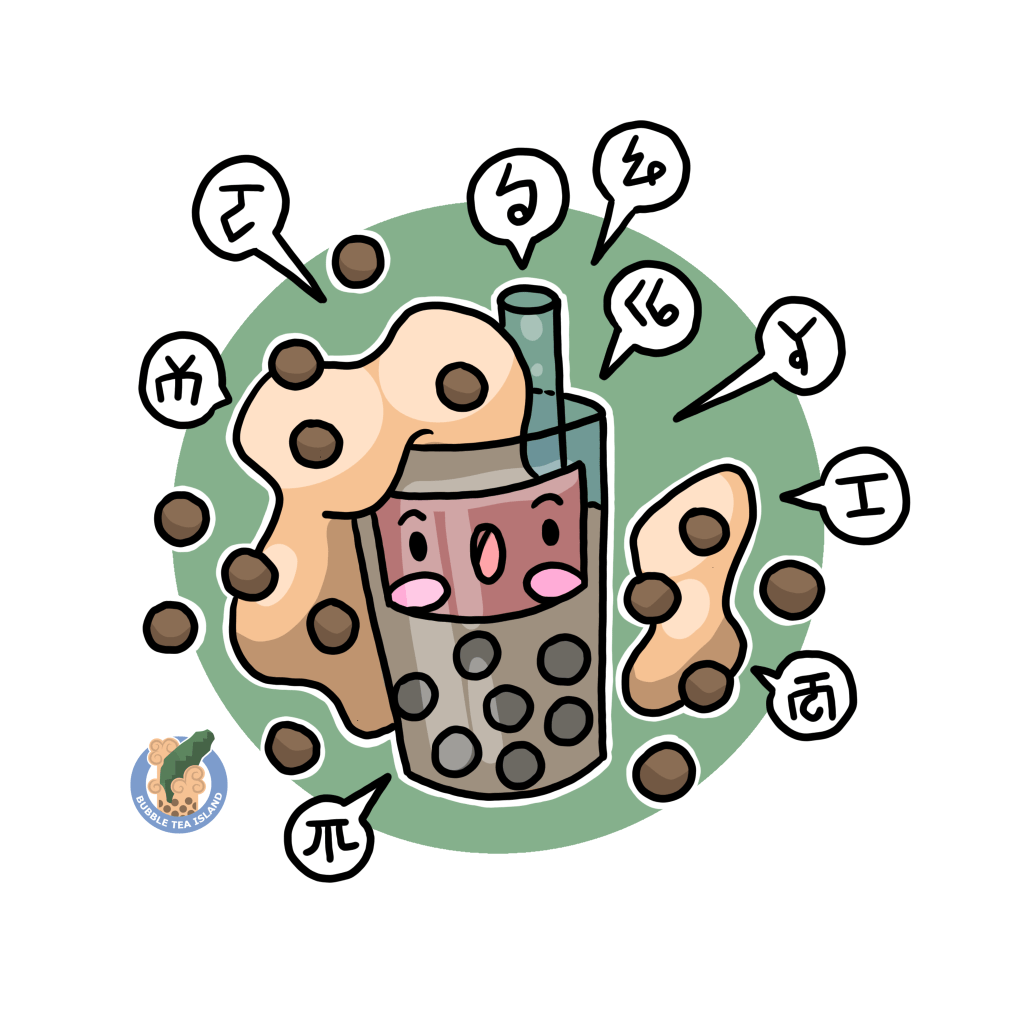
In a few simple steps, I will demonstrate how you can master Taiwanese Bopomo if you already know Mandarin Bopomofo and have a basic understanding of spoken Taiwanese. Please note that I will not explain Taiwanese pronunciation, assuming you are already familiar with terms such as voiced consonants and nasal vowels. Nevertheless, you can easily access the following dictionary, which provides Taiwanese Bopomo annotations and audio for any character, allowing you to become more acquainted with Taiwanese sounds.
Remove Mandarin Specific Letters
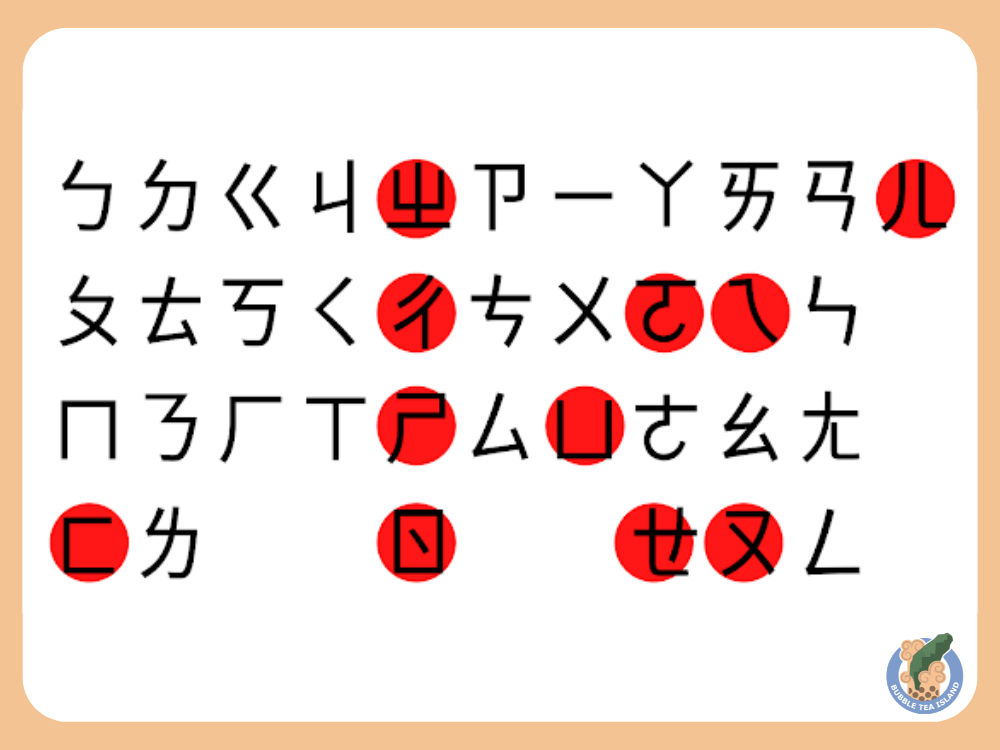
First, retrieve your Mandarin Bopomofo and eliminate all the letters that represent sounds not present in Taiwanese, indicated in red. Well done! You now possess knowledge of over half of Taiwanese Bopomo.
Taiwanese Voiced Consonants
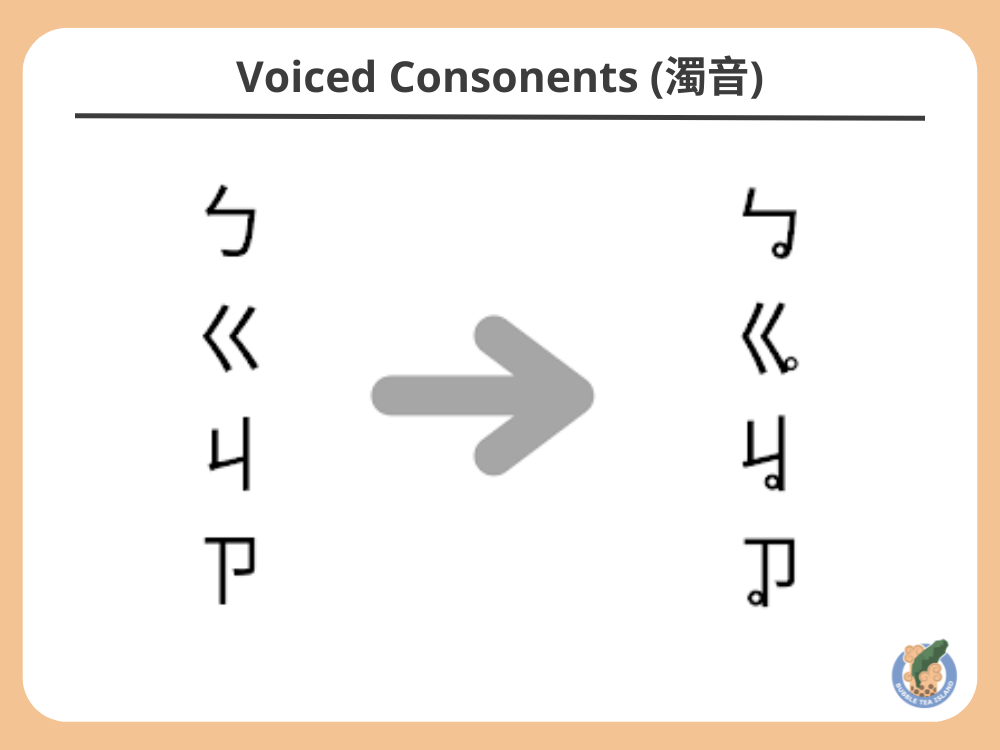
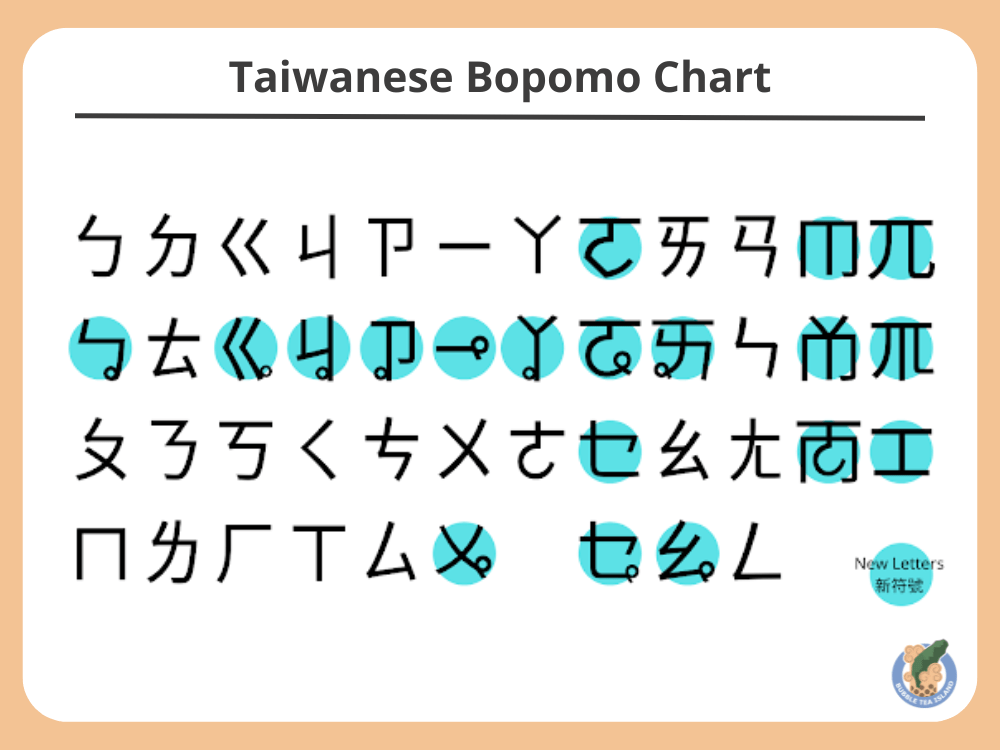
Next, let’s proceed to create the voiced equivalents (濁音) of ㄅ, ㄍ, ㄐ, ㄗ by adding a small loop at the end, resulting in the characters ㆠ, ㆣ, ㆢ, ㆡ. Aren’t they charming?
Taiwanese Nasal Vowels
Now, let’s create the nasal equivalents (鼻音) of ㄚ, ㄞ, ㄠ, ㄧ, ㄨ by adding a small loop at the end, resulting in the characters ㆩ, ㆮ, ㆯ, ㆪ, ㆫ. Additionally, you will learn two entirely new letters: ㆦ [ɔ] and ㆤ [e], along with their nasal equivalents: ㆧ and ㆥ.

Triple M Letters
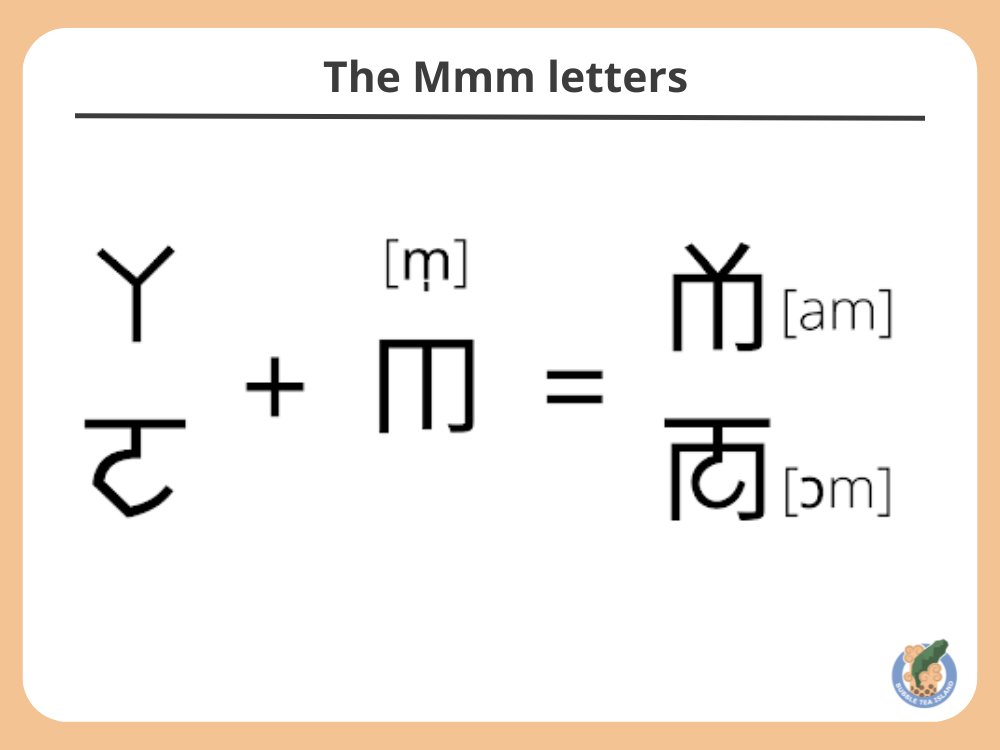
Introducing the “Mmm” letters! Well, that’s not their official names; I just came up with it. So why do we need new letters when we already have the “m” sound (ㄇ)? Bopomo (and Bopomofo) has a unique feature: it avoids assigning multiple roles to letters. In Taiwanese (similar to Mandarin), each syllable consists of initials, medials, and finals. Each letter can only fulfill one role*. Since ㄇ has already been designated as an initial, it cannot be used to end a syllable. Hence, we require new letters to represent the three final “m” sounds.
The first letter is ㆬ, which represents the straightforward “m” sound, just like ㄇ. The other two letters are a combination of the first letter with the letters ㄚ and ㆦ, resulting in the characters ㆰ [am] and ㆱ [ɔm].
Triple Ng Letters
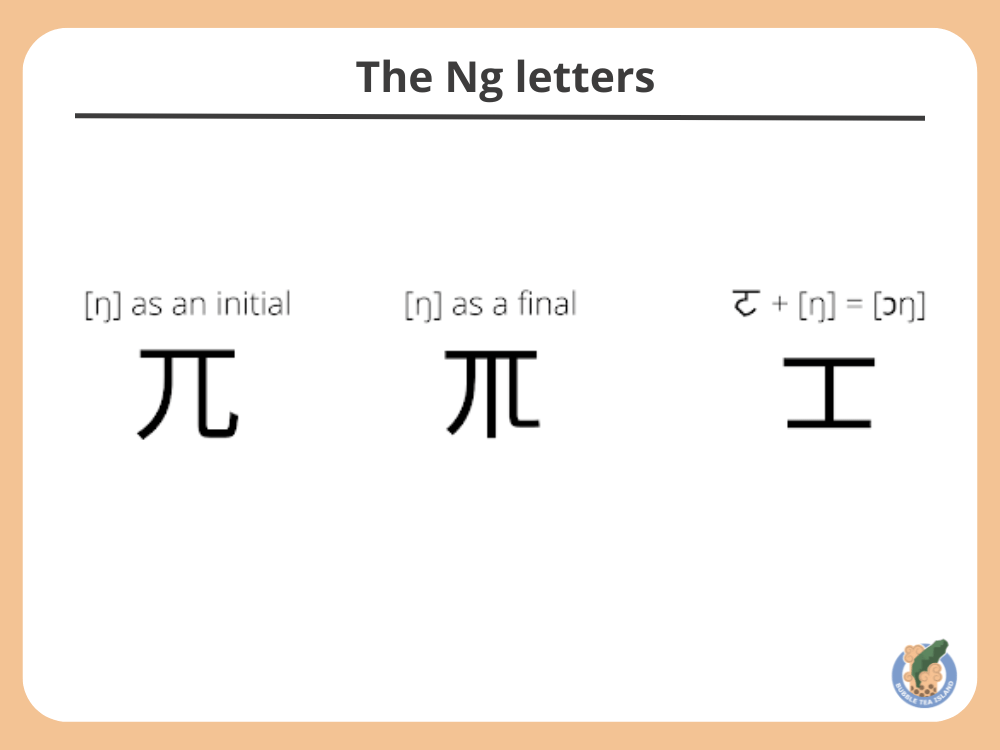
Next, let’s talk about the Ng letters, which I find to be the most challenging to pronounce, in my opinion. ㄫ serves as the initial sound, while ㆭ represents the final sound. ㆲ is a combination of the sound ㆦ and [ŋ] (ng). It’s important to note that when the sound [ŋ] is combined with the medial ㄧ, we use the letter ㄥ, similar to Mandarin.
Taiwanese Tones
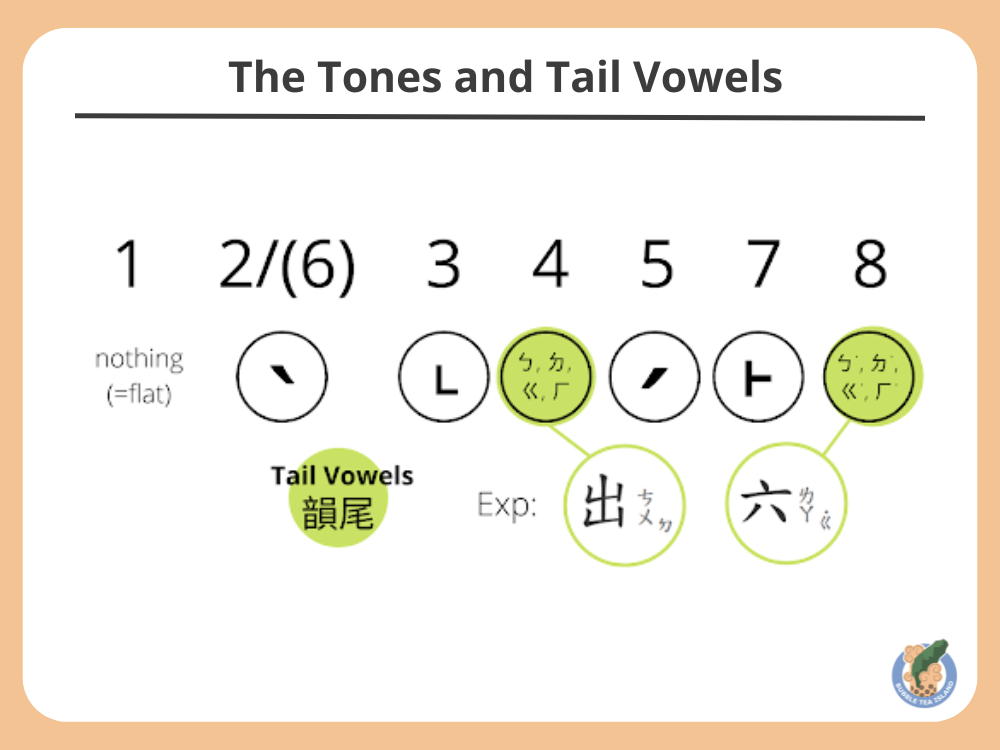
Last but not least, let’s discuss the tones. Personally, I find this to be the most challenging aspect as I still struggle to differentiate them. Taiwanese features 7 or 8 distinct tones, depending on the source. Two of these tones are produced by “Tail Vowels,” represented in Bopomo by the letters ㄅ, ㄉ, ㄍ, and ㄏ placed on the right side of the syllable’s final for the 4th tone. Additionally, the same letters are used for the 8th tone but with a dot placed on top.
Taiwanese Bopomo Alphabet Chart
Now, let’s tidy it all up, and voila! Here is the complete Taiwanese Bopomo alphabet (excluding the tones). Isn’t it truly captivating?
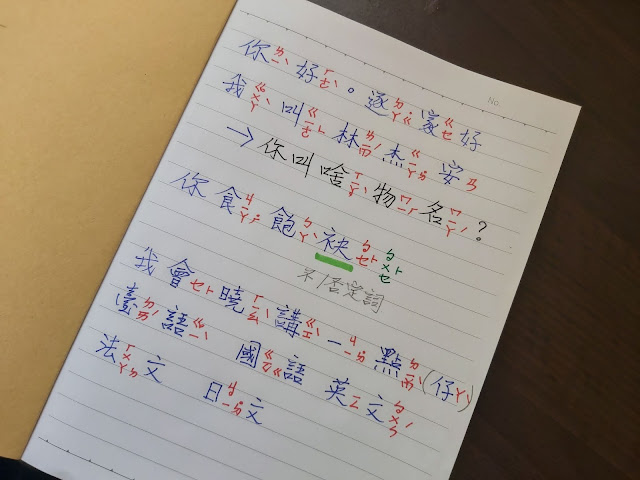
These are what my Taiwanese notes look like, annotated with Bopomo.
Taiwanese is an incredibly beautiful language, and I strongly advocate for the Taiwanese government to promote the use of Taiwanese Bopomo. By doing so, more people can appreciate the remarkable linguistic capabilities it has to offer. Additionally, I hope that in the future, someone will develop a Bopomo Keyboard, making it even more accessible and convenient for individuals to use.
I also highly recommend the online Taiwanese dictionary of the Ministry of Education. All its entries are annotated with Bopomo.
* ㄧ and ㄨ present an exception in Taiwanese. While they typically serve as medials, they can actually be used together in the same syllable. In this case, one of them retains the role of a medial, while the other transforms into a final.
 Bubble Tea Island