
If you’re planning a trip to Taiwan or engaging in business dealings with Taiwanese companies, it’s essential to know how to express price in Chinese. Taiwan has its unique monetary system and currency, and it’s crucial to learn how to express price accurately and correctly in Chinese. In this article, we will guide you through the basics of expressing price in Taiwan.
Taiwanese Currency System
Taiwan uses the New Taiwan Dollar (NTD) as its currency. The symbol for the New Taiwan Dollar is “NT$” or “台幣” (ㄊㄞˊ ㄅㄧˋ) in Chinese. Notes come in denominations of NT$100, NT$500, NT$1,000, along with some rare NT$200 and NT$2,000 bills. Coins come in denominations of NT$1, NT$5, NT$10 and NT$50. The New Taiwan dollar’s subdivisions, or cents, are not commonly used in consumer transactions because most products are sold in whole dollars. However, banks do keep track of cents.
Basic Numbers in Chinese
Before we dive into expressing prices, let’s first learn some basic Chinese words for numbers:
| Number | Character | Bopomofo | Pinyin |
|---|---|---|---|
| 1 | 一 | ㄧ | yī |
| 2 | 二 | ㄦˋ | èr |
| 3 | 三 | ㄙㄢ | sān |
| 4 | 四 | ㄙˋ | sì |
| 5 | 五 | ㄨˇ | wǔ |
| 6 | 六 | ㄌㄧㄡˋ | liù |
| 7 | 七 | ㄑㄧ | qī |
| 8 | 八 | ㄅㄚ | bā |
| 9 | 九 | ㄐㄧㄡˇ | jiǔ |
| 10 | 十 | ㄕˊ | shí |
| 100 | 百 | ㄅㄞˇ | bǎi |
| 1,000 | 千 | ㄑㄧㄢ | qiān |
| 10,000 | 萬 | ㄨㄢˋ | wàn |
The Words 錢, 元, and 塊
Understanding the different words used for expressing price in Taiwan is important for effective communication in daily transactions.
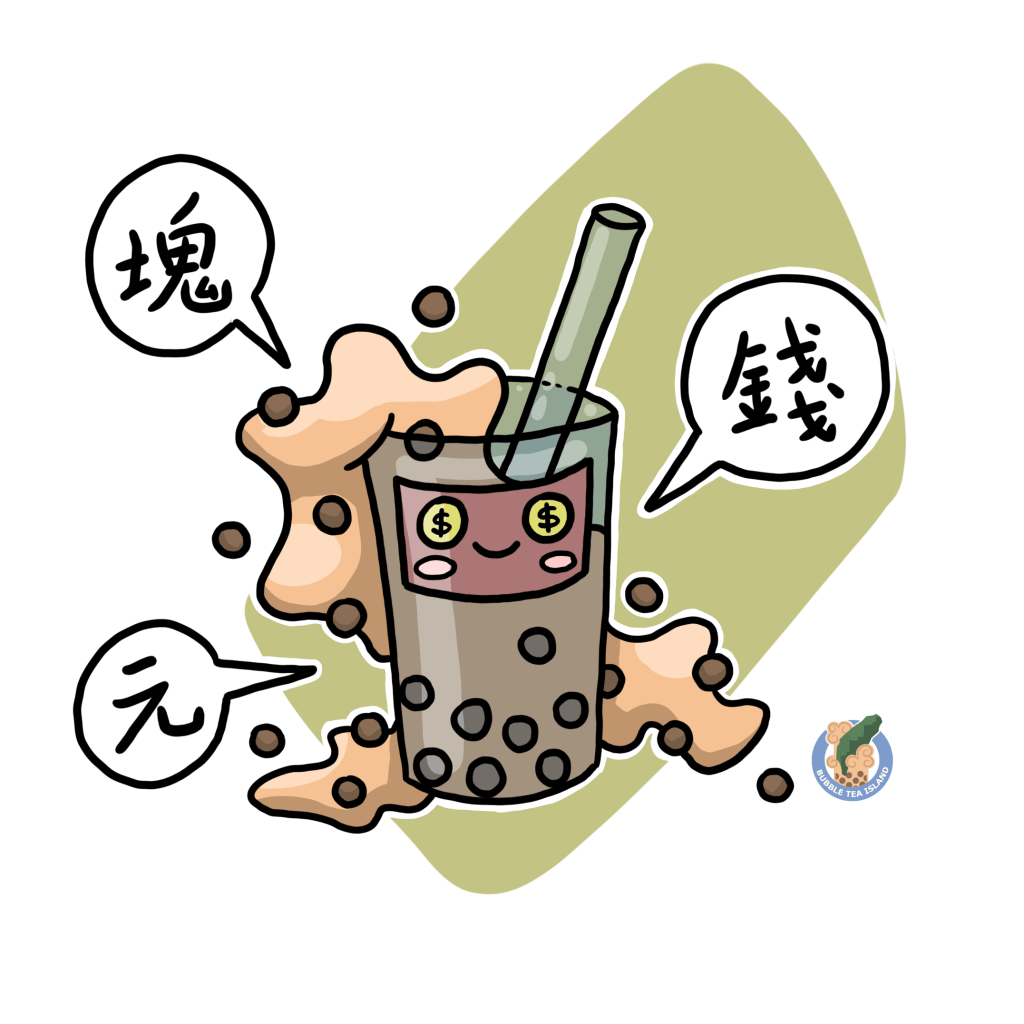
The most commonly used word for money in Taiwan is “錢” (ㄑㄧㄢˊ), which literally means “money”. It is also used to refer to small amounts of money or loose change.
The word “元” (ㄩㄢˊ) is used to describe the unit of currency in Taiwan. It is equivalent to one dollar, and is used for expressing the price of most products and services. When used in combination with numbers, it can express larger amounts of money. For example, “五百元” means “five hundred dollars.” The word “元” is also used for expressing monetary value in formal settings, such as on receipts, invoices, and bank statements.
The word “塊” (ㄎㄨㄞˋ) is another way of expressing one dollar, and it is more commonly used in casual conversations. It is also used to express price in a more conversational tone, and is often used in street markets or small stores.
| Chinese | Bopomofo | Pinyin | English |
|---|---|---|---|
| 錢 | ㄑㄧㄢˊ | qián | Money |
| 元 | ㄩㄢˊ | yuán | Dollar (formal) |
| 塊 | ㄎㄨㄞˋ | kuài | Dollar (conversational) |
Asking How Much It Costs in Chinese
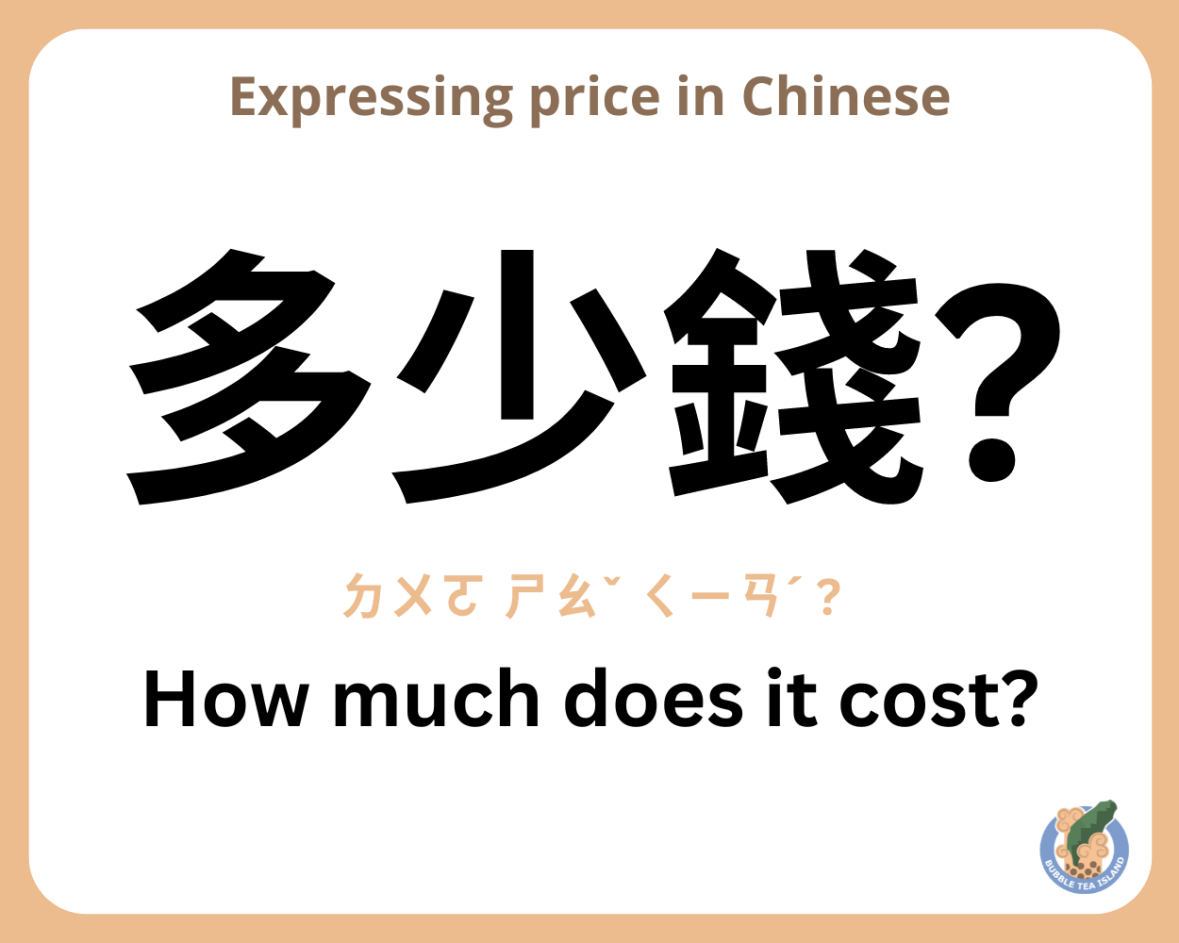
To ask how much something costs, you can simply say “多少錢?” (ㄉㄨㄛ ㄕㄠˇ ㄑㄧㄢˊ?), which means “how much does it cost?“. To specify the item you’re asking the price for, you can use “這個” (this) or “那個” (that) before “多少錢?” while pointing at the object.
| 多少錢? | ㄉㄨㄛ ㄕㄠˇ ㄑㄧㄢˊ ? | duō shǎo qián? | How much does it cost? |
|---|
Answering Price in Chinese
And if you want to answer the price, you can just say:
Something + number + 塊 (錢) / 元
For example:
- 這個蛋糕一百塊 (ㄓㄜˋ ㄍㄜˋ ㄉㄢˋ ㄍㄠ ㄧ ㄅㄞˇ ㄎㄨㄞˋ) – This cake is 100 NT dollars.
- 那件衣服兩百五十元 (ㄋㄚˋ ㄐㄧㄢˋ ㄧ ㄈㄨˊ ㄌㄧㄤˇ ㄅㄞˇ ㄨˇ ㄕˊ ㄩㄢˊ) – That piece of clothing is 250 NT dollars.
How Discounts Are Expressed in Chinese?

Discounts in Chinese are expressed as “折扣” (ㄓㄜ ㄎㄡˋ – zhékòu), which literally means “to fold and cut“. However, expressing discounts in Chinese can be a bit tricky to understand at first. Instead of being expressed as a percentage reduction of the original price, discounts are expressed as a percentage of the original price.
For example, “9折” means that the product costs 90% of the original price, which is a 10% discount. “8折” means that the product costs 80% of the original price, which is a 20% discount. “7折” means that the product costs 70% of the original price, which is a 30% discount, and so on.
When you hear the price, you may want to ask if there is any discount available. You can say “有沒有折扣?” (ㄧㄡˇ ㄇㄟˊ ㄧㄡˇ ㄓㄜ ㄎㄡˋ ?), which means “Is there any discount?” or “打折嗎?” (ㄉㄚˇ ㄓㄜ ㄇㄚˊ ?), which means “Is there a sale?” For example:
- 這件衣服有沒有折扣? (ㄓㄜˋ ㄐㄧㄢˋ ㄧ ㄈㄨˊ ㄧㄡˇ ㄇㄟˊ ㄧㄡˇ ㄓㄜ ㄎㄡˋ ?) – Is there any discount for this piece of clothing?
- 這個產品打折嗎? (ㄓㄜˋ ㄍㄜˋ ㄔㄢˇ ㄆㄧㄣˇ ㄉㄚˇ ㄓㄜ ㄇㄚˊ ?) – Is there a sale for this product?
If a product originally costs 100 New Taiwan Dollars and is currently being sold at a discounted price of 8折, the seller would say “一百元,打八折,八十元” (ㄧ ㄅㄞˇ ㄩㄢˊ , ㄉㄚˇ ㄅㄚ ㄓㄜ , ㄅㄚ ㄕˊ ㄩㄢˊ), which translates to “The original price is 100 New Taiwan Dollars, with a 20% discount, the discounted price is 80 New Taiwan Dollars”.
It’s worth noting that discounts are not always expressed as percentages. Sometimes, discounts are expressed in monetary terms, such as “減十元” (ㄐㄧㄢˇ ㄕˊ ㄩㄢˊ), which means “reduce by ten New Taiwan Dollars”.
One of other most common discounts in Taiwan is the “buy one, get one free” promotion, which is translated as “買一送一” (ㄇㄞˇ ㄧ ㄙㄨㄥˋ ㄧ). You may also come across “買二送一”, which means “buy two, get one free”, “買三送一”, which means “buy three, get one free”, and so on.
Extra Vocabulary
This is a list of extra vocabulary words related to price and shopping in Chinese.
| Chinese | Bopomofo | Pinyin | English |
|---|---|---|---|
| 價格 | ㄐㄧㄚˋ ㄍㄜˊ | jià gé | Price |
| 購物 | ㄍㄡˋ ㄨˋ | gòu wù | Shopping |
| 花費 | ㄏㄨㄚ ㄈㄟˋ | huā fèi | Cost, expense |
| 特價 | ㄊㄜˋ ㄐㄧㄚˋ | tè jià | Special price |
| 買單 | ㄇㄞˇ ㄉㄢ | mǎi dān | To pay the bill |
| 現金 | ㄒㄧㄢˋ ㄐㄧㄣ | xiàn jīn | Cash |
| 信用卡 | ㄒㄧㄣˋ ㄩㄥˋ ㄑㄧㄚˇ | xìn yòng kǎ | Credit card |
| 超市 | ㄔㄠ ㄕˋ | chāo shì | Supermarket |
| 商店 | ㄕㄤ ㄉㄧㄢˋ | shāng diàn | Store |
| 跳價 | ㄊㄧㄠˋ ㄐㄧㄚˋ | tiào jià | Price jump, sudden increase in price |
| 退貨 | ㄊㄨㄟˋ ㄏㄨㄛˋ | tuì huò | Return of goods |
| 消費 | ㄒㄧㄠ ㄈㄟˋ | xiāo fèi | Consumption, spending |
| 消費者 | ㄒㄧㄠ ㄈㄟˋ ㄓㄜˇ | xiāo fèi zhě | Consumer |
| 節省 | ㄐㄧㄝˊ ㄕㄥˇ | jié shěng | Save money |
| 售價 | ㄕㄡˋ ㄐㄧㄚˋ | shòu jià | Selling price |
| 現貨 | ㄒㄧㄢˋ ㄏㄨㄛˋ | xiàn huò | Goods in stock |
In conclusion, learning how to express price in Chinese is crucial for anyone planning a trip to Taiwan. By mastering the basics of expressing price in Chinese, you’ll be able to communicate effectively with locals and negotiate prices confidently in traditional markets or small shops.
Join our Substack “Mandarin Zest“, where we regularly share intermediate to advanced Chinese learning content. Make sure to subscribe!
 Bubble Tea Island