

In the early 18th century, a remarkable imposter named George Psalmanazar embarked on a daring adventure that captivated the unsuspecting minds of Europeans. With an astonishing ability to adapt his fabricated identity, Psalmanazar seamlessly assumed the roles of a displaced heathen from Japan and later, a mysterious Formosan savage. His audacious acts of impersonation played on the ignorance and fascination of the era, making him a celebrated figure and a master manipulator of public opinion.
Psalmanazar’s incredible tale began as he crossed the Rhine into what is now Germany, disguised as a Japanese foreigner despite his blond hair, blue eyes, and complete lack of knowledge of the Japanese language. Surprisingly, the European society of 1700 displayed a lack of scrutiny when it came to such details, allowing Psalmanazar to thrive on the knowledge he acquired from Jesuit missionaries who had actually visited the Far East.
From Japan to Taiwan
To enhance the credibility of his imposture, Psalmanazar adopted peculiar customs of the Japanese people, such as sleeping in chairs and worshiping the Sun. However, to avoid potential exposure, he soon shifted his alleged place of origin from Japan to Formosa (modern-day Taiwan) in 1702, a land unknown to most Europeans at the time.
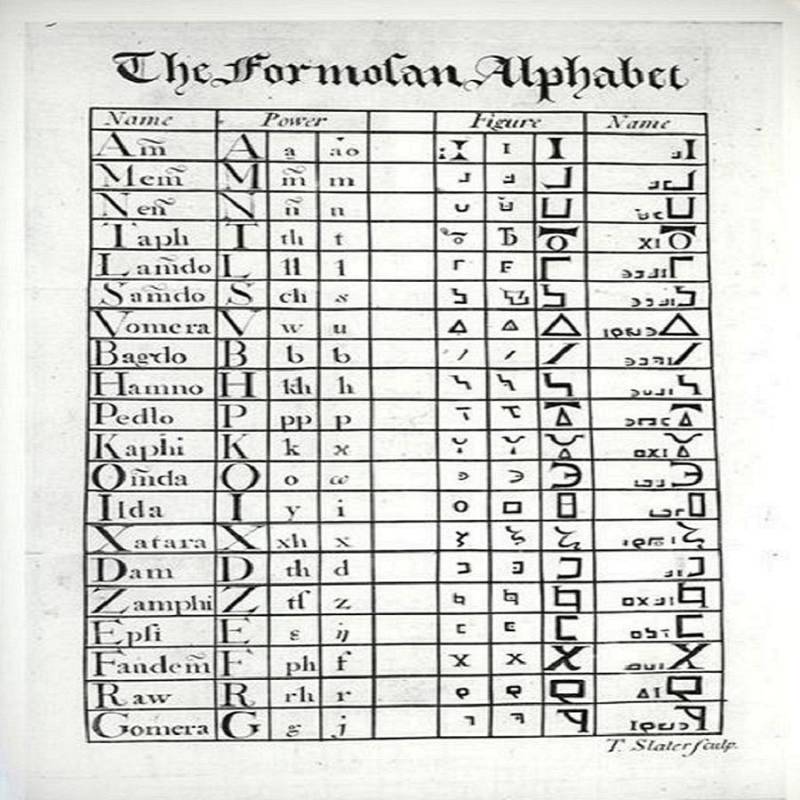
Adding an extra touch of intrigue, Psalmanazar devised his own calendar, performed bizarre religious rituals, and even spoke a fabricated language, passing it off as “Formosan.” His calculated actions aimed to astound onlookers and maintain the illusion of authenticity.
By the end of that year, Psalmanazar had journeyed to the Netherlands, where he encountered Alexander Innes, a British chaplain attached to a Scottish regiment. Innes became infatuated with the “Formosan savage” persona to such an extent that he fell for Psalmanazar’s act without hesitation. Innes, now a firm believer in Psalmanazar’s concocted identity, baptized him into the Church of England and bestowed upon him the name “George Psalmanazar” in reference to the biblical King Shalmaneser.
In 1703, Innes facilitated Psalmanazar’s introduction to London’s influential figures, commencing with the Bishop of London. Psalmanazar’s performance did not disappoint. He continued to perpetuate his outlandish backstory, weaving a web of absurd claims that should have been apparent to anyone with even a modicum of skepticism.
A land of savages and blond-hair, blue-eyed artistocracy
According to Psalmanazar’s fabricated narrative, he was born into the Formosan aristocracy, explaining his fair complexion due to a life spent indoors. He further alleged that Formosans conducted barbaric sacrifices of 20,000 virginal boys on massive outdoor grills annually. Additionally, he claimed that he had been kidnapped by Jesuits as a child and subjected to torture in an attempt to convert him to Catholicism, which he adamantly refused, recognizing Anglicanism as the one true faith.
The British populace of the time, engrossed in their fascination with the Far East and blissfully ignorant of its realities, became easy prey for Psalmanazar’s calculated deceit. He skillfully tailored his lies to reinforce their existing prejudices and desires: their religion’s universal appeal, the perceived evil of Catholics and Jesuits, the conviction that British culture could civilize pagans, and the notion that aristocrats were universally fair-skinned.
Psalmanazar artfully fed these predispositions, satisfying the audience’s appetite for reinforcement of their beliefs. Even when challenged by a visiting Jesuit theologian in a debate, Psalmanazar’s charm and clever responses left the crowd convinced of his victory. His quick-witted and pro-British explanations effortlessly deflected any inconsistencies pointed out by the priest, leaving an indelible impression on those who witnessed the debate.
The Great Imposter’s demise
However, despite the spectacle and widespread acceptance of his imposture, cracks in Psalmanazar’s façade began to appear. Some scholars and intellectuals began to question the veracity of his claims, highlighting the inconsistencies and absurdities in his narrative. Critical voices emerged, challenging the gullibility of the British public and calling into question their willingness to be deceived.
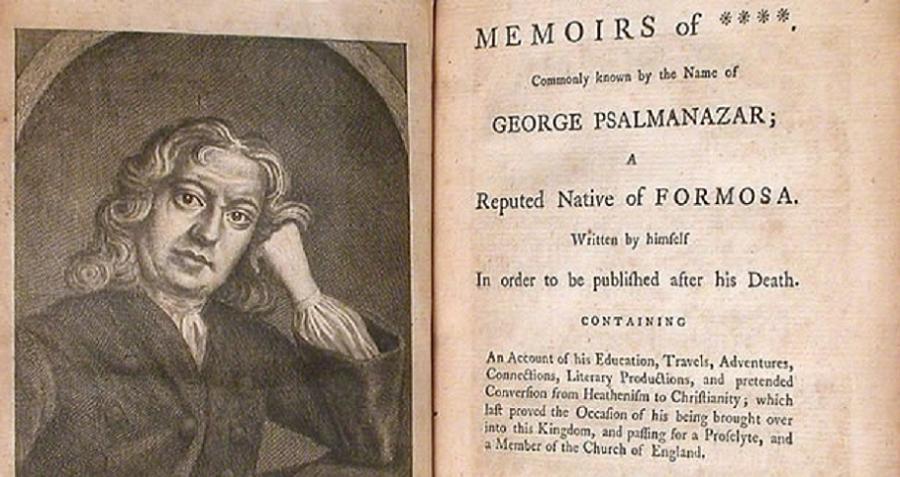
Nevertheless, the allure of Psalmanazar’s tale persisted. It was not only the British public who were captivated by his charade but also the literary and intellectual elite of the time. His memoir, “An Historical and Geographical Description of Formosa,” became a bestseller, captivating readers with its fantastical accounts of far-off lands. Psalmanazar’s ability to shape his story to conform to the desires and biases of his audience ensured its enduring popularity.
As the years went by, Psalmanazar’s celebrity began to wane. Skepticism and scrutiny increased, eroding the foundation of his elaborate fiction. Eventually, he confessed to his deception, revealing the intricate web of lies he had spun. The revelation shocked many, tarnishing his reputation and leaving a sense of betrayal in its wake.
George Psalmanazar’s imposture stands as a testament to the power of deception and the vulnerability of a society susceptible to its allure. His ability to manipulate public opinion, exploit prevailing prejudices, and shape a narrative that appealed to the desires and biases of his audience secured his place in history as one of the most captivating impostors of his time.
Despite the ultimate exposure of his deceit, the legacy of Psalmanazar’s audacious imposture endures, serving as a cautionary tale and a reminder of the importance of skepticism and critical thinking. His story is a vivid illustration of how a combination of ignorance, fascination, and a willingness to believe can pave the way for an imposter to deceive even the most discerning minds.
 Bubble Tea Island