
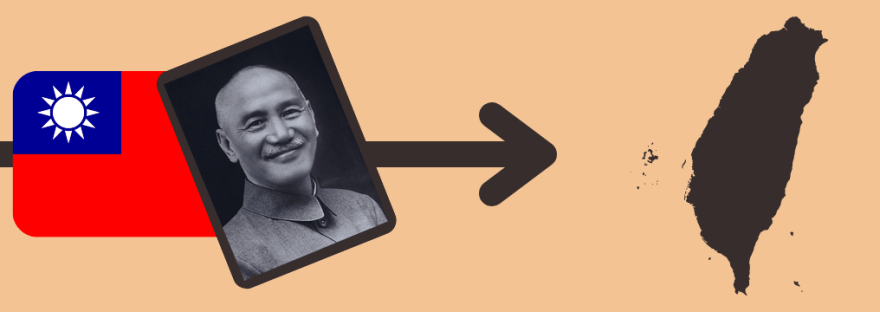
In the tumultuous years following the Chinese Civil War, the defeated Nationalist government faced imminent collapse as Communist forces led by Mao Zedong gained control over mainland China. In the face of this dire situation, Chiang Kai-shek, the head of the Nationalist government, made a fateful decision. In 1949, he fled to the island of Taiwan with his government and loyal supporters, transforming the course of history for both China and Taiwan. This article delves into the events surrounding Chiang Kai-shek’s escape and the enduring impact it had on the political landscape of East Asia.

The Chinese Civil War
The Chinese Civil War, a protracted conflict between the Communist Party of China (CPC) and the Nationalist Party (Kuomintang or KMT), commenced in the late 1920s. Despite their united front against the Japanese invasion during World War II, deep-rooted ideological differences and power struggles resurfaced after Japan’s defeat. The Communists, under the leadership of Mao Zedong, eventually emerged victorious, with the Nationalists retreating to Taiwan.
The Retreat to Taiwan
After World War II, when Japan renounced ownership over Taiwan, the island was left without a functioning government. Recognizing the need for stability and a transitional period, the Allied Forces permitted the government of the Republic of China to administer Taiwan temporarily. This aimed to allow the Taiwanese people to have time to deliberate on their future through a referendum, which included options such as independence, remaining with Japan, or union with China.
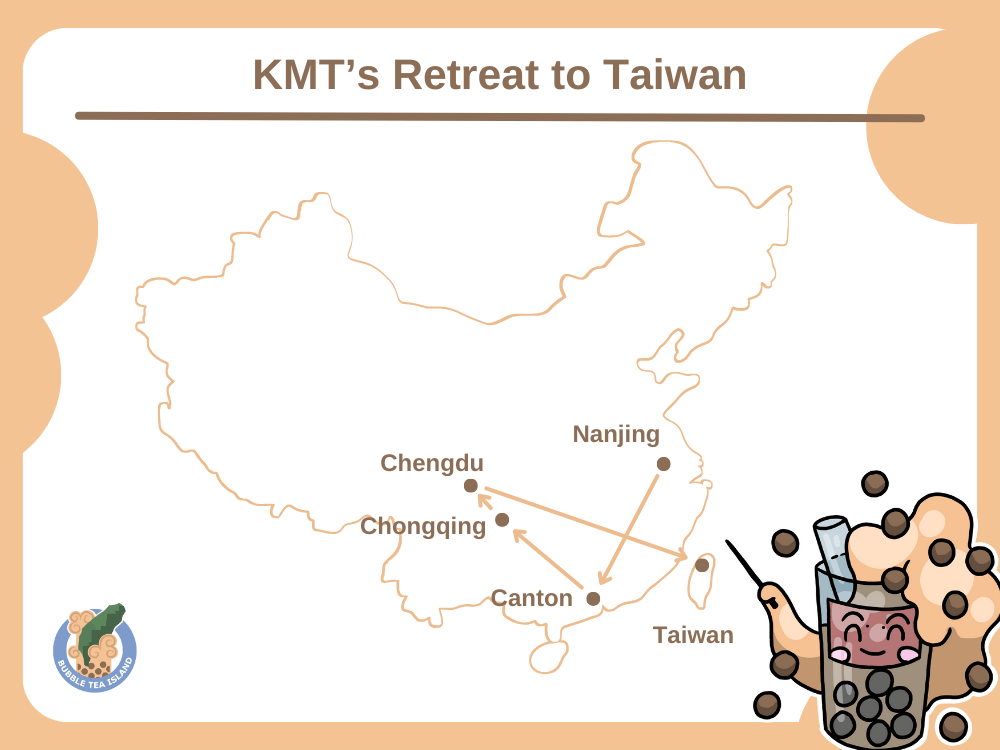
As the Communist forces gained momentum and the fall of major cities became inevitable, Chiang Kai-shek faced a challenging decision. In late 1949, he made the difficult choice to relocate the Nationalist government to Taiwan. Accompanied by approximately two million followers, including military personnel, government officials, and supporters, Chiang and his entourage boarded ships and fled to Taiwan.
Chiang’s Motives
Chiang’s decision to retreat to Taiwan was multi-faceted. First and foremost, it allowed him to preserve the remnants of the Nationalist government and military, regroup, and continue the fight against communism. Taiwan, strategically located in the Western Pacific, provided a stronghold from which Chiang hoped to rally support and eventually retake the mainland.
Furthermore, Chiang believed that the international community, particularly the United States, would support his government’s legitimacy and recognize his government in Taiwan as the rightful representative of China. This expectation stemmed from the fact that the Nationalist government had been recognized as the legitimate government of China prior to the Communist victory. Chiang sought to leverage Taiwan’s geopolitical significance and the lingering anti-communist sentiment in the global arena to maintain support for his cause.
The Impact on Taiwan
Chiang Kai-shek’s flight to Taiwan had a profound impact on the island’s political landscape. Despite initial challenges in establishing control and facing opposition from native Taiwanese, Chiang’s government gradually consolidated power and implemented policies aimed at modernizing the island. Known as the “Taiwan Miracle,” these policies fueled rapid economic growth, transforming Taiwan into a prosperous industrialized nation.
During this period, Taiwan also experienced a dark chapter known as the “White Terror.” The White Terror refers to a period of authoritarian rule and political repression under Chiang Kai-shek’s government. In an effort to suppress opposition and maintain control, Chiang’s regime carried out mass arrests, executions, and widespread human rights abuses. Many individuals suspected of being communist sympathizers or political dissidents were targeted, leading to a climate of fear and censorship. The White Terror had a lasting impact on Taiwan’s society, leaving scars that would take years to heal.
Moreover, Chiang’s Nationalist government maintained a tenuous claim to represent all of China, an assertion that gradually lost international support as the People’s Republic of China, led by the Communist Party, gained recognition as the legitimate government. Taiwan became diplomatically isolated, losing its seat in the United Nations to mainland China in 1971. However, it continued to develop into a vibrant democracy with a distinct political identity separate from China.
Symbols of Chiang Kai-shek Still Present in Taiwan Today
While Chiang Kai-shek’s statues have been removed from many public spaces in Taiwan in recent years, some symbols of his era remain. The most prominent of these is the Chiang Kai-shek Memorial Hall, a massive complex in Taipei that serves as a major tourist destination and a controversial landmark.
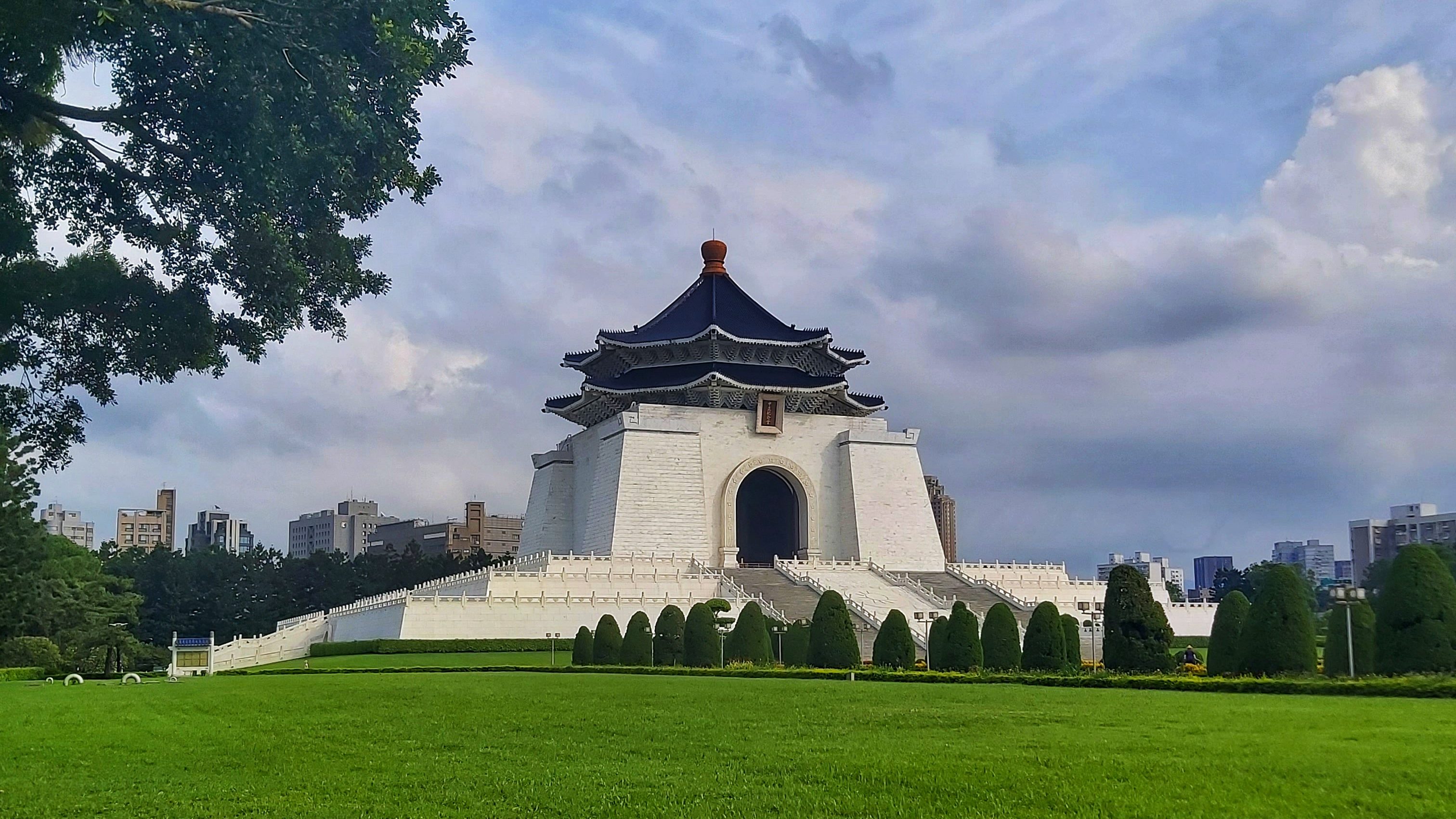
The memorial hall houses a giant statue of Chiang, as well as exhibits dedicated to his life and legacy. The continued presence of such a monument reflects the ongoing debate in Taiwan about its history and its relationship with mainland China.

For some, the memorial hall is a reminder of a period of authoritarian rule and human rights abuses. Others view it as a historical site that deserves preservation. The debate over Chiang Kai-shek’s legacy is certain to continue, and the memorial hall will remain a focal point of this discussion.

Chiang Kai-shek’s flight to Taiwan in 1949 marked a pivotal moment in history, shaping the island’s destiny in profound ways. It allowed the Nationalist government to regroup and establish its authority, leading to Taiwan’s transformation into a prosperous and industrialized nation. However, this period was not without its dark side. The era of Chiang’s rule was marked by the “White Terror,” a period of political repression and authoritarianism characterized by mass arrests, executions, and human rights abuses. Despite these challenges, Taiwan persevered and evolved into a vibrant democracy, forging its own distinct path separate from Communist China. Today, Taiwan stands as a shining example of a democratic society and a beacon of progress in the region.
 Bubble Tea Island