

When it comes to expressing remorse or apologizing, it’s important to know the appropriate phrases in the language you’re using. In Chinese culture, showing sincerity and humility is highly valued, especially when admitting a mistake or apologizing for an offense. In this article, we will explore ten ways to say sorry in Chinese, along with a few responses to someone’s apology.
A summary of the expressions are available with Pinyin annotation at the end of the article.

How to Say “Sorry” in Chinese
對不起 (ㄉㄨㄟˋ ㄅㄨˋ ㄑㄧˇ)
One of the most common and straightforward ways to say sorry in Chinese is “對不起.” It expresses a sincere apology and is used in various situations, whether it’s a small mistake or a significant offense. This phrase is often used in formal or informal settings.
不好意思 (ㄅㄨˋ ㄏㄠˇ ㄧˋ ㄙ)
When you want to express a sense of embarrassment or inconvenience caused by your actions, “不好意思” is the phrase to use. It can be used in both casual and formal situations, and it implies a sincere apology while acknowledging your wrongdoing.
是我的錯 (ㄕˋ ㄨㄛˇ ㄉㄜ˙ ㄘㄨㄛˋ)
If you want to take full responsibility for your actions and admit that it was your fault, you can say “是我的錯.” This phrase conveys a strong sense of personal accountability and is often used when you genuinely regret your actions.
我錯了 (ㄨㄛˇ ㄘㄨㄛˋ ㄌㄜ˙)
Similar to the previous phrase, “我錯了” translates to “I was wrong” or “I made a mistake.” It’s a simple and direct way to apologize in Chinese, showing sincerity and willingness to admit your wrongdoing.
是我不對 (ㄕˋ ㄨㄛˇ ㄅㄨˋ ㄉㄨㄟˋ)
When you want to acknowledge that you were in the wrong, you can say “是我不對.” This phrase emphasizes your recognition of the mistake and expresses genuine remorse for your actions.
我不是故意的 (ㄨㄛˇ ㄅㄨˋ ㄕˋ ㄍㄨˋ ㄧˋ ㄉㄜ˙)
If you want to emphasize that your actions were unintentional or that you didn’t mean to cause harm, you can use “我不是故意的.” This phrase demonstrates that you didn’t have ill intentions and expresses regret for any unintended consequences.
是我的責任 (ㄕˋ ㄨㄛˇ ㄉㄜ˙ ㄗㄜˊ ㄖㄣˋ)
When you want to accept responsibility for a particular situation or event, you can say “是我的責任.” This phrase implies that you understand the gravity of the situation and express a sincere apology for your part in it.
抱歉 (ㄅㄠˋ ㄑㄧㄢˋ)
“抱歉” is a common way to say sorry in Chinese, expressing regret and a desire for forgiveness. This phrase can be used in various situations, ranging from minor inconveniences to more significant mistakes.
道歉 (ㄉㄠˋ ㄑㄧㄢˋ)
The phrase “道歉” directly translates to “apologize” and is commonly used in Chinese to express a sincere apology. It conveys the message that you are genuinely sorry and regret your actions.
我跟你賠禮道歉 (ㄨㄛˇ ㄍㄣ ㄋㄧˇ ㄆㄟˊ ㄌㄧˇ ㄉㄠˋ ㄑㄧㄢˋ)
If you want to convey a more formal and sincere apology, you can say “我跟你賠禮道歉.” This phrase implies that you are willing to make amends and shows a higher level of remorse.
How to Respond When Someone Says Sorry in Chinese
沒關係 (ㄇㄟˊ ㄍㄨㄢ ㄒㄧˋ)
When someone apologizes to you in Chinese, a common response is “沒關係,” which translates to “It’s okay” or “No problem.” This phrase conveys forgiveness and reassures the other person that you accept their apology.
別擔心 (ㄅㄧㄝˊ ㄉㄢ ㄒㄧㄣ)
If someone apologizes, you can respond with “別擔心,” meaning “Don’t worry.” This phrase shows that you understand and accept their apology, encouraging them to let go of any guilt or concern.
沒事 (ㄇㄟˊ ㄕˋ)
A simple and casual way to respond to an apology is by saying “沒事,” which means “It’s nothing” or “No big deal.” This response indicates that you don’t hold any grudges and that the incident has been forgiven and forgotten.
算了吧 (ㄙㄨㄢˋ ㄌㄜ˙ ㄅㄚ)
In certain situations, when you want to convey that you’re ready to move on and not dwell on the mistake, you can respond with “算了吧,” which can be translated as “Let it go” or “Forget about it.” This phrase suggests that you’re willing to overlook the offense and maintain a positive relationship.
Summary of the Vocabulary
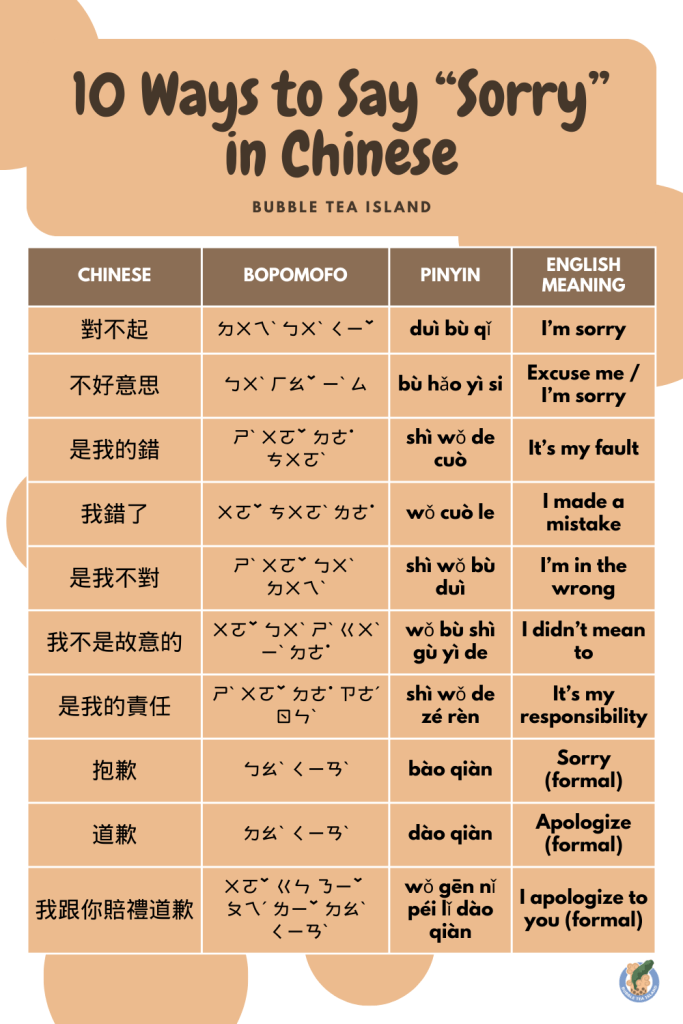


Join our Substack “Mandarin Zest“, where we regularly share intermediate to advanced Chinese learning content. Make sure to subscribe!
Apologizing is an essential aspect of human interaction, and understanding how to say sorry in different languages helps us express sincerity and maintain harmonious relationships. In Chinese culture, humility, sincerity, and taking responsibility for one’s actions are highly valued when expressing remorse. By using these ten ways to say sorry in Chinese and responding appropriately to apologies, you can show your respect for Chinese customs and effectively communicate your regret and desire for reconciliation.
 Bubble Tea Island