

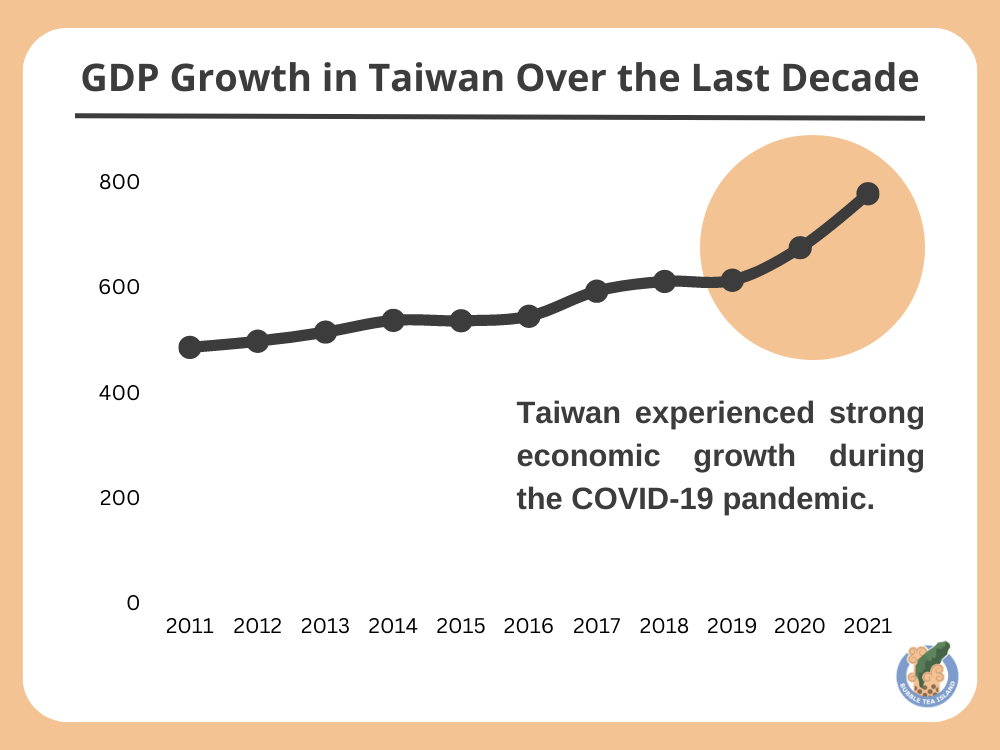
Taiwan has been making remarkable strides in its economic development over the years. With a GDP of $774.728 billion in 2021, the island nation has firmly established itself as a key player on the global economic stage. As per the International Monetary Fund‘s (IMF) projections, Taiwan is poised to achieve a significant milestone by joining the prestigious “Trillion Dollar Club” by the year 2027. This article delves into the factors contributing to Taiwan’s economic growth, its significance, and the potential implications of reaching such a milestone.
Taiwan’s Economic Journey
Taiwan’s economic journey has been a testament to resilience, innovation, and strategic policymaking. Emerging from the aftermath of World War II, Taiwan underwent a rapid transformation from an agrarian society to an export-driven technological hub. The nation’s adoption of export-oriented policies, combined with investments in education, infrastructure, and research and development (R&D), laid the foundation for its economic success.
Innovation and Technological Advancements
One of the key drivers behind Taiwan’s economic growth has been its prowess in the technology sector. The nation is home to world-renowned technology companies and semiconductor manufacturers, playing a pivotal role in the global supply chain. Taiwan Semiconductor Manufacturing Company (TSMC), for instance, is a critical player in the production of advanced microchips that power various electronic devices worldwide. This emphasis on technological innovation has not only boosted the nation’s GDP but has also solidified its reputation as a global leader in cutting-edge industries.
Export-Oriented Economy
Taiwan’s export-oriented economic model has been a cornerstone of its success. The nation’s ability to produce high-quality goods at competitive prices has made it a preferred trading partner for numerous countries. This has facilitated the growth of various industries, including electronics, machinery, and textiles. Additionally, Taiwan’s strategic location in East Asia has provided it with a gateway to regional and international markets, further augmenting its export-driven economy.
Investments in Human Capital
Taiwan’s commitment to education and human capital development has played a vital role in its economic ascent. The nation boasts a highly skilled and educated workforce, with a strong emphasis on science, technology, engineering, and mathematics (STEM) education. This has not only fueled innovation but has also attracted foreign investments and multinational corporations seeking a skilled labor force. Furthermore, a culture of entrepreneurship and a supportive ecosystem for startups have contributed to Taiwan’s economic vibrancy.
The Road to the Trillion Dollar Club
The IMF’s projection of Taiwan joining the Trillion Dollar Club by 2027 highlights the nation’s sustained economic growth and potential for continued expansion. This significant milestone is indicative of Taiwan’s ability to adapt to changing global dynamics, capitalize on emerging opportunities, and leverage its strengths in the technology and manufacturing sectors.
Implications and Challenges
Reaching the trillion-dollar GDP mark would undoubtedly position Taiwan as a major global economic player. However, it also presents a set of challenges that the nation must address. These challenges include maintaining a competitive edge in an ever-evolving technological landscape, ensuring sustainable growth, and addressing geopolitical considerations, especially given Taiwan’s complex relationship with China.
Taiwan’s journey from a post-war agrarian economy to an economic powerhouse with a GDP of $774.728 billion in 2021 is a testament to the nation’s resilience, innovation, and strategic policymaking. With its technological prowess, export-oriented economy, and investments in human capital, Taiwan is well on its way to becoming a member of the Trillion Dollar Club by 2027. As the nation navigates the path to this economic milestone, it will be crucial to strike a balance between maintaining its competitive edge and addressing emerging challenges.
 Bubble Tea Island