

龍 is the character for “dragon”. It is made out of 17 strokes.
| Chinese Character | Simplified Version | Bopomofo | Pinyin |
|---|---|---|---|
| 龍 | 龙 | ㄌㄨㄥˊ | lóng |


The Chinese character for “dragon” (龍 – ㄌㄨㄥˊ – lóng) is not just a linguistic symbol; it is deeply intertwined with the history, culture, and symbolism of China. This article explores the multifaceted significance of the Chinese character 龍, shedding light on its connections with imperial power, cultural identity, and the unique connotations it holds within Chinese culture.
Character Insights
The character 龍 is a pictographic representation of a dragon, symbolizing this mythical creature. Though its connection to a dragon might not be immediately evident in its modern form, a closer look at the oracle bone and bronze scripts reveal a clearer depiction of the dragon’s shape.
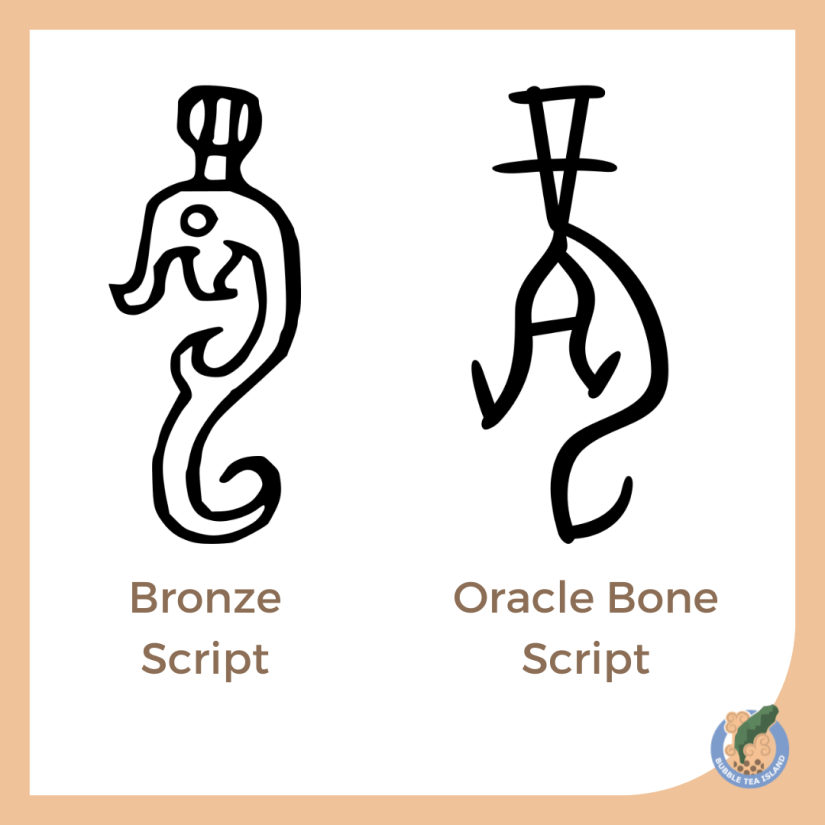
This character is composed of 17 strokes, whereas its simplified version comprises only 5 strokes (龙).
Imperial Symbolism
Historically, the Chinese dragon was closely associated with the Emperor of China and was used as a symbol to represent imperial power. This connection dates back centuries, and the dragon’s role in imperial culture was profound. During the Tang dynasty, emperors adorned their robes with dragon motifs as a clear declaration of their imperial authority. High officials of the court were also honored with dragon robes. The dragon’s symbolism extended to its physical representation, with distinctions such as the number of claws on a dragon designating its use. In the Yuan dynasty, the two-horned five-clawed dragon was reserved for the Son of Heaven, or Emperor, while the four-clawed dragon was used by princes and nobles. This practice continued into the Ming and Qing dynasties, where the five-clawed dragon was strictly reserved for the Emperor, even appearing on the first Chinese national flag during the Qing dynasty.

Cultural Symbolism
Beyond its association with imperial power, the Chinese dragon holds deep cultural significance. Unlike the European dragon, which is often depicted as a fire-breathing and aggressive creature, the Chinese dragon is a symbol of prosperity, good luck, and harmony. It is also revered as a rain deity, reflecting its importance in agricultural contexts. The dragon’s cultural symbolism is so strong that it is sometimes used by the Chinese people as a sign of their ethnic identity, referred to as “Descendants of the Dragon.” This cultural emblem underscores the enduring and positive connotations of the Chinese dragon within Chinese society.
Vocabulary with the Character 龍
| Chinese | Bopomofo | Pinyin | English |
|---|---|---|---|
| 龍蝦 | ㄌㄨㄥˊ ㄒㄧㄚ | lóngxiā | Lobster |
| 龍舟 | ㄌㄨㄥˊ ㄓㄡ | lóngzhōu | Dragon boat |
| 恐龍 | ㄎㄨㄥˇ ㄌㄨㄥˊ | kǒnglóng | Dinausor |
| 龍鳳 | ㄌㄨㄥˊ ㄈㄥˋ | lóngfèng | Dragon and phoenix (symbolizes harmony and marital bliss) |
Join our Substack “Mandarin Zest“, where we regularly share intermediate to advanced Chinese learning content. Make sure to subscribe!
The Chinese character for dragon, 龍, is a symbol deeply ingrained in the history and culture of China, as well as Taiwan’s. It represents imperial power and serves as a cultural emblem of prosperity and identity, reflecting its enduring significance within Chinese society.
 Bubble Tea Island