

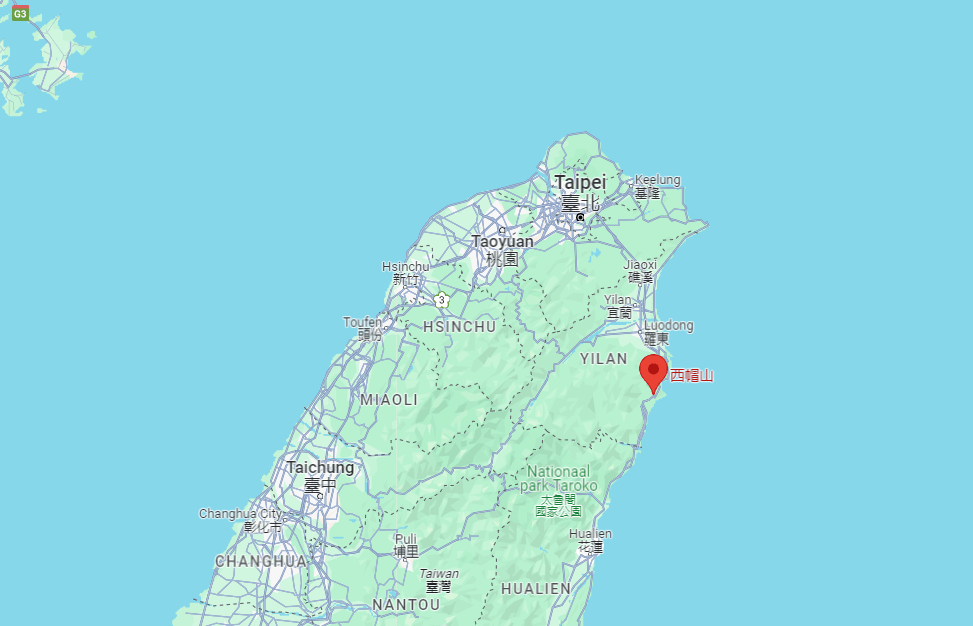
Taiwan experiences a myriad of climatic patterns, making it a captivating subject for weather enthusiasts. In recent years, Ximao Shan (西帽山) in Yilan’s Nan’ao Township has claimed the title of the rainiest place in Taiwan, showcasing an astonishing 12,027 millimeters of precipitation.
Understanding Ximao Shan
Ximao Shan’s meteoric rise to becoming the rainiest place in Taiwan for two consecutive years is attributed to various climatic events. In the past year, the island experienced heavy rains, with Ximao Shan recording unprecedented rainfall equivalent to the height of a four-story building. The influence of La Niña, a meteorological phenomenon intensifying air currents near Taiwan and leading to increased precipitation.
The Ximao Shan weather station, established in May 2018, has consistently averaged 7,500 millimeters of rainfall annually. However, the first 10 months of 2022 alone witnessed a staggering 8,832 millimeters of rain, with a significant portion – 5,847 millimeters – falling between September 1 and October 31. This surge in precipitation is closely linked to the formation of three typhoons to the southeast of Taiwan during September and October.
Runner-Ups in Rainfall
While Ximao Shan claimed the top spot, Qingtian in Taipei’s Yangming Shan, and Daping in New Taipei’s Wanli District emerged as the second and third rainiest places in Taiwan, both exceeding 10,000 millimeters of rainfall over the year. These areas showcase the island’s diverse rainfall distribution, with certain regions experiencing heavier precipitation than others.
Taiwan’s Climate Complexity
Taiwan’s climate is a complex tapestry woven by its geographical features. With mountains stretching from north to south, Taiwan experiences diverse temperature and rainfall patterns influenced by monsoons, ocean currents, and its proximity to the Asian continent. The island’s size, roughly 250 miles long and 90 miles wide, contributes to the climatic variations observed across different regions.
The island’s winter monsoon, originating from the Asian continent, dominates the northern part of Taiwan from October to March, resulting in heavy rainfall. Conversely, the southwest experiences a dry season during this period. In the summer, the southwest monsoon brings rain to the southern part of the island, creating a wet summer and dry winter in the south, and vice versa in the north.
Finally, Taiwan lies in the typhoon belt, experiencing an average of two to three typhoons annually. These storms, while potentially destructive, often hit the island’s east coast, minimizing damage in densely populated areas. The island’s windy conditions, influenced by monsoons, contribute to its climatic diversity.

The island’s unique geographical features create a climate of immense complexity, offering a fascinating blend of rainfall, temperature variations, and seasonal patterns. Ximao Shan’s reign as the rainiest place underscores Taiwan’s position as a captivating destination for those intrigued by the forces of nature.
 Bubble Tea Island