
Every year on September 28th, Taiwan celebrates the birthday of Confucius (孔子), one of the most revered philosophers and educators in Chinese history. Known as “Teachers’ Day” (教師節) in Taiwan, this special day is dedicated not only to the memory of Confucius but also to honor the role of teachers in society. The celebrations are grand, full of tradition, and highlight Confucius’ lasting influence on education and moral values. The central event, the “Grand Ceremony Dedicated to Confucius” (祭孔大典), takes place at various Confucius temples across the island, with Taipei Confucius Temple being the most famous.
History and Significance of Confucius’ Birthday
Confucius was born in 551 B.C. in the state of Lu, during the Spring and Autumn period. His teachings focused on morality, proper conduct, and social harmony, deeply influencing Chinese culture and thought. He also pioneered education by establishing private schools that accepted students from all social classes, a revolutionary concept at the time.
Taiwan pays special tribute to him each year on September 28, celebrating both his birthday and the role of teachers in shaping society. The tradition dates back to the Ming Dynasty and was officially established as a national holiday in 1939. Initially set for August 27, Confucius’ birthday was later adjusted to September 28 to align more accurately with the Gregorian calendar.
The Grand Ceremony at Taipei Confucius Temple
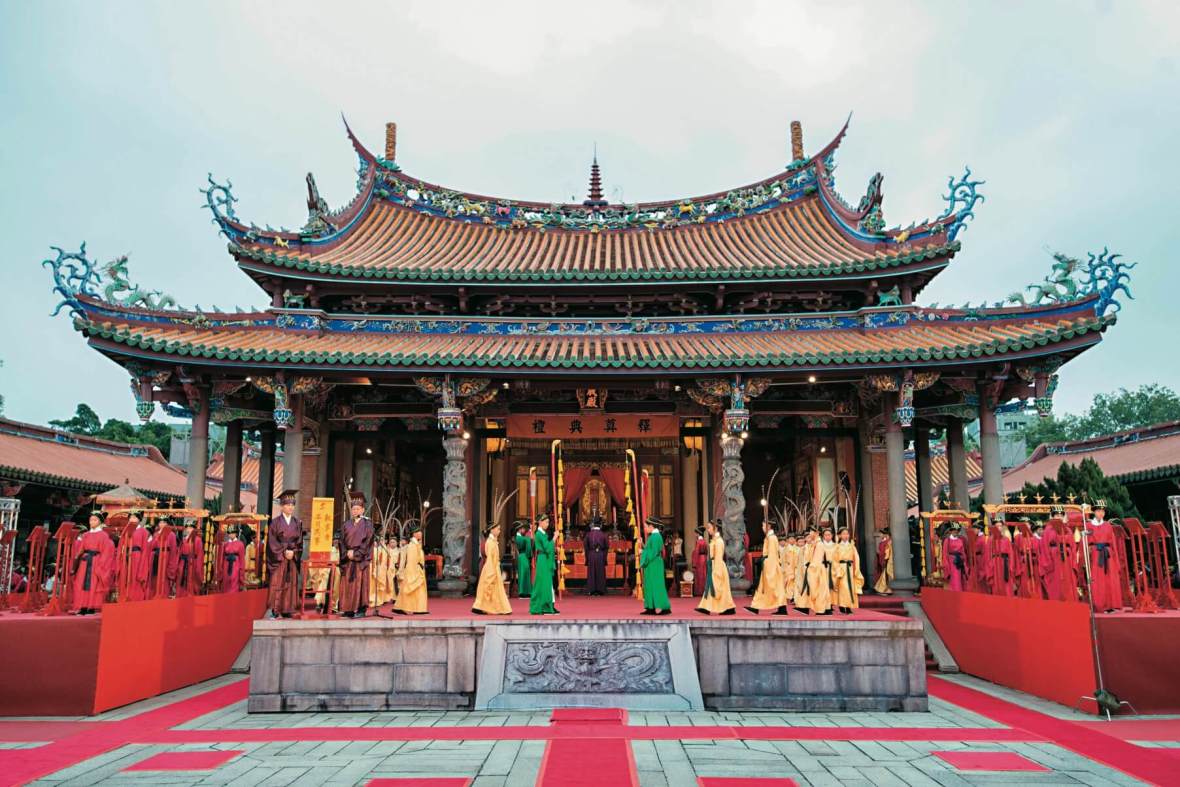
The Taipei Confucius Temple (台北孔廟) hosts the island’s largest and most elaborate celebration. The ceremony begins at 6 a.m., echoing centuries-old Confucian rituals. The “Three Consecrations” ritual (三獻禮), performed during the ceremony, is one of the most well-preserved Confucian practices. It involves a series of offerings and prayers meant to honor the Master and show respect for teachers.

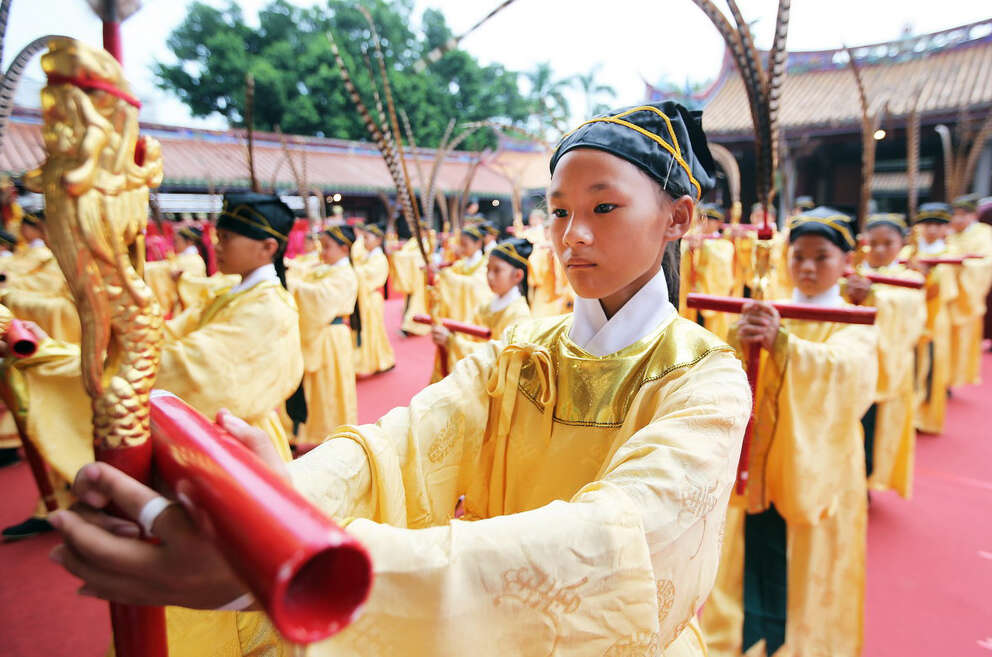
Music and Dance Rituals: A traditional Confucian ceremony isn’t complete without the elegant “Six Arts” (六藝) performances, which symbolize harmony and balance. Fifty-four musicians and 36 dancers (sometimes 64), dressed in ancient robes, perform the stately “Eight-Row Dance” (八佾舞), a ceremonial dance reflecting Confucian teachings of order and discipline. The dancers wear yellow robes with green belts, while musicians don blue belts. Together, their movements reflect the essence of Confucianism: balance, harmony, and respect.
Celebrations Across Taiwan
Though the ceremony in Taipei is the largest, other cities such as Tainan and Kaohsiung also host impressive Confucius Birthday celebrations. Each temple follows the traditional rituals while adding local flavor to the festivities. These events attract not only Taiwanese citizens but also international tourists interested in experiencing Chinese culture firsthand.
In addition to the temple ceremonies, schools and educational institutions around Taiwan celebrate Teachers’ Day by expressing gratitude to educators. Students often visit their teachers, send cards, or present small tokens of appreciation, reinforcing the traditional Confucian value of respect for teachers.
Confucius’ Influence on Education in Taiwan
Confucianism plays a vital role in Taiwan’s educational system, with Confucius regarded as the ultimate symbol of learning and virtue. His philosophy of lifelong learning, respect for authority, and moral integrity continues to shape Taiwan’s culture and values today. On Teachers’ Day, awards are presented to educators who have shown outstanding dedication and positive influence, underscoring the ongoing relevance of Confucian ideals in modern Taiwanese society.
Confucius’ birthday celebrations in Taiwan are not only a tribute to the philosopher but also a vibrant expression of the island’s deep respect for education and teachers. Through traditional rituals, music, and dance, Taiwan keeps alive the teachings of Confucius, reminding everyone of the importance of learning, respect, and moral integrity in creating a harmonious society.

If you ever find yourself in Taiwan on September 28, be sure to visit one of the Confucius temples to witness these captivating celebrations—a beautiful blend of history, culture, and reverence for one of the world’s greatest teachers.
 Bubble Tea Island