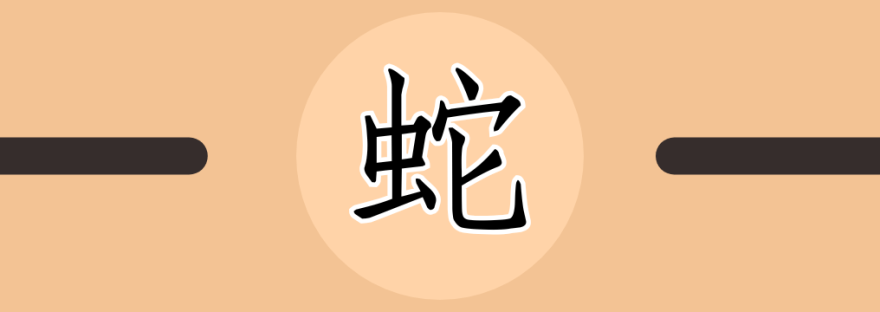
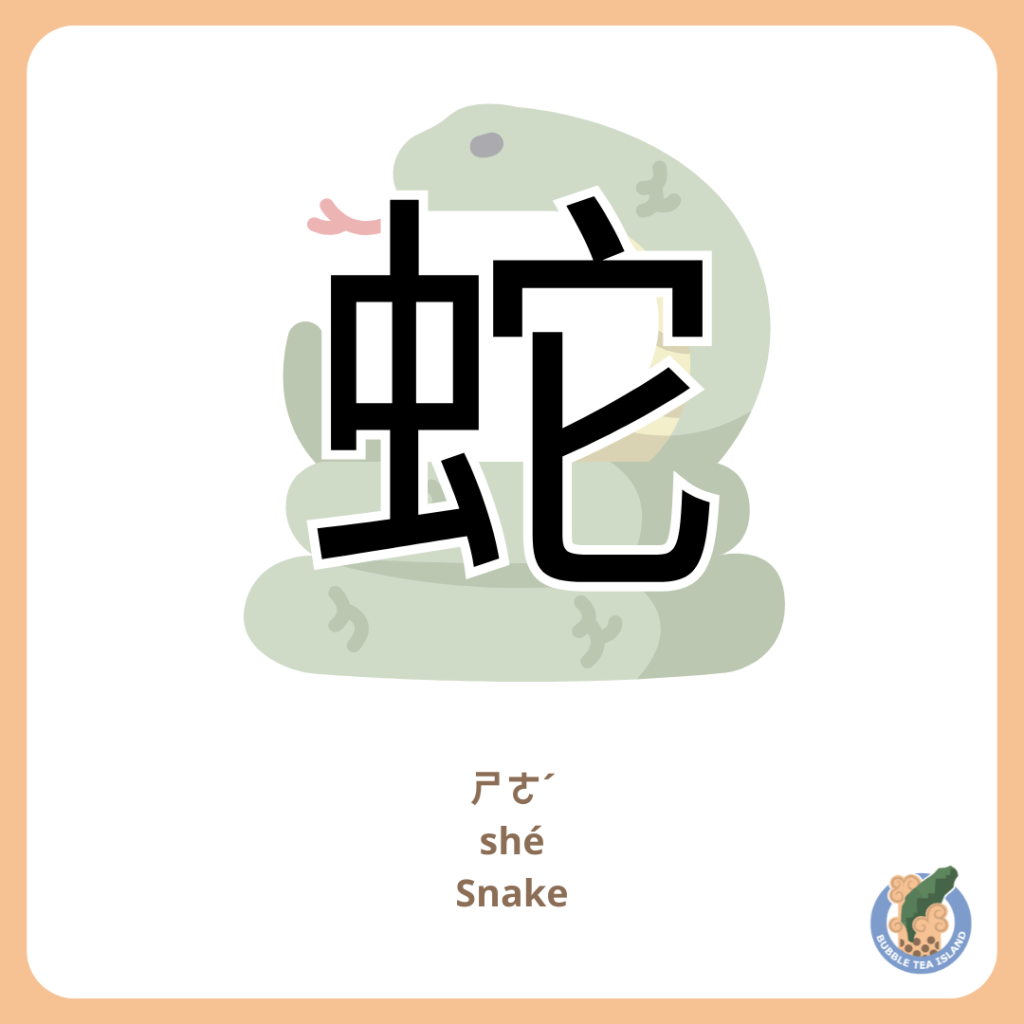
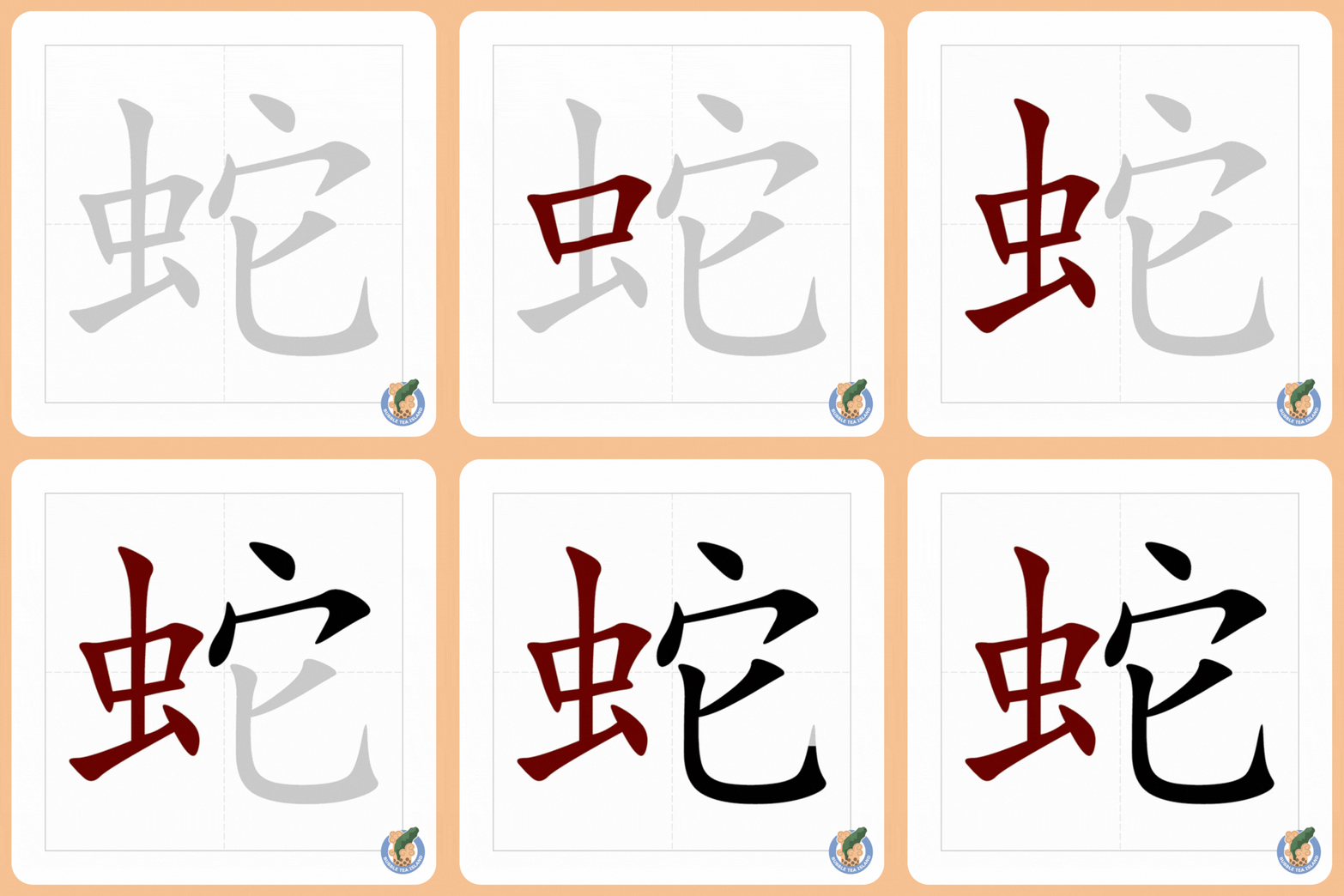
蛇 is the character for “snake”. It is made out of 10 strokes.
| Chinese Character | Simplified Version | Bopomofo | Pinyin |
|---|---|---|---|
| 蛇 | 蛇 | ㄕㄜˊ | shé |
Definition
Snake; serpent
Historical Origins
The Chinese character 蛇 (shé), meaning “snake,” has fascinating origins as a phono-semantic compound. This type of character combines a semantic component with a phonetic component, offering clues about both meaning and pronunciation.
In the case of 蛇, the semantic element is 虫 (chóng), which broadly refers to insects or creatures that crawl or slither. This root connects the character to the natural world of creeping creatures, like snakes.
The phonetic element is 它 (old chinese pronunciation *l̥ʰaːl), which provides the approximate sound for the character. Interestingly, 它 itself originated as a pictographic representation of a snake. Over time, as Chinese script evolved, 它 took on its current meaning (“it”) while contributing its phonetic essence to the creation of 蛇.

Vocabulary with the Character 蛇
| Chinese | Bopomofo | Pinyin | English |
|---|---|---|---|
| 蛇毒 | ㄕㄜˊ ㄉㄨˊ | shé dú | Snake venom |
| 蛇形 | ㄕㄜˊ ㄒㄧㄥˊ | shé xíng | Snake-like shape |
| 蛇蠍心腸 | ㄕㄜˊ ㄒㄧㄝ ㄒㄧㄣ ㄔㄤˊ | shé xiē xīn cháng | Ruthless (lit. “heart of snakes and scorpions”) |
| 打草驚蛇 | ㄉㄚˇ ㄘㄠˇ ㄐㄧㄥ ㄕㄜˊ | dǎ cǎo jīng shé | “Stir up the grass and startle the snake” (idiom: to inadvertently alert an enemy) |
| 畫蛇添足 | ㄏㄨㄚˋ ㄕㄜˊ ㄊㄧㄢ ㄗㄨˊ | huà shé tiān zú | “Draw legs on a snake” (idiom: to overdo something unnecessary) |
Join our Substack “Mandarin Zest“, where we regularly share intermediate to advanced Chinese learning content. Make sure to subscribe!
 Bubble Tea Island