
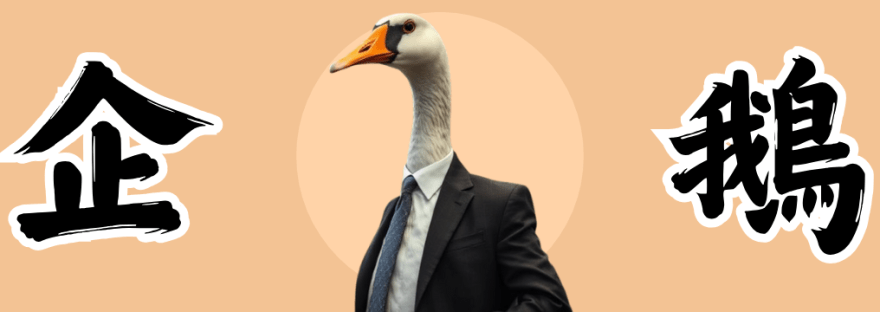
The idea that the Chinese word for “penguin” (企鵝, qǐ’ é) literally translates to “business goose” has been circulating online, often accompanied by amusing memes. While it’s a fun and appealing concept, particularly since penguins do appear to waddle around in formal tuxedo-like attire, the truth behind the term is more nuanced.
Breaking Down the Chinese Characters
The word 企鵝 consists of two characters:
- 企 (qǐ): This character can mean “to stand on tiptoes” or “to look forward to.” It also appears in words related to business, such as 企業 (qǐyè), meaning “enterprise” or “company.”
- 鵝 (é): This character directly translates to “goose.”
At first glance, the association of penguins with “business” seems plausible because of the shared character 企. However, the etymology of 企鵝 reveals a different story.
Why Is 企鵝 Not “Business Goose”?
While the character 企 is present in both 企鵝 and 企業, its meaning in these contexts diverges:
- Literal Origin of 企 In classical Chinese, 企 originally referred to the act of standing on tiptoes, symbolizing hope or anticipation. Over time, it evolved to convey ideas of standing upright or striving forward. In the context of 企鵝, it describes the upright stance of a penguin, resembling a person standing.
- Connection to Business The use of 企 in 企業 stems from the concept of “standing up” or “establishing” a venture, rather than any direct relationship with penguins. While there is a thematic overlap, the connection is metaphorical, not literal.
- The Goose Connection The second character, 鵝, clearly denotes “goose.” Penguins were likely named 企鵝 because of their upright posture, which resembles a goose standing tall.

A Misconception Rooted in Humor
The meme-worthy notion of penguins as “business geese” likely stems from a playful combination of:
- Penguins’ resemblance to people dressed in formal suits.
- The phonetic similarity between 企鵝 (qǐ’é) and 企業 (qǐyè).
- A surface-level interpretation of the characters’ meanings.
While the misunderstanding is amusing, it’s important to note that 企鵝 actually means “standing goose” or “tiptoeing goose.”
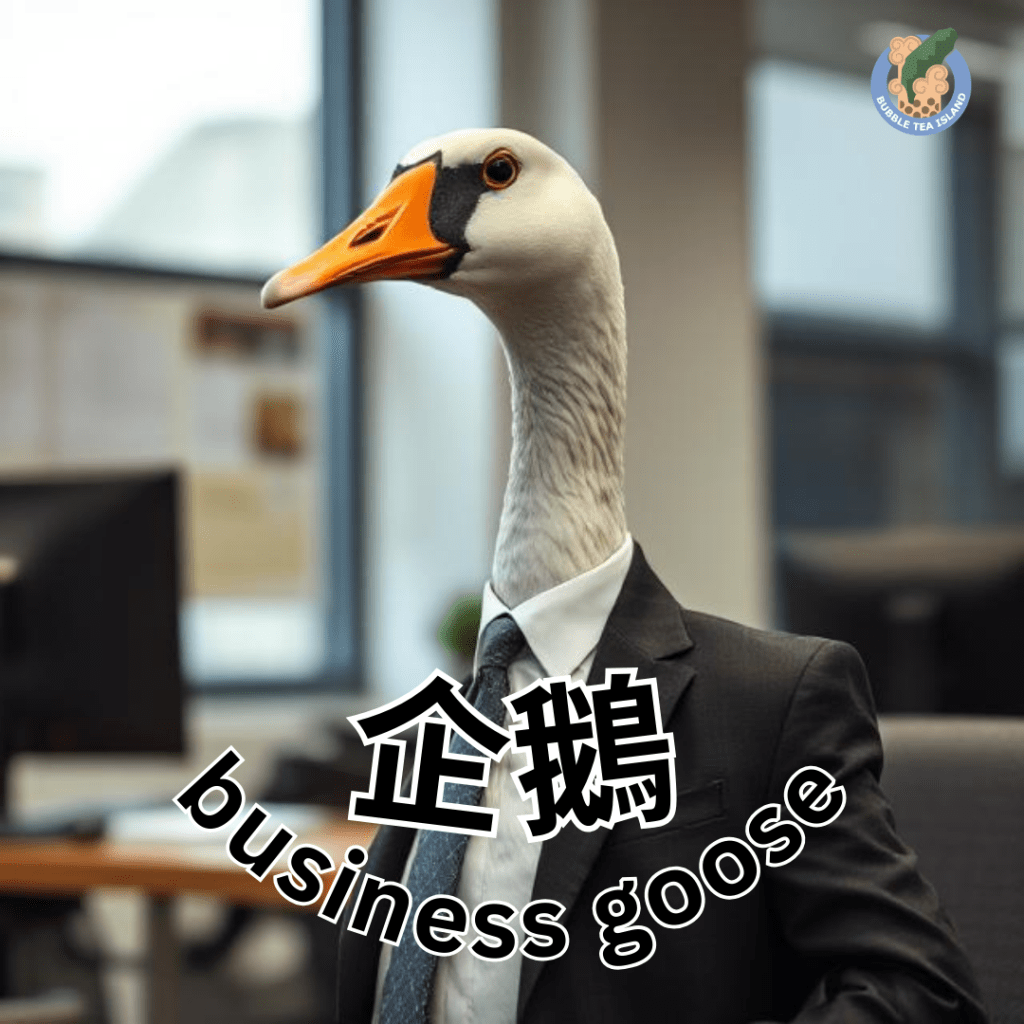
No, the Chinese word for “penguin” does not mean “business goose.” The term 企鵝 derives from a poetic observation of penguins’ upright stance, not their suitability for the corporate world. While the meme may bring a smile, it’s another reminder of the richness and complexity of the Chinese language.
By understanding the origins of 企鵝, we can appreciate how language and culture intertwine to describe the natural world in creative and meaningful ways.
Join our Substack “Mandarin Zest“, where we regularly share intermediate to advanced Chinese learning content. Make sure to subscribe!
 Bubble Tea Island