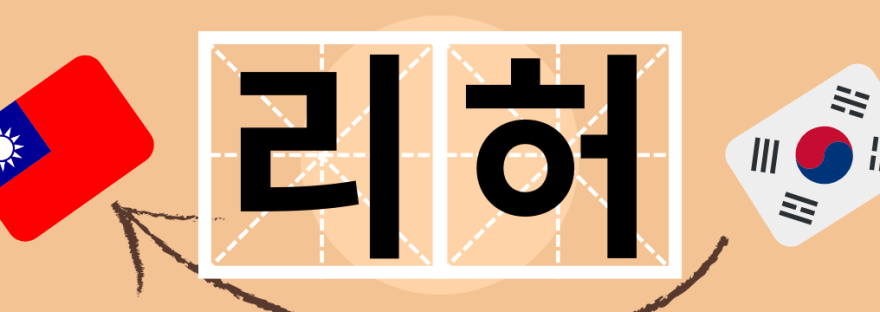
Taiwanese Hangul (한글: 대꽃금진; Chinese: 臺語譴文; pinyin: Táiyǔ Yànwén; Pe̍h-ōe-jī: Tâi-gí Gān-bûn) is an innovative orthography system developed to represent the sounds of Taiwanese Hokkien, one of Taiwan’s most widely spoken languages. Introduced in 1987 by Taiwanese linguist Hsu Tsao-te, it leverages modified Hangul letters to transcribe Taiwanese Hokkien effectively. The system has since gained the support of some other linguists.
Why Use Hangul for Taiwanese Hokkien?
The primary motivation for adopting Hangul for Taiwanese Hokkien lies in the structural similarities between Chinese characters and Hangul. Both scripts are arranged in square blocks, making it easier to combine the two in a visually consistent way compared to mixing Chinese characters with Latin alphabets. This spatial harmony preserves the aesthetic appeal of written text while offering a practical and phonetic representation of spoken Taiwanese.
The Structure of Taiwanese Hangul
Taiwanese Hangul borrows and adapts elements of Hangul to accommodate the unique phonetic features of Taiwanese Hokkien. Below is an overview of its key components:

Consonants
| Bopomo | Tâi-lô | Hangul |
|---|---|---|
| ㄅ | p | ᄇ |
| ㆠ | b | ᄈ |
| ㄆ | ph | ᄑ |
| ㄇ | m | ᄆ |
| ㄉ | t | ᄃ |
| ㄊ | th | ᄐ |
| ㄋ | n | ᄂ |
| ㄌ | l | ᄅ |
| ㄍ | k | ᄀ |
| ㆣ | g | ᄁ |
| ㄎ | kh | ᄏ |
| ㄏ | h | ᄒ |
| ㄐ | tsi | ᄌ |
| ㆢ | ji | ᄍ |
| ㄑ | tshi | ᄎ |
| ㄒ | si | ㅅ |
| ㄗ | ts | ᄌ |
| ㆡ | j | ᄍ |
| ㄘ | tsh | ᄎ |
| ㄙ | s | ㅅ |
| ㄫ | ng | ㄸ |
Vowels
| Bopomo | Tâi-lô | Hangul |
|---|---|---|
| ㄧ | i | ᅵ |
| ㆪ | îⁿ | 잇 |
| ㄨ | u | ᅮ |
| ㆫ | uⁿ | 웃 |
| ㄚ | a | ᅡ |
| ㆩ | aⁿ | 앗 |
| ㄜ | o | ᅥ |
| ㆦ | o | ᅩ |
| ㆧ | oⁿ | 옷 |
| ㆤ | é | ᅦ |
| ㆥ | eⁿ | 엣 |
| ㄞ | ai | ᅢ |
| ㄠ | au | 알 |
Coda endings
| Bopomo | Tâi-lô | Hangul |
|---|---|---|
| ㆬ | -m | ᄆ |
| ㄣ | -n | ᄂ |
| ㆭ | -ng | ㅇ |
| ㆴ | -p | ᄇ |
| ㆵ | -t | ᄃ |
| ㆶ | -k | ᄀ |
| ㆷ | -h | ᄒ |
Tone Markings
| Bopomo | Tâi-lô | Hangul | |
|---|---|---|---|
| 1st tone | ᄋ | ||
| 2nd tone (and 6th) | ˋ | ◌́ | ᄅ |
| 3rd tone | ˪ | ◌̀ | ᄂ |
| 4th tone | ᄋ | ||
| 5th tone | ˊ | ◌̂ | ᄉ |
| 7th tone | ˫ | ◌̄ | ᄀ |
| 8th tone | ̍ | ̍ | ᄇ |
Note that tone markings are often omitted in text fully written in Taiwanese Hangul, requiring you to guess the tones.
Taiwanese Hangul and Bopomofo: A Comparison
Taiwanese Hangul offers a unique and precise way to capture the sounds of Taiwanese Hokkien. It accurately represents subtle phonetic details, such as vowel nasalization and glottal stops, and integrates seamlessly with traditional Chinese text thanks to its square-block structure. This design maintains consistent visual spacing and enhances readability, making it aesthetically harmonious when used alongside Chinese characters.
However, Taiwanese Hangul was primarily designed to complement the traditional Chinese writing style, rather than serving solely as a phonetic transcription system. This limits its efficiency compared to systems like Taiwanese Bopomofo, which is specifically tailored for phonetic accuracy.
For those already familiar with Mandarin Bopomofo, learning Taiwanese Bopomo is intuitive and straightforward. It remains the most efficient and accessible system for writing Taiwanese Hokkien pronunciation, providing speed and precision unmatched by other options like Pe̍h-ōe-jī.
Despite its phonetic accuracy and integration with Chinese text, Taiwanese Hangul’s adoption has been limited. Latin-based systems like Pe̍h-ōe-jī dominate educational and linguistic contexts, overshadowing both Taiwanese Hangul and Bopomo. Nevertheless, these systems continue to play a vital role in language preservation and accessibility for learners.

Taiwanese Hangul is an innovative system that harmonizes with traditional Chinese text while preserving the sounds of Taiwanese Hokkien. Though overshadowed by Latin-based systems like Pe̍h-ōe-jī, it remains a valuable tool for language preservation and accessibility, complementing existing phonetic systems like Bopomo.
 Bubble Tea Island