

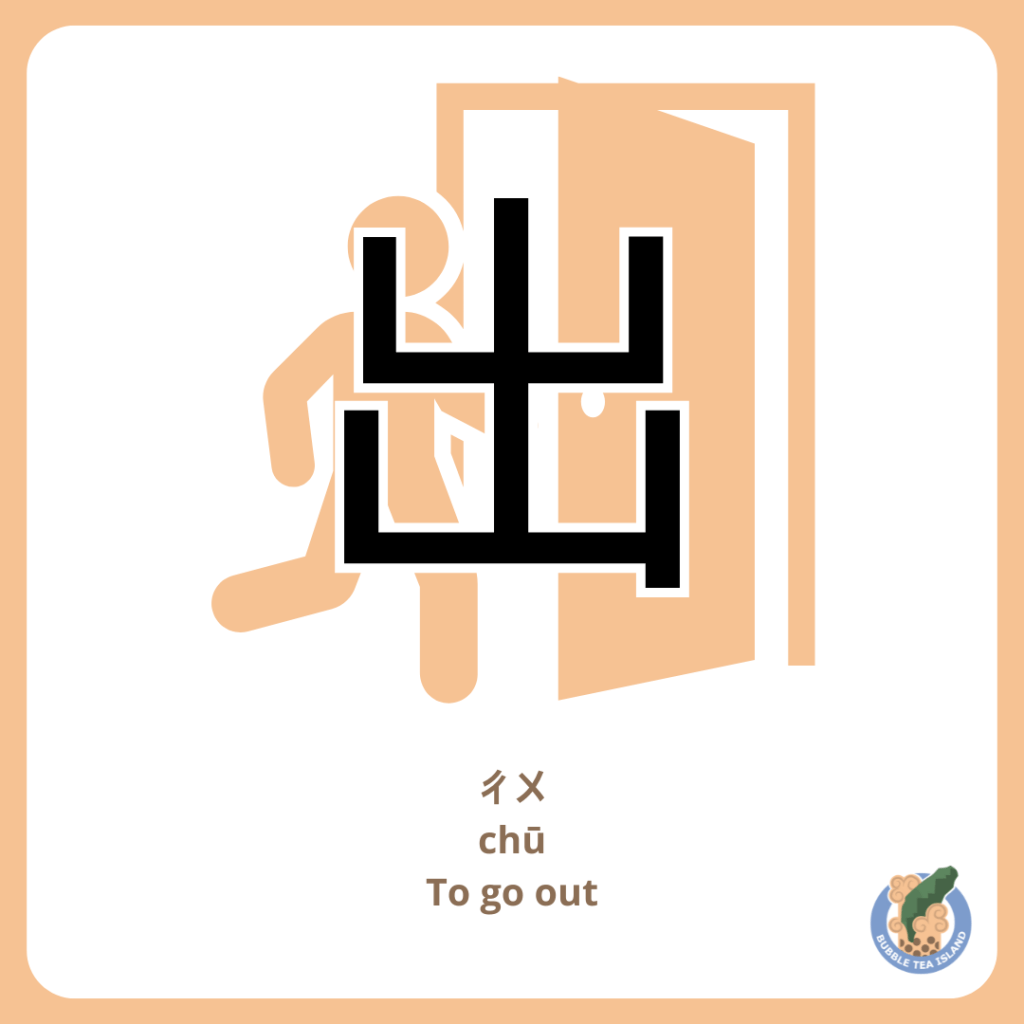
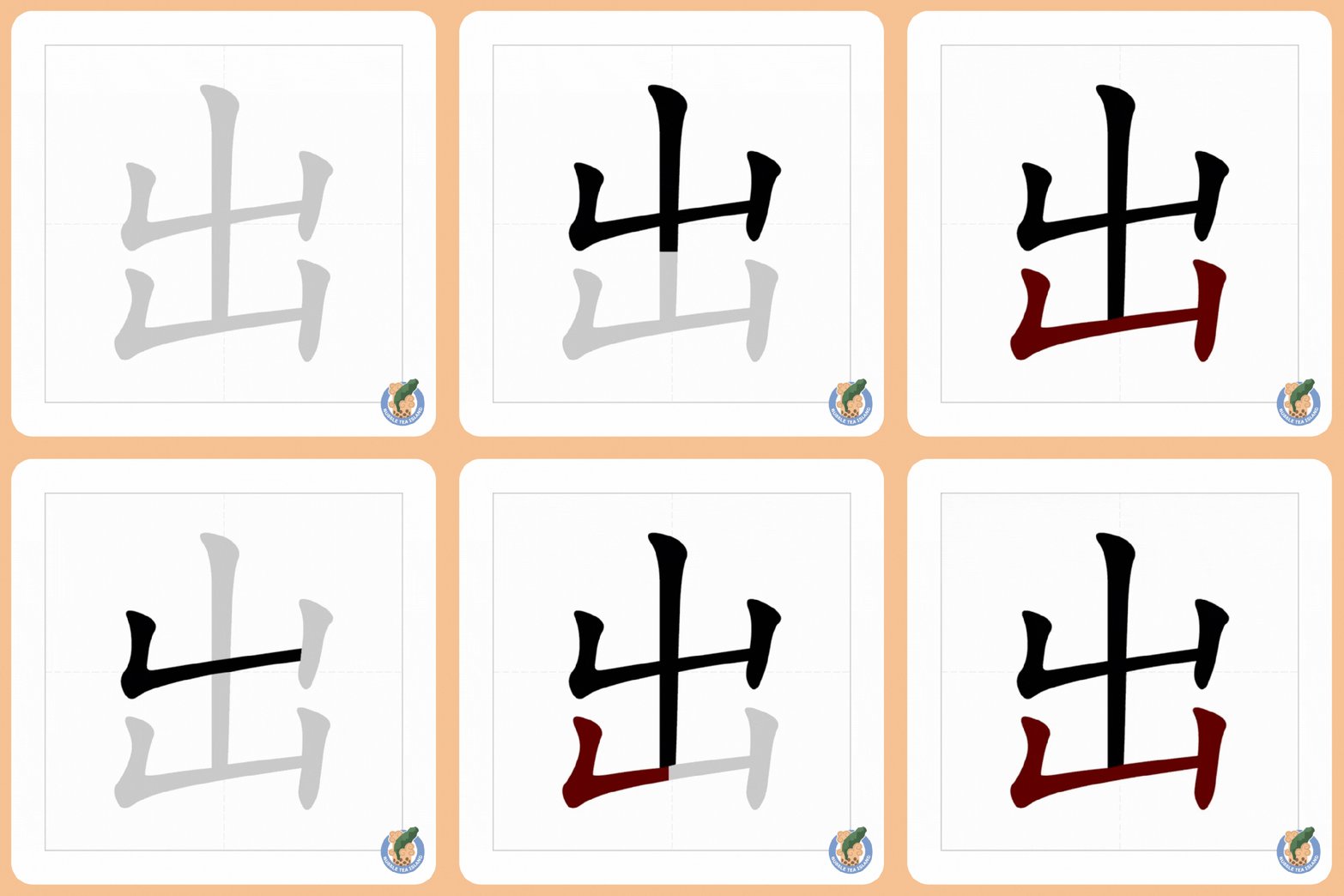
出 is the character for “to go out”. It is made out of 5 strokes.
| Chinese Character | Simplified Version | Bopomofo | Pinyin |
|---|---|---|---|
| 出 | 出 | ㄔㄨ | chū |
Definition
To go out; to come out; to occur; to produce; to go beyond; to rise; to put forth; to happen; classifier for dramas, plays, operas, etc.
Historical Origins
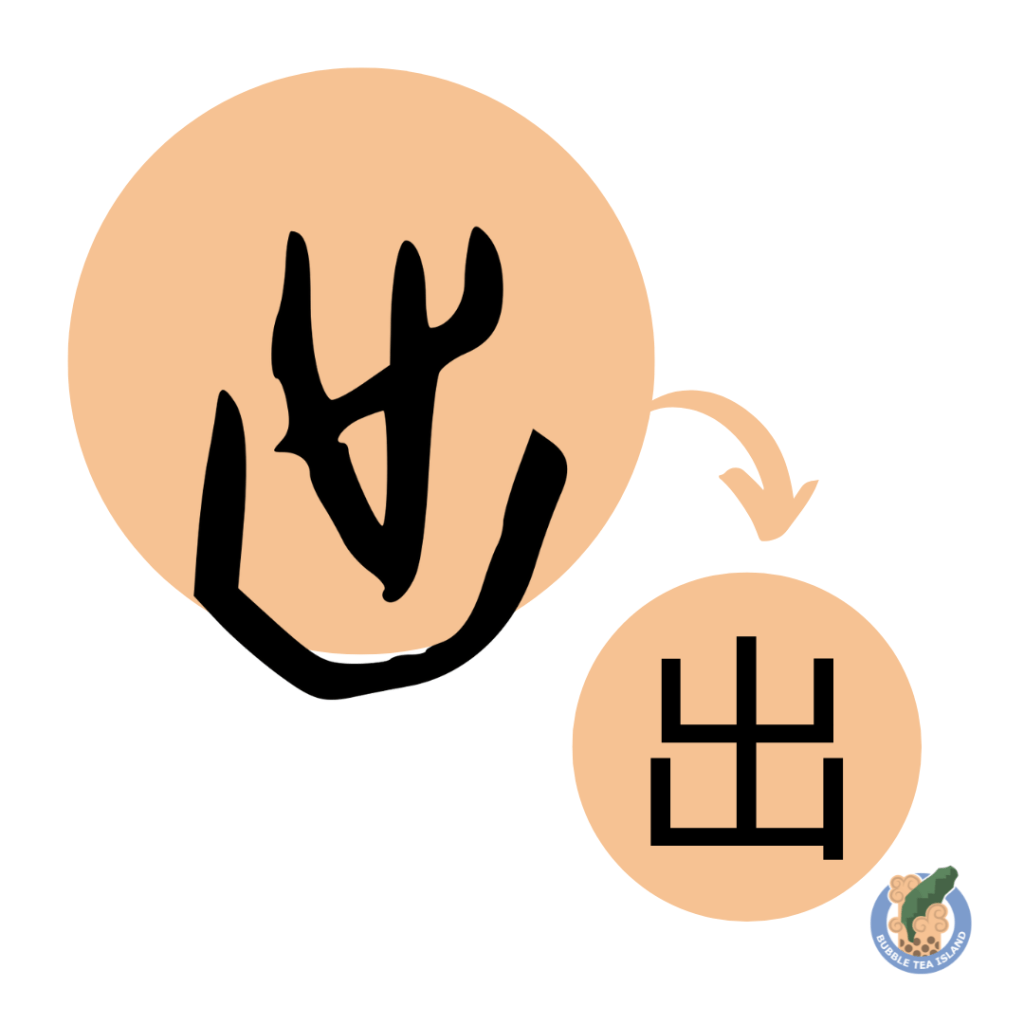
The character 出 is an ideogrammic compound*,* originally composed of two parts: 止 (meaning “foot”) and 凵 (a symbol for “cave” or “opening”). Together, they depict the act of stepping out of a cave—a vivid image of exiting an enclosed space.
Over time, especially by the Qin dynasty, the original structure became stylized and distorted. This led to a misinterpretation in the Shuōwén Jiězì (《說文解字》), an ancient Chinese dictionary, which incorrectly described 出 as a pictograph of a plant (屮) growing upward and out.
Vocabulary with the Character 出
| Chinese | Bopomofo | Pinyin | English |
|---|---|---|---|
| 出發 | ㄔㄨ ㄈㄚ | chū fā | to depart |
| 出口 | ㄔㄨ ㄎㄡˇ | chū kǒu | exit / export |
| 出現 | ㄔㄨˉ ㄒㄧㄢˋ | chū xiàn | to appear |
| 出國 | ㄔㄨ ㄍㄨㄛˊ | chū guó | to go abroad |
| 出門 | ㄔㄨ ㄇㄣˊ | chū mén | to go out (of home) |
| 出版 | ㄔㄨ ㄅㄢˇ | chū bǎn | to publish |
| 出生 | ㄔㄨ ㄕㄥ | chū shēng | to be born |
| 出席 | ㄔㄨ ㄒㄧˊ | chū xí | to attend |

Join our Substack “Mandarin Zest“, where we regularly share intermediate to advanced Chinese learning content. Make sure to subscribe!
 Bubble Tea Island