
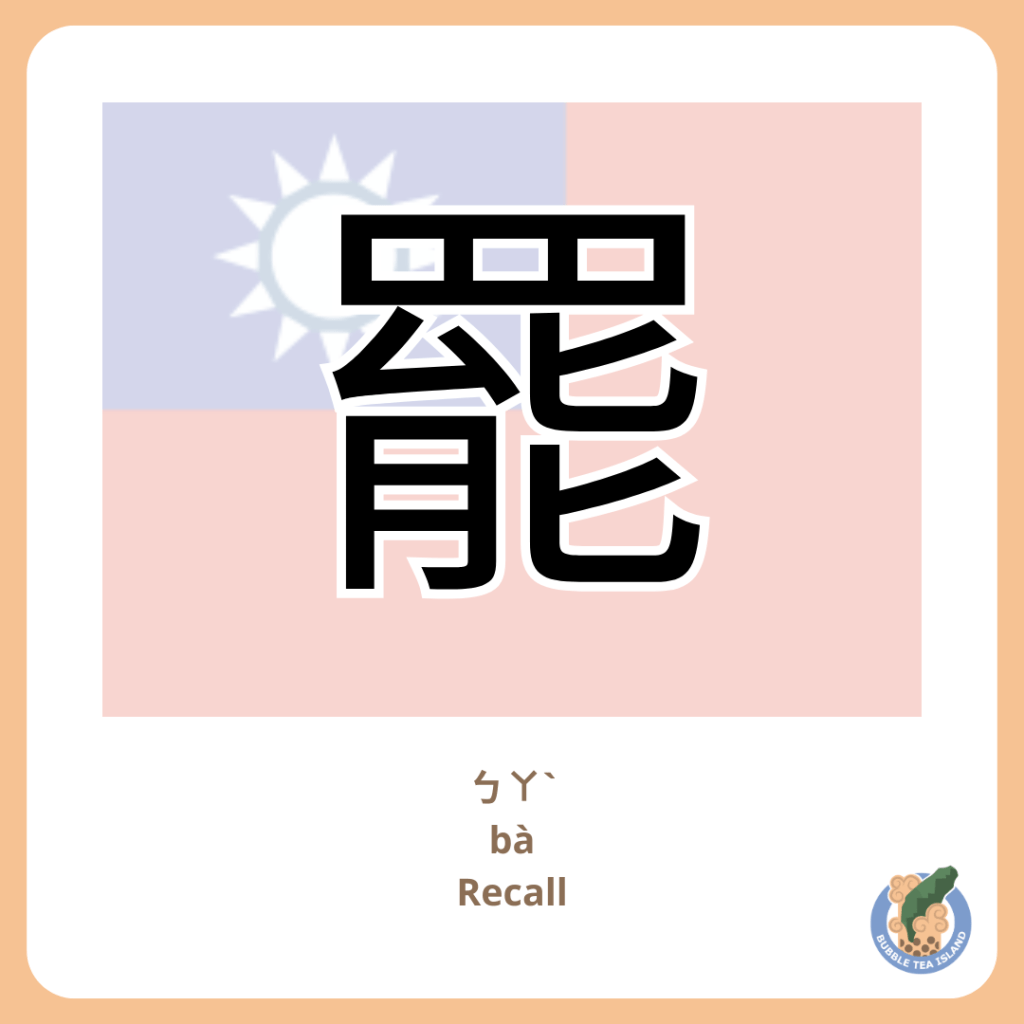
Last week, Taiwan announced its Chinese Character of the Year for 2025. The character chosen by voters was 罷, meaning “recall” or “to dismiss.” Far from being a poetic or abstract choice, the character is a direct reflection of the political turmoil that defined much of Taiwan’s year.
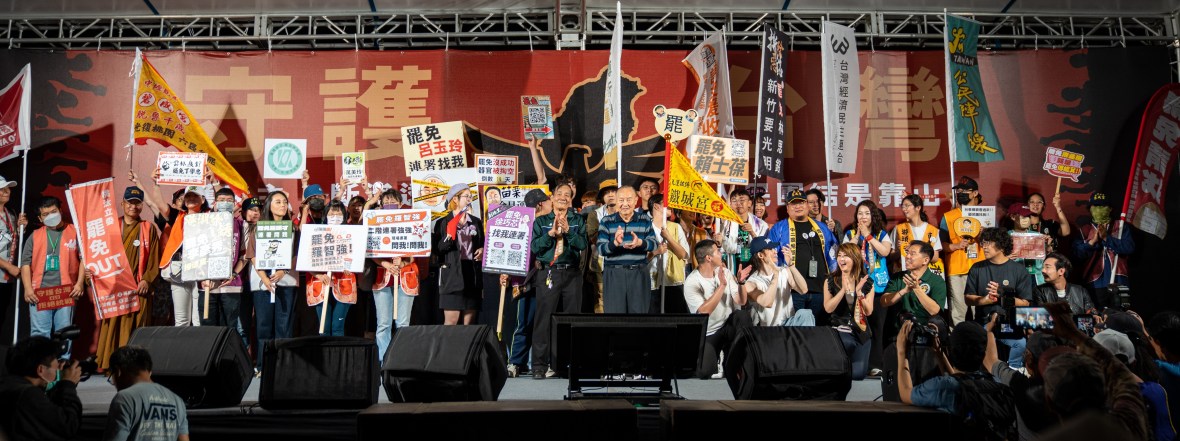
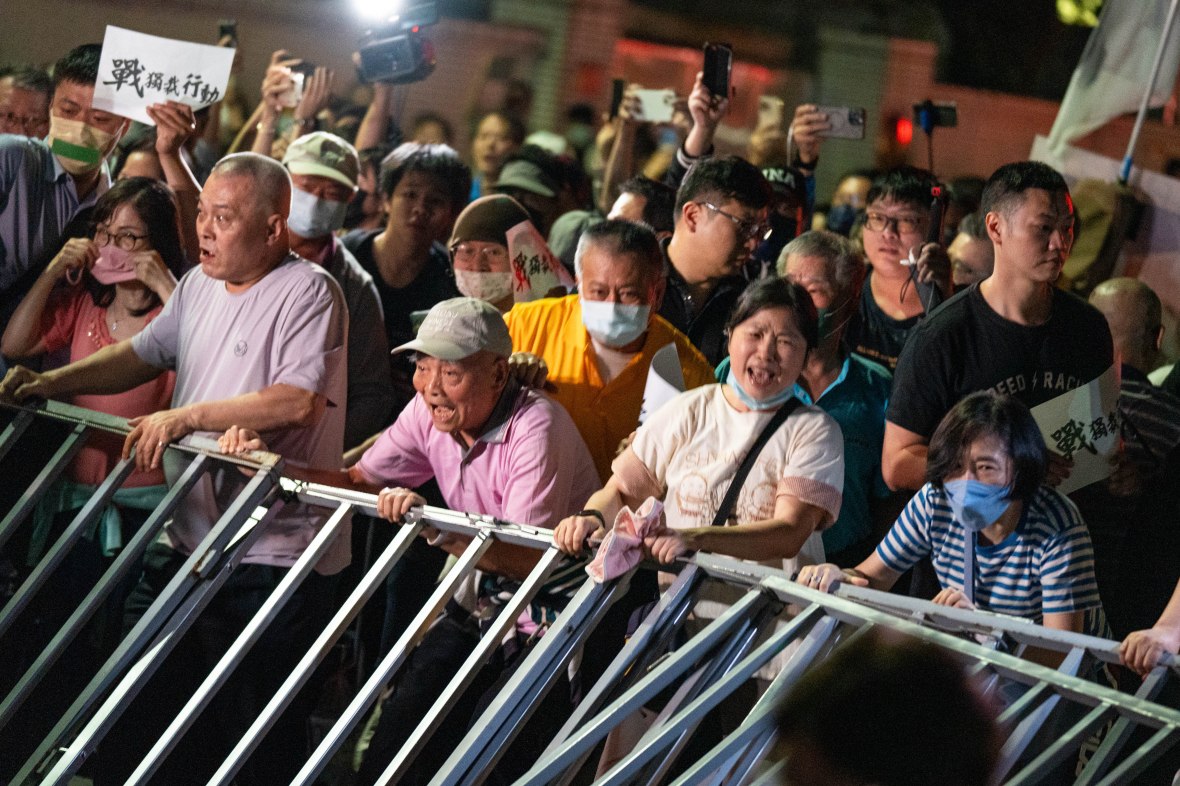
In 2025, the word recall was everywhere. News headlines, political talk shows, social media debates, and street-level campaigning were dominated by discussions of 大罷免—the “grand recall” movement. What began as a political strategy quickly turned into a nationwide referendum on democratic norms, partisan tactics, and the limits of political legitimacy.
A Recall Campaign That Shaped the Year
The recall movement was initiated by the Democratic Progressive Party (DPP), Taiwan’s ruling party, which currently holds the presidency but lacks a majority in the Legislative Yuan. That majority is controlled by the Kuomintang (KMT), a party generally viewed as more favorable to closer ties with China.
Facing legislative gridlock and hoping to regain control of parliament, the DPP backed recall motions targeting several KMT legislators. The goal was straightforward: remove enough opposition lawmakers through recall votes to flip the balance of power in the legislature.
Legally and procedurally, the effort was entirely permissible. Taiwan’s constitution and electoral laws clearly provide for recall mechanisms, and recall elections have been used before at both the local and national levels. Politically, however, the strategy proved far more controversial.
As the recall campaigns unfolded, public debate intensified. Supporters framed the effort as democratic accountability in action—a way to punish legislators they viewed as obstructive or acting against Taiwan’s interests. Critics, however, accused the DPP of weaponizing democratic institutions to overturn the results of a legitimate election they had lost.
A Political Backlash
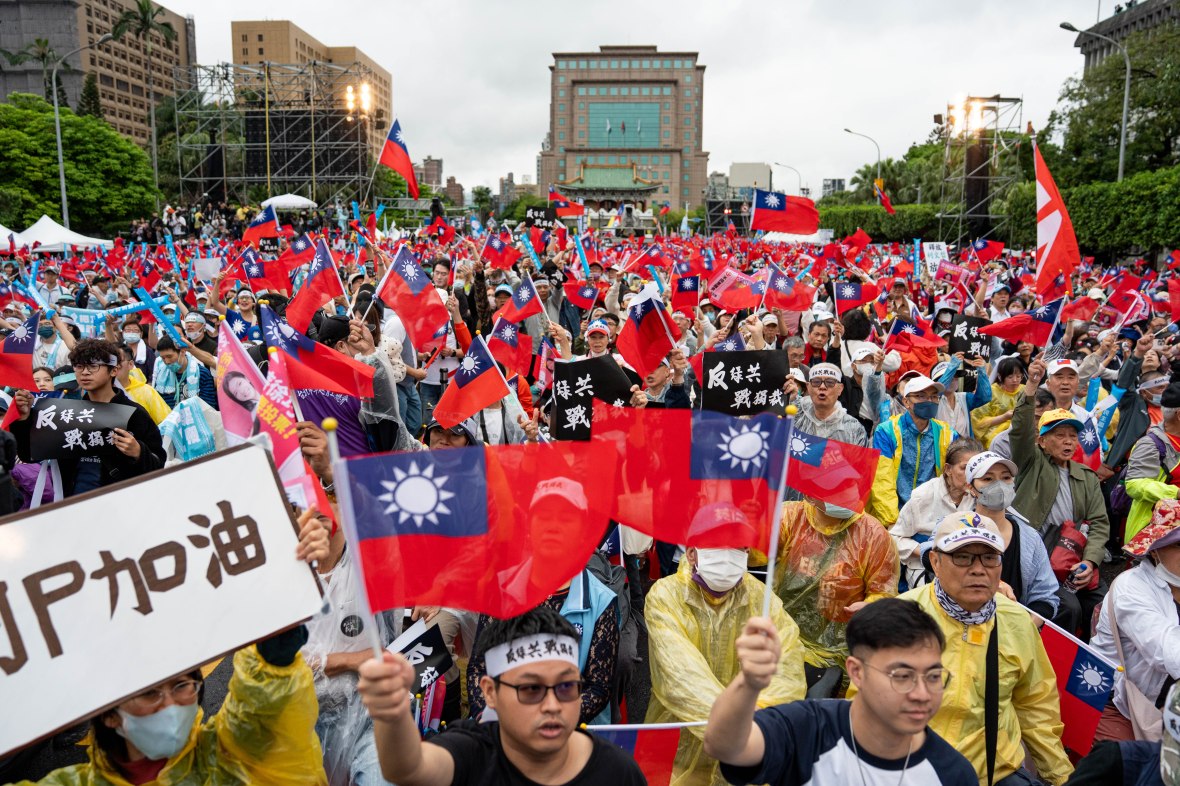
When the votes were finally counted, the outcome was unequivocal. None of the targeted KMT legislators were recalled. Instead of weakening the opposition, the recall elections mobilized KMT supporters and sympathetic voters, many of whom turned out explicitly to reject what they perceived as political overreach.
For the DPP, the recalls became a political embarrassment. What was meant to be a strategic comeback instead reinforced the opposition’s legitimacy and exposed the limits of public tolerance for partisan maneuvering.
Segments of Taiwanese civil society went further, accusing the ruling party of abusing Taiwan’s democratic system. In their view, recall mechanisms are meant to address severe misconduct or loss of public trust—not to serve as a second round of elections whenever parliamentary arithmetic proves inconvenient.
The episode sparked broader concerns about democratic fatigue. Constant mobilization, endless political confrontation, and the blurring of lines between accountability and revenge politics left many voters frustrated and disengaged.
Why 罷 Became the Character of the Year
Against this backdrop, the selection of 罷 as the Character of the Year felt almost inevitable. The annual vote, which often favors words related to economic anxiety, social change, or collective emotion, instead crystallized a single political concept that had come to dominate daily life.
One of the most prominent public figures to support the character was Taipei Mayor Chiang Wan-an, a member of the KMT. In his remarks, Chiang expressed hope that the character would serve as a lasting reminder of what he described as a political farce. More importantly, he argued, it should encourage Taiwanese society to move beyond ideological trench warfare and refocus on concrete issues: livelihoods, governance, and effective policymaking.
In this sense, 罷 functions less as a celebration than as a cautionary symbol—an emblem of a year when political tools were stretched to their limits and public patience was tested.
Recall and Taiwan’s Democratic DNA
The irony of the situation is that recall is not a foreign or recently imported concept in Taiwan. On the contrary, it lies at the very heart of the Republic of China’s constitutional philosophy.
The right of recall (罷免) is one of the Four Rights of the People, alongside the right of election (選舉), the right of initiative (創制), and the right of referendum (複決). These rights form a cornerstone of Sun Yat-sen’s Three Principles of the People, the ideological foundation of the Republic of China.
Sun Yat-sen was deeply skeptical of Western liberal democracies, which he famously criticized as “false democracies.” In his view, citizens in such systems exercised meaningful power only during elections—and even then imperfectly, since politicians could manipulate voters through empty promises and deception.
To correct this flaw, Sun proposed a model of democracy that combined representative institutions with robust forms of direct popular control. Elections alone were not enough. The people, he argued, needed continuous tools to supervise, correct, and, if necessary, remove those in power.
From this perspective, recall is not a loophole or a gimmick. It is a fundamental democratic safeguard.
Between Principle and Practice
The events of 2025 highlight the tension between democratic principle and political practice. While recall is a legitimate right, its use—or perceived misuse—can reshape public trust in institutions. When citizens begin to see democratic tools as partisan weapons, the system itself risks losing credibility.
The failure of the large-scale recall campaign suggests that Taiwanese voters, while highly politicized and deeply divided, are also keenly aware of this distinction. Their rejection of the recalls was not necessarily an endorsement of every KMT legislator, but a signal that democratic mechanisms should not replace electoral outcomes without compelling justification.
As Taiwan looks beyond 2025, the character 罷 will likely linger in public memory. Not as a triumph, but as a reminder of a year when democracy was stress-tested—and when voters ultimately asserted their own judgment on how far politics should go.

In that sense, the Character of the Year may have captured something deeper than a single campaign: a collective desire for restraint, balance, and a return to governance over endless confrontation.
 Bubble Tea Island