

Taiwan has long been a popular destination for Mandarin learners from around the world. The country offers a wide range of Mandarin training centers and university programs, and for many foreigners, it feels significantly easier to adapt to than mainland China.
Daily life in Taiwan is more familiar to Westerners: there is no internet censorship, people use the same social media platforms and apps as in Europe or North America, and the overall lifestyle feels less restrictive. For first-time learners, this familiarity lowers the mental barrier of moving to a Chinese-speaking environment.
At the same time, learning Mandarin in Taiwan is not automatically effective, and many learners are surprised by how slowly their Chinese progresses once the initial excitement fades. Taiwan offers excellent opportunities — but only under the right conditions.
The Mandarin Used in Taiwan Is Not the Same as in China
Traditional vs Simplified Characters
The most visible difference is the writing system. Taiwan uses Traditional Chinese characters, while mainland China uses Simplified characters.
The idea that Traditional characters are inherently harder to learn is largely a myth. There is no convincing evidence that Simplified characters have significantlyantly improved literacy rates, and regions that use Traditional characters, such as Taiwan, Hong Kong, and Macau, tend to have very high literacy.
While Traditional characters have more strokes and can feel intimidating at first, they preserve much more of their original semantic structure. Over time, this often makes them more logical and easier to internalize. Simplified characters, despite having fewer strokes, frequently require pure memorization, as the visual link to meaning has been removed.
That said, Taiwan does not use Simplified characters at all. If your long-term goal is to work primarily with mainland China or to prepare for professional environments there, Taiwan may not be the most practical place to study.

Pronunciation, Accent, and Perception
Taiwanese Mandarin has a distinct pronunciation. It is generally softer, more neutral, and extremely polite. Tone sandhi and retroflex sounds are often less pronounced than in northern Chinese Mandarin.
As someone who learned Mandarin entirely in Taiwan and later traveled to China, I noticed that mainland Chinese speakers could immediately tell my Mandarin was Taiwanese. Interestingly, this usually sparked curiosity rather than criticism.
The reverse situation can be more complicated. Foreigners who learned Mandarin in China and later moved to Taiwan are sometimes corrected on their pronunciation or told they sound “too Chinese” or “too rural.” This reflects a deeper social bias: many Taiwanese view mainland Chinese as less civilized, whether consciously or not.
From personal experience, having learned Mandarin in Taiwan, I find strong northern accents (such as Beijing Mandarin) difficult to understand. On the other hand, many foreigners who studied in Beijing report little difficulty understanding Taiwanese Mandarin.
Mandarin vs Taiwanese: A Reality Learners Often Overlook
One aspect many learners underestimate is the presence of Taiwanese (Hokkien) in daily life.
While Mandarin is the official language and widely spoken, Taiwanese is still dominant in:
- family conversations
- older generations
- certain social and emotional contexts
Locals often switch between Mandarin and Taiwanese without noticing. For learners, this can be confusing and frustrating, especially outside academic or professional environments.
This doesn’t make learning Mandarin impossible — but it does mean that full linguistic immersion is more complex than expected, particularly in the south of Taiwan where Hokkien is more dominent.
The Gap Between Classroom Chinese and Real-Life Chinese
This issue is not unique to Taiwan, but it is very noticeable.
The Chinese taught in classrooms often has little to do with the Chinese used:
- on the street
- in informal conversations
- in the media
- online
I studied Mandarin at both National Taiwan University and the National Taiwan Normal University Mandarin Training Center, and in both cases, classes were heavily textbook-based. Lessons rarely incorporated current events, slang, or real-life topics relevant to students’ interests.
Formal classes are essential for building a solid grammar and vocabulary foundation. However, relying on classes alone almost guarantees stagnation at an intermediate level.
To progress beyond that, learners need:
- regular interaction with locals
- language exchange partners
- sustained exposure to real-life content
Without this, even years in Taiwan may result in surprisingly limited fluency.
English Dominance in Taipei
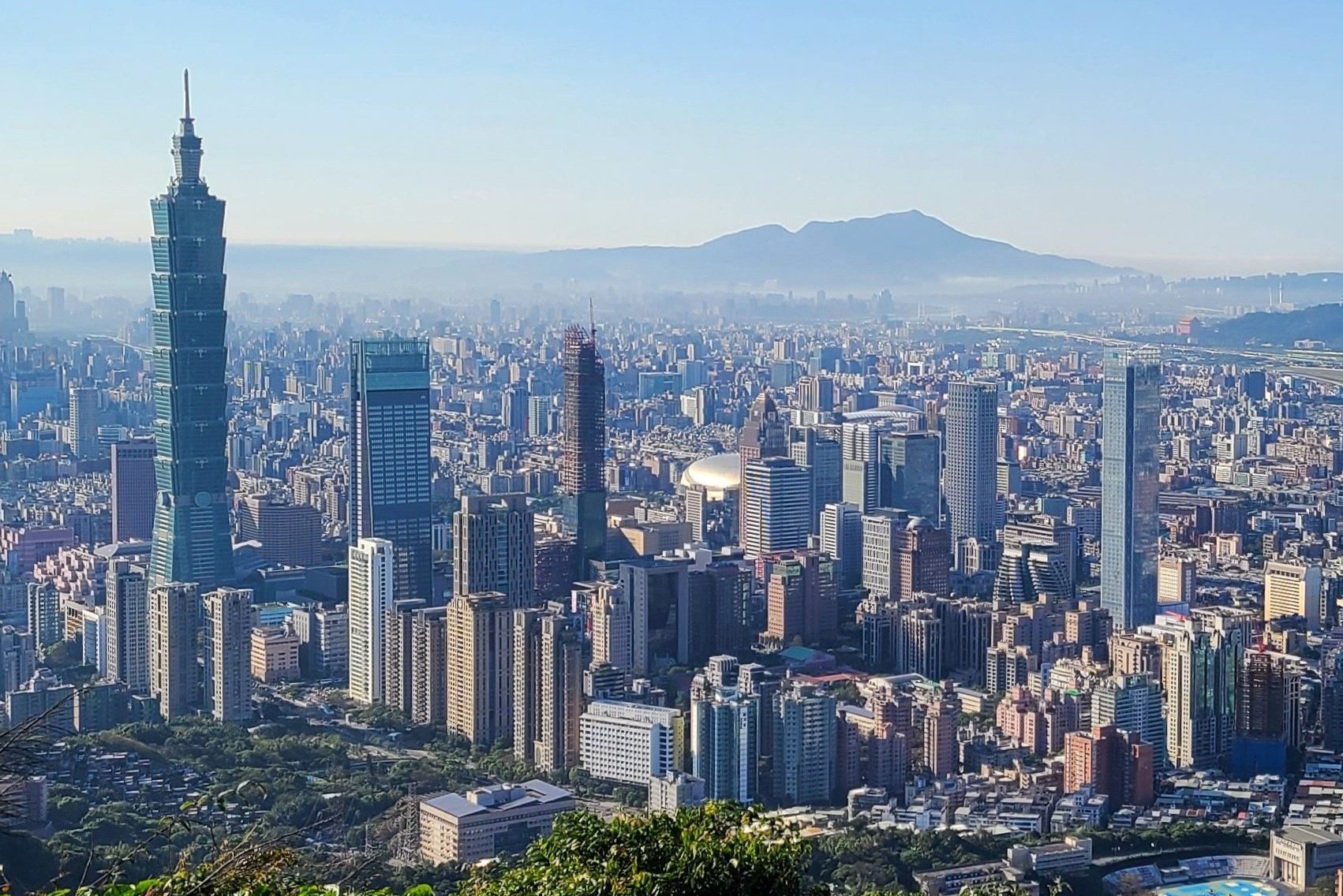
Taipei is, in many ways, an exceptional city. It offers:
- endless entertainment
- easy access to nature
- one of the most efficient public transportation systems in the world
However, it is not an ideal environment for learning Mandarin.
Many locals speak fluent English, and English translations are everywhere — from restaurant menus to administrative procedures. For travelers and short-term visitors, this is a major advantage. For Mandarin learners, it becomes a constant temptation to fall back on English.
Progress requires friction. Taipei removes much of that friction.
Alternatives People Don’t Consider
Cities such as Taichung, Tainan, and Kaohsiung provide a much stronger Mandarin-learning environment. Outside Taipei, English proficiency drops noticeably, and daily interactions are more likely to happen in Chinese.
The trade-off is lifestyle. Expat communities are smaller, international events are fewer, and social life can feel more limited — especially at first.
Among these cities, Taichung stands out as a good compromise:
- Taiwan’s second-largest city
- modern and rapidly developing
- about one hour from Taipei by train
The main downside is transportation. With only one metro line and an inconvenient bus system, most people eventually need to learn how to ride a scooter to live comfortably.
Scholarships: Opportunity, but Increasing Competition
Scholarships play a major role in where many learners choose to study Mandarin.
Taiwan does offer scholarships for Chinese language study through government programs and universities. These scholarships can be generous and are often seen as a strong incentive. However, the number of available scholarships is limited, and as Taiwan has become more popular, the selection process has grown increasingly competitive.
Strong academic records, well-defined study plans, and sometimes prior Mandarin experience are often expected. Many applicants assume scholarships are easy to obtain, only to discover that competition is much tougher than anticipated.
By contrast, China offers a far larger number of scholarships, and they are generally easier to secure — particularly if you apply to less prestigious universities or institutions outside major cities. For learners whose primary concern is funding and accessibility, China can be a more pragmatic option.
This doesn’t make Taiwan a worse choice, but it does mean that studying Mandarin there often requires more preparation, stronger applications, and sometimes a higher personal financial commitment.
Motivation, Time Pressure, and the Visa Factor
Another element learners often overlook is time pressure.
Student visas are temporary, and many learners approach their studies with an unspoken deadline. While this can be motivating, it can also lead to anxiety and burnout. Without clear goals, months pass quickly and progress feels disappointing.
Learners who improve the most tend to:
- set concrete language goals
- accept discomfort and social awkwardness
- actively limit English usage
- structure their exposure outside class
Taiwan provides the environment — but motivation and discipline still do most of the work.

My Own Learning Curve (Brief and Honest)
I learned Mandarin relatively quickly at the beginning. I was highly motivated and had no major issues with Chinese characters — a common struggle for many learners.
I reached a B2 level in about one year, which allowed me to enroll in a Master’s degree taught entirely in Chinese.
However, I fell into the classic expat trap early on. Most of my friends were foreigners, and outside formal settings, I rarely spoke Chinese beyond basic daily tasks like ordering food or making reservations.
As a result, I plateaued at a high-intermediate level for several years.
Only recently have I started pushing toward advanced fluency — mainly through:
- running Mandarin Zest
- intentionally spending more time with locals
- consuming more Chinese content
Ironically, the last point has been the most challenging. I don’t particularly enjoy Taiwan’s or China’s entertainment industries, which makes sustained exposure harder than expected.
Is Taiwan the Right Place for You to Learn Mandarin?
Taiwan can be an excellent place to learn Mandarin — but only for certain profiles.
It works best for learners who:
- value cultural comfort and political openness
- are willing to actively seek Chinese outside the classroom
- accept slower progress in exchange for long-term sustainability
It is less ideal for those who:
- want fast, forced immersion
- plan to work primarily in mainland China
- rely heavily on scholarships or need guaranteed financial support
- expect classroom learning alone to deliver fluency
If you’re considering studying Mandarin in Taiwan and want help deciding whether it fits your goals — or how to structure your stay to avoid common plateaus — a short, honest conversation can often save months (or years) of frustration.
Sometimes, clarity matters more than enthusiasm.
 Bubble Tea Island
I just saw B1 in a year, I am sitting here doing some chinese and saw this post. I have to take my hat off to you and say well done. thats about 900% faster than me, in actual fact I am probably not b1 yet. Just went over to your substack…good stuff.
LikeLike
Thank you! It’s actually B2 in a year haha I studied Mandarin in Taiwan for a year, and passed the HSK5 when I got back to Belgium the same summer. I then enrolled to my master’s degree at NTU the year after.
LikeLike