
If you’ve been following immigration news lately, the global mood isn’t exactly welcoming.
Across Europe, North America, and parts of Asia, governments are tightening visa rules, raising salary thresholds, limiting family reunification, and making permanent residency harder to reach. For many foreigners, moving abroad in 2026 feels more complicated, more expensive, and more uncertain than it did just a few years ago.
Taiwan, however, is quietly moving in the opposite direction.
Starting January 1st, 2026, a new round of amendments to the Act for the Recruitment and Employment of Foreign Professionals comes into force—and they’re some of the most foreigner-friendly changes the island has ever seen.
The message is clear: Taiwan doesn’t just want short-term workers anymore. It wants talent that stays.
Why? Because Taiwan is facing three very real challenges at the same time:
- A shrinking population
- A structural labor shortage
- And exploding demand for skilled workers driven by AI, semiconductors, and a fast-growing startup ecosystem
Here’s what the “new talent era” actually looks like, depending on who you are.
1. International Students: From Graduation to (Almost) Permanent Residency
For years, graduating in Taiwan as a foreign student came with a familiar frustration: you were educated locally, but staying was complicated. Salary thresholds, employer sponsorship, and rigid work permit rules often pushed graduates out just when they were ready to contribute.
That changes in 2026.
The 2-Year Open Work Transition (A Big Deal)
If you graduate from a Taiwanese institution with an Associate degree or higher, you can now:
- Extend your residency for 1 year after graduation
- Renew it once, for a total of 2 years
- Work without a specific work permit during this time
That means you can:
- Intern
- Freelance
- Work part-time or full-time
- Try different roles or industries
All without being tied to one employer.
For international students, this is huge. It gives you time to explore the job market realistically instead of rushing into the first qualifying offer.
Studying in Taiwan Now Counts Toward APRC
Another long-standing complaint is finally addressed: time spent studying now helps you reach permanent residency faster.
Depending on your degree, you can deduct 1 to 3 years from the usual 5-year APRC requirement.
- Bachelor’s: shorter wait
- Master’s: only 3 additional years of professional residency
- PhD: even faster (more on that below)
This signals something important: Taiwan is officially treating international graduates as future residents, not temporary guests.
Important Reminder
The 2-year period is a transition, not an endpoint. After that, you’ll still need to qualify through one of these paths:
- The new scoring system for international and Overseas Compatriot students
- Or standard employment as a Foreign Professional in specialized or technical work
2. Taiwanese Companies: Hiring Global Talent, Minus the Headaches
Taiwan’s ambitions in AI, semiconductors, and deep tech can’t be met by local talent alone. The government knows this—and the 2026 changes are designed to make hiring foreigners much less painful.
No More Mandatory “2 Years of Experience”
Companies can now hire graduates from the world’s top 1,500 universities without requiring prior work experience.
Even better:
- Graduates from top 200 universities can apply for individual work permits
- Employers can hire them almost like local staff
This is a massive shift for startups and SMEs that previously struggled with paperwork and eligibility rules.
Rankings are based on QS, Times Higher Education, or US News & World Report.
Foreign Professionals Join the Labor Pension System
Starting in 2026, Foreign Professionals are included in Taiwan’s Labor Pension System right away—no APRC required.
- Employers contribute 6% to a portable pension account
- The pension follows the employee if they change jobs
- Compensation packages become much more competitive internationally
3. Global Professionals: The Gold Card Gets Even Better
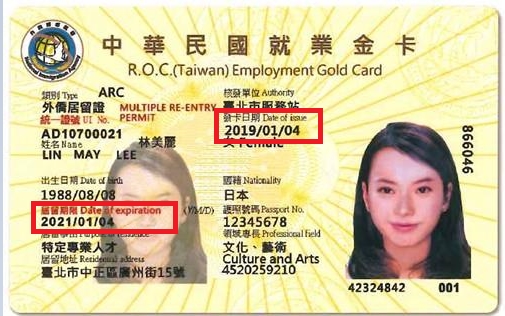
Taiwan’s Employment Gold Card was already one of Asia’s most flexible visas. In 2026, it becomes even more attractive—especially for high earners and specialists.
Permanent Residency in Just 1 Year
If you qualify as a Foreign Specialist Professional and earn over NTD 6 million annually, you can now apply for APRC after only one year in Taiwan.
The same fast track applies if you:
- Earn a PhD in Taiwan
That’s an incredibly short timeline by global standards.
Spouses Can Work Freely
Spouses of:
- Gold Card holders
- Foreign Specialist Professionals
- Foreign Senior Professionals
Can now apply for their own open work permit, without employer sponsorship.
This removes one of the biggest barriers for couples considering Taiwan long-term.
Real Long-Term Security
Some other quiet but important upgrades:
- Pension contributions remain intact even if you change jobs
- APRC can now be obtained in as little as 1 year (instead of 3)
- Spouse and children no longer need to show proof of financial assets
- After 10 years of residency, you gain access to Taiwan’s long-term care and disability services—on par with citizens
In other words: Taiwan is finally planning for foreigners to age here.
So… Why Taiwan, Why Now?
While many countries are raising walls, Taiwan is building bridges.
The 2026 amendments show a strategic shift: from short-term labor fixes to long-term demographic and economic planning. By giving students time, professionals security, and companies flexibility, Taiwan is positioning itself as one of the most talent-friendly destinations in Asia—especially for people working in tech, AI, research, and creative industries.
 Bubble Tea Island