
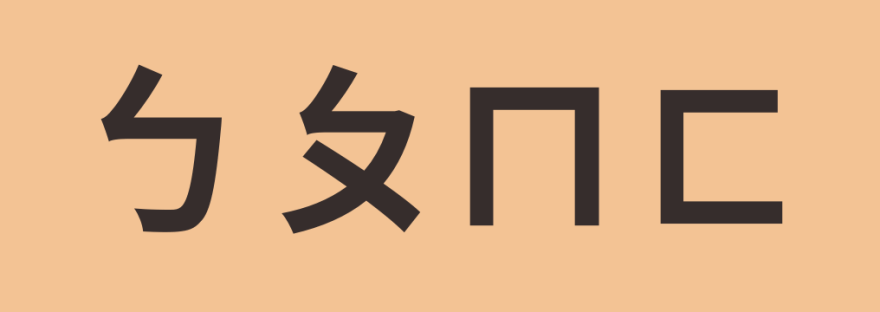
Bopomofo, also known as Zhuyin Fuhao, is a phonetic alphabet used for transcribing the sounds of Mandarin Chinese. Bopomofo consists of 37 symbols representing the basic sounds of the language. It is primarily used in Taiwan as a learning tool for children and in dictionaries to indicate pronunciation.

The Story Behind My Discovery of Bopomofo
When I embarked on my journey to learn Mandarin Chinese five years ago in Belgium, I was introduced to Pinyin and simplified Chinese as the standard tools for learning the language. My teacher, who hailed from Beijing, China, guided me through this initial phase. I decided to do a quick Google search to resolve the issue of simplified Chinese characters and stumbled upon the existence of Traditional Characters used in Taiwan and Hong Kong. Intrigued by their aesthetic appeal, I started using the traditional writing system.
However, as I delved deeper into learning Chinese, something about Pinyin seemed off. Not only did I struggle with it, but my classmates also faced similar difficulties. By the end of the first semester, we had each developed our own modified versions of Pinyin because the original system made little sense to us. It perplexed me that an alphabet initially designed to transcribe Latin languages in Europe could accurately represent the pronunciation of a language from an entirely different language family, thousands of kilometers away. Did China not have any tools for teaching pronunciation before the 1950s? These questions haunted me, but since my teacher was unaware of the existence of Bopomofo, she couldn’t provide any answers.
Everything changed when I connected with my first Taiwanese friend through a language exchange app. During one of our practice sessions, I encountered a character I didn’t recognize. I turned to her and asked, “How do you write the pronunciation of this character in Pinyin?” To my surprise, she responded, “Oh, I’m sorry, but I don’t know how to use Pinyin. We rely on a different phonetic alphabet called Bopomofo.” Shocked by her statement, I immediately opened Google, searched for Bopomofo, and eagerly read through the entire Wikipedia page. I was filled with excitement! That very evening, armed with a pen and a stack of white papers, I devoted myself to learning and memorizing the complete Bopomofo alphabet. From that moment onward, my Chinese learning experience took a turn for the better.
9 Reasons Why You Should Learn Bopomofo
In the 1910s, the government of the Republic of China developed Bopomofo with a similar objective as Pinyin: to facilitate the learning of Mandarin Chinese. While the history of Bopomofo can be explored in detail, this article aims to focus on the reasons why you should consider learning and utilizing Bopomofo as a Mandarin Chinese learner. Without delay, let’s delve into nine compelling reasons to embrace Bopomofo!
1 – You Will Have a Better Pronunciation
One of the main challenges with Pinyin is that, since it utilizes the Latin alphabet, individuals whose native language also employs the Latin alphabet tend to read Pinyin in the same manner as their native language. Consequently, even if they manage to pronounce the words correctly, they often retain a distinct accent.
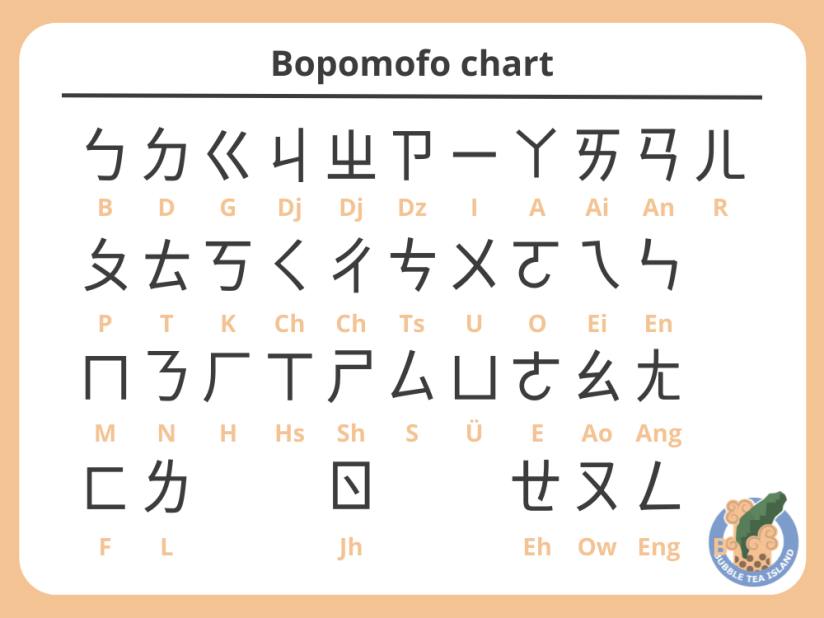
In contrast, Bopomofo employs its own distinct alphabet. Each sound is associated with a new and unique letter, eliminating the influence of other languages, as Bopomofo is exclusively used for Chinese. While it may require a bit more time to learn, the benefit is a significantly improved pronunciation. By embracing Bopomofo, you can overcome the hurdles posed by language interference and develop a more accurate and authentic Chinese pronunciation.
2 – You Will See The Clear Distinction Between Initials, Medials, and Finals
You may not be aware of it, but Chinese syllables consist of initials, medials, and finals. In Pinyin, these components are compactly packed together, making it challenging, and in some cases nearly impossible, to distinguish them. Additionally, Pinyin often causes certain letters to disappear or change when combined with specific initial/medial/final combinations. Conversely, each Bopomofo letter represents an initial, medial, or final, allowing for instant identification of its role within a syllable.
Let’s consider an example:
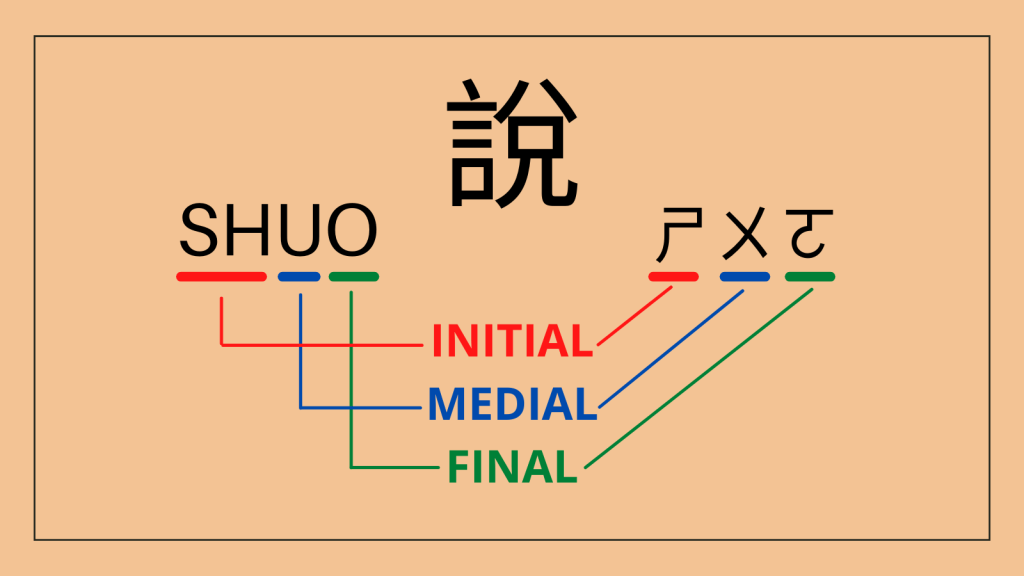
Take the word 說 (to speak). In Pinyin, it is written as [Shuo]. The initial is [Sh] (written as “shi” when standalone), the medial is [u] (written as “u” when a medial or final, but “w” when an initial), and the final is [o]. As you can see, it lacks intuitiveness. Now, let’s try the same exercise in Bopomofo: 說 in Bopomofo is represented as [ㄕㄨㄛ], with [ㄕ] as the initial, [ㄨ] as the medial, and [ㄛ] as the final. Bopomofo letters maintain a consistent shape regardless of their position within the syllable. Much easier, isn’t it?!
3 –You Will Be All Set Up To Master Chinese Poetry
Rhymes play a significant role in poetry, and Chinese poetry is no exception. However, in certain cases, it can be challenging to discern rhymes using Pinyin due to the aforementioned issues with initials, medials, and finals.
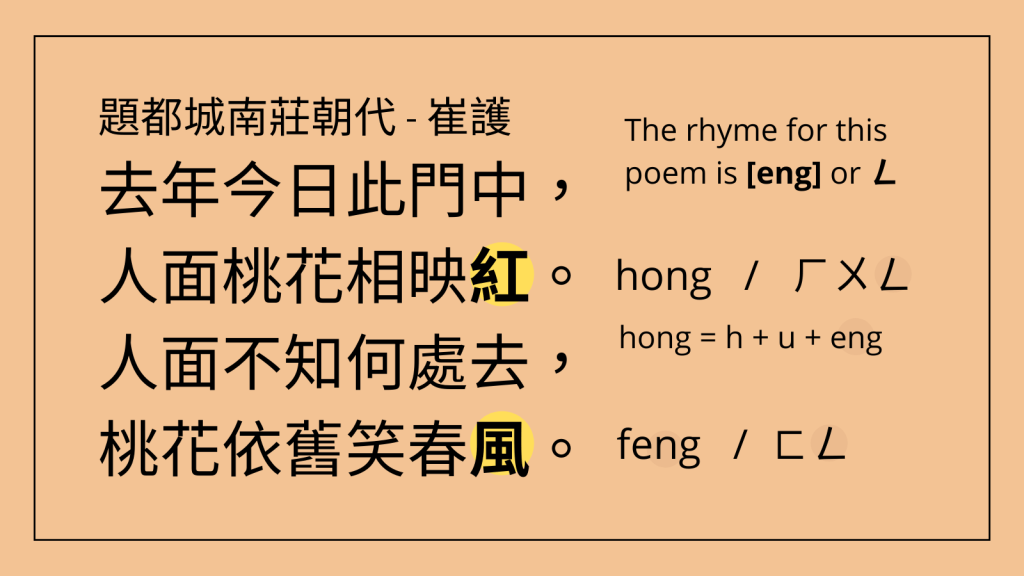
Take classical Tang poetry, for instance, where rhymes occur on the last character every two lines, starting from the second line. Let’s consider the following poem. The last character of the second line is 紅 (red), and the last character of the fourth line is 風 (wind). In Pinyin, these would be [hong] and [feng] respectively. Can you guess the rhyme? If you thought it was [ng], you would be mistaken. The correct answer is actually [eng]. You might be puzzled as there is no [eng] sound in [hong]. However, [hong] is actually composed of the following components: [h – u – eng]. Now, let’s examine the Bopomofo representation: 紅 is [ㄏㄨㄥ], and 風 is [ㄈㄥ]. Do you see the rhyme? It is [ㄥ], equivalent to the Pinyin sound [eng]. Much simpler, isn’t it?
4 – You Will Discover The magic of The Ruby Characters
One of the primary challenges for Chinese learners is the inherent laziness of the brain when it comes to learning characters. If you study a vocabulary list with characters on one side and Pinyin on the other, with a significant gap between them, your brain naturally tends to focus on the Pinyin while neglecting the characters.
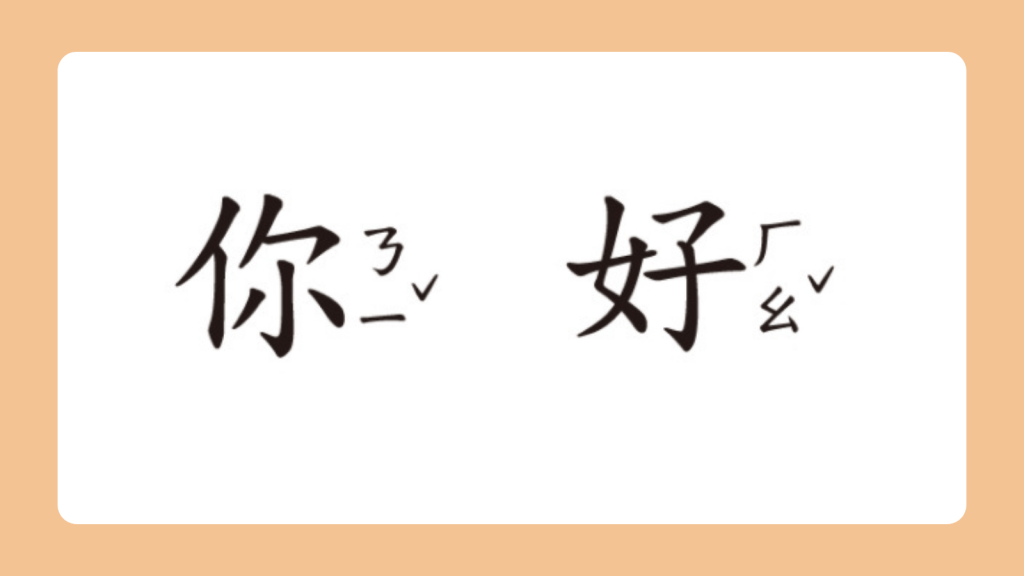
However, Bopomofo offers a solution. When Bopomofo is written alongside characters, it takes the form of what is known as “ruby characters.” It appears in a smaller font and is consistently positioned on the right side of the character. This deliberate placement ensures that you cannot read the Bopomofo without simultaneously looking at the character itself. Therefore, when studying vocabulary lists or other materials, both the Bopomofo and the character will always be within your visual field.
By incorporating Bopomofo as ruby characters, the visual association between the phonetic symbols and the characters becomes inherent. This approach helps overcome the brain’s tendency to focus solely on Pinyin and fosters a more balanced and comprehensive understanding of both the phonetic and visual aspects of Chinese characters.
5 – You Will Be Able To Read Entire Books, Newspapers, and More From The Very Beginning
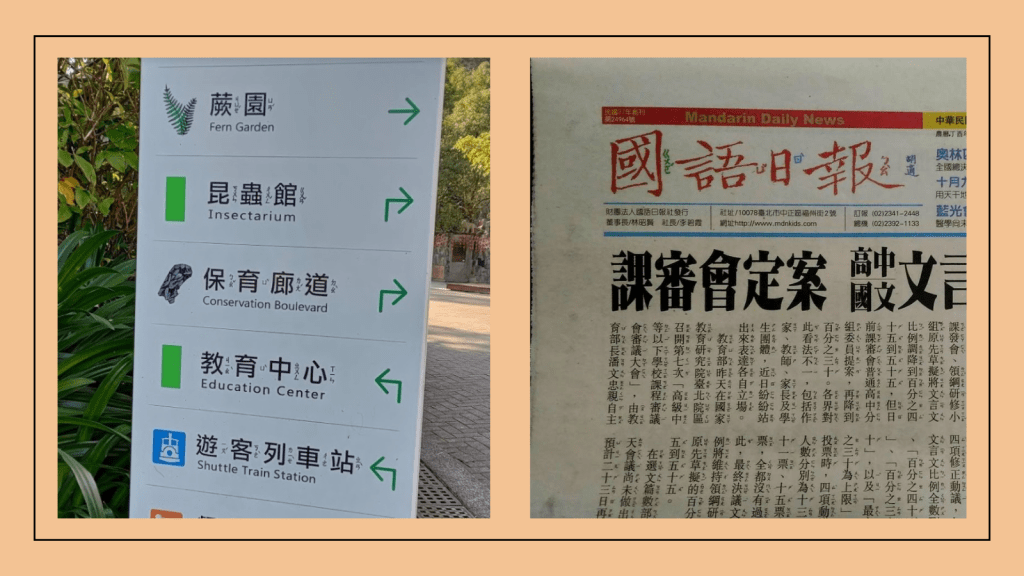
In Taiwan, ruby characters are extensively utilized in children’s books, making it easier for young readers to associate the phonetic symbols with the corresponding characters. Additionally, the paper version of Taiwan’s Mandarin Daily News (國語日報) is entirely written using ruby characters. Moreover, if you reside in Taiwan, you’ll notice that Bopomofo is widely employed in kid-friendly places such as the Taipei Zoo, certain MRT stations, amusement parks, and more.
This prevalence of Bopomofo means that once you familiarize yourself with it, you can confidently read aloud a wide range of content without necessarily knowing a single Chinese character. It’s truly remarkable, isn’t it? The widespread adoption of Bopomofo in various settings provides a valuable tool for those who are starting their journey with Mandarin Chinese or simply wish to enhance their pronunciation skills.
6 – It Will Make Typing Chinese on Your Phone Smoother and Faster
Typing in Chinese using Bopomofo offers a significant advantage in terms of speed compared to Pinyin. There are several reasons for this efficiency. Firstly, Bopomofo requires fewer letters to represent a Chinese syllable, with a maximum of three letters, whereas Pinyin can involve up to six letters.
However, the primary reason for Bopomofo’s faster typing lies in the design of the keyboard itself. The Pinyin keyboard is essentially a direct adaptation of the QWERTY keyboard, which was specifically designed for typing in the English language. This layout doesn’t align well with the needs of Chinese characters, resulting in a less intuitive typing experience.
Conversely, the Bopomofo keyboard is highly logical and optimized for typing Chinese characters efficiently. The letters are organized according to their initials, medials, and finals, ensuring a logical and streamlined process for inputting Chinese text. This intuitive layout significantly enhances the typing speed for Chinese users.

7. You Will Be Able to Write The Pronunciation of All Sinitic Languages
If you ever decide to embark on the journey of learning another Sinitic language like Taiwanese or Cantonese, relying solely on Mandarin Pinyin will not be of much assistance. Each of these languages has its own distinct version of Pinyin, tailored to their unique phonetic characteristics. This means that for each Sinitic language you wish to explore, you will have to familiarize yourself with a new and specific Pinyin system.
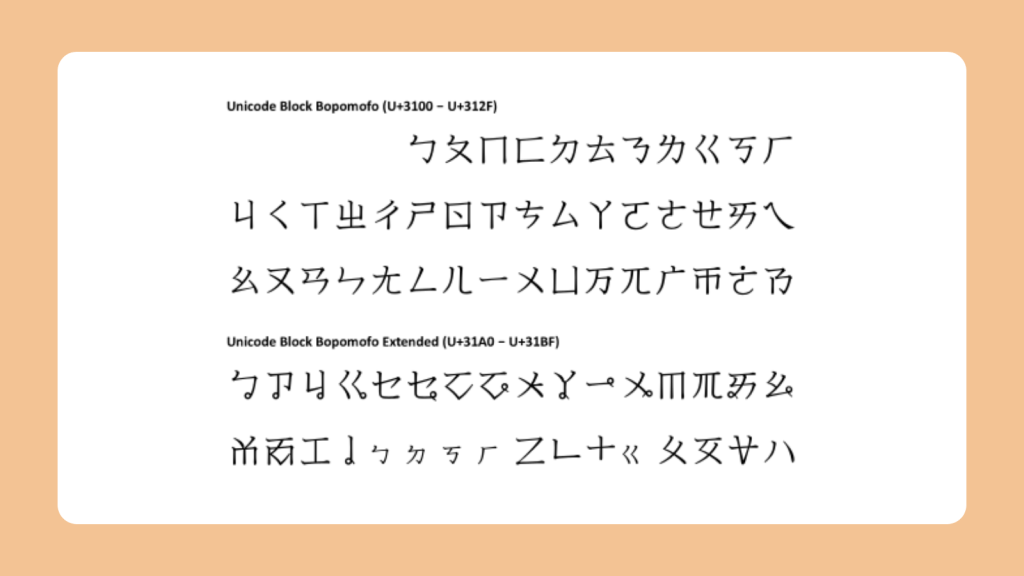
However, Bopomofo offers a more versatile solution. It has an extended version called “Extended Bopomofo” (注音符號擴展) that incorporates an additional 32 letters alongside the original set, resulting in a total of 69 letters. This expanded Bopomofo system is designed to encompass the pronunciation of various Sinitic languages, including Cantonese and Taiwanese Hokkien. It serves as a kind of international Sinitic phonetic alphabet, facilitating the accurate representation of different language variations.
8. You Won’t Be Bothered By All The Romanization Systems Used in Taiwan
It is not uncommon to hear complaints from foreigners living in Taiwan regarding the inconsistency of romanization in street names, city names, and other aspects. However, it’s important to understand that this issue doesn’t bother the locals as much because they do not rely on Pinyin. Hence, they don’t attach the same level of importance to the need for standardization. By switching to Bopomofo, you’ll come to realize that names like Taipei, Taichung, and Kaohsiung are simply city names that don’t necessarily require rigid conformity to a specific romanization standard.
Consider it this way: Would you prefer to call Los Angeles “The Angels” or refer to San Francisco as “Saint Francis”? These alternative renditions might not capture the true essence or history of the cities. Similarly, in Taiwan, embracing the local perspective allows you to appreciate the unique character and cultural heritage associated with the names as they are commonly used by the residents themselves. By adopting Bopomofo, you’ll gain a deeper understanding of the local language and culture, enriching your experience in Taiwan.
9. You Will Be Able to Use It As A Secret Language
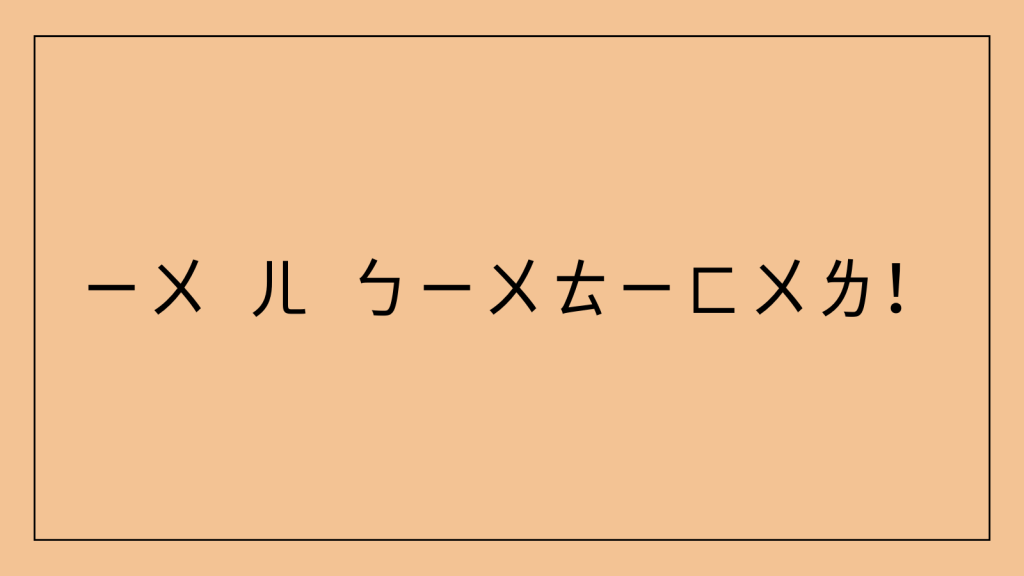
Bopomofo is frequently employed by Taiwanese netizens online as a means to discuss China without being understood by Chinese netizens, given that China ceased teaching Bopomofo 70 years ago. Furthermore, as Bopomofo is a phonetic alphabet, it has the potential to be utilized for writing other languages as well. This opens up the possibility of creating your own secret language by transcribing another language you are familiar with using Bopomofo.
To exemplify this, take a moment to read the following Bopomofo sentence. If you find it challenging to decipher, well, that serves as an additional incentive, making it your 10th reason to learn Bopomofo. This unique aspect of Bopomofo adds a layer of intrigue and creativity to your linguistic abilities, allowing for a new and exciting way to communicate and express yourself.
Bopomofo offers a range of compelling reasons for Mandarin Chinese learners to embrace this phonetic alphabet. Its distinct advantages, such as improved pronunciation accuracy, clear differentiation of syllable components, enhanced comprehension of poetry rhymes, and visual association with Chinese characters through ruby characters, make it a valuable tool for language acquisition. The widespread use of Bopomofo in Taiwan, including its integration in children’s books, newspapers, and everyday environments, further highlights its significance in language learning and cultural immersion. Additionally, Bopomofo’s versatility in transcribing various Sinitic languages and the potential for creating secret languages add an element of excitement and exploration to the learning process. By embracing Bopomofo, learners can unlock a new level of understanding, communication, and appreciation for the Chinese language and culture.
Join our Substack “Mandarin Zest“, where we regularly share intermediate to advanced Chinese learning content. Make sure to subscribe!
 Bubble Tea Island