

In this article, I will show you how to introduce your nationality and where you live in Chinese. We will cover some basic vocabulary and grammar, so you can start using these phrases right away. Let’s get started!
A summary of the vocabulary (with both Bopomofo and Pinyin) is available at the end of the article.
Introducing your nationality in Chinese
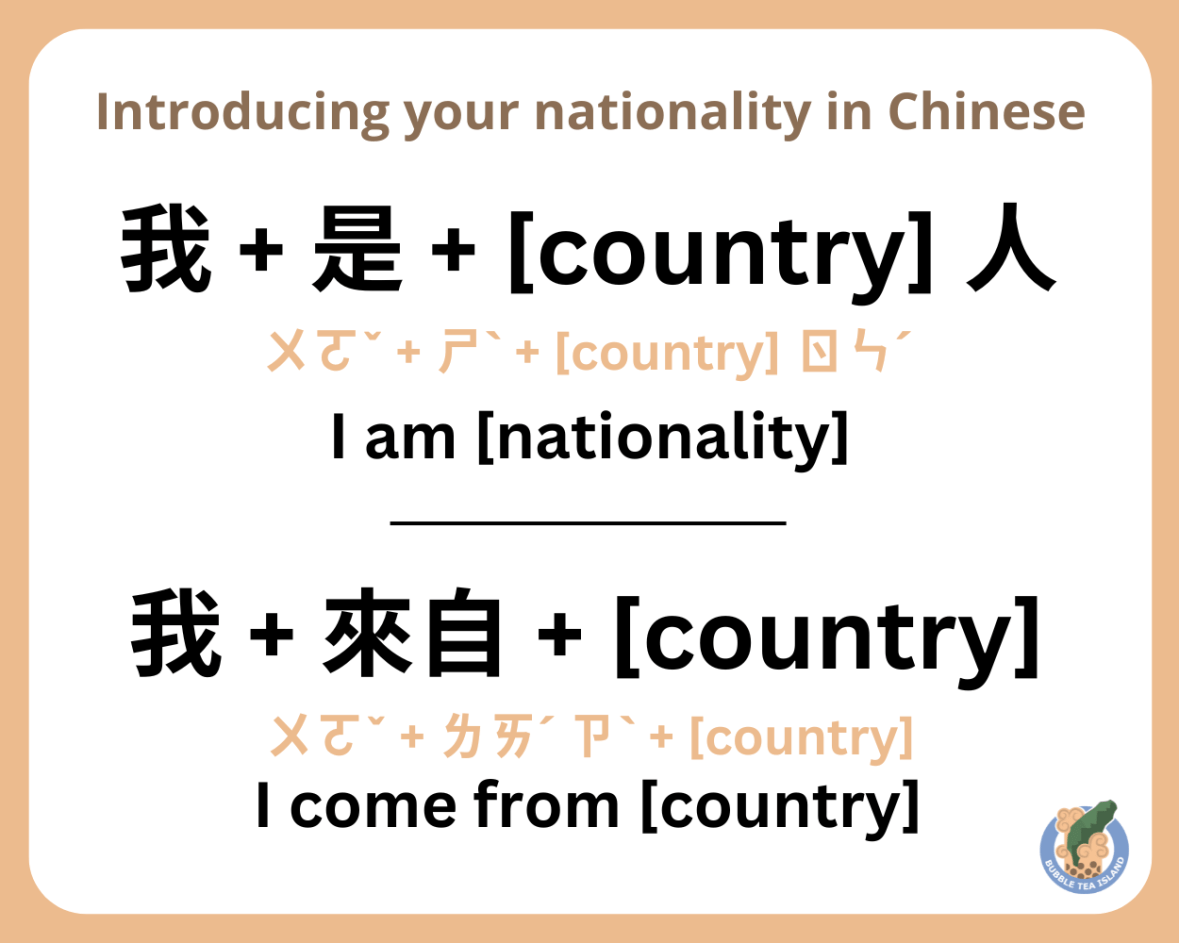
Introducing your nationality in Chinese is a great way to start conversations and connect with people from different parts of the world. Follow this simple structure to tell people your nationality:
我 + 是 + [country] 人 – (ㄨㄛˇ + ㄕˋ + [country] ㄖㄣˊ )
The character 人 means “person“. When it’s followed by the name of a country, it refers to a person from that country or their nationality.
For example:
我是美國人 (ㄨㄛˇ ㄕˋ ㄇㄟˇ ㄍㄨㄛˊ ㄖㄣˊ) – I am American.
我是台灣人 (ㄨㄛˇ ㄕˋ ㄊㄞˊ ㄨㄢ ㄖㄣˊ) – I am Taiwanese.
Note that you can also replace the country with a state or a city in you want to be more specific.
For example:
我是加州人 (ㄨㄛˇ ㄕˋ ㄐㄧㄚ ㄓㄡ ㄖㄣˊ) – I am Californian.
我是紐約人 (ㄨㄛˇ ㄕˋ ㄋㄧㄡˇ ㄩㄝ ㄖㄣˊ) – I am a New Yorker.
How to ask someone their nationality in Chinese?
If you want to ask someone about their nationality in Chinese, you can use this question:
你是哪國人? (ㄋㄧˇ ㄕˋ ㄋㄚˇ ㄍㄨㄛˊ ㄖㄣˊ ?)
This question literally means “Which country person are you?” and is a polite way to ask someone about their nationality.
Introducing where are you from in Chinese
In order to express where are you from (your origins) in Chinese, you can use the following sentence:
我 + 來自 + [country/ place] – (ㄨㄛˇ + ㄌㄞˊ ㄗˋ + [country/ place])
來自 literally means “come from”. It is used to express your country or city of origin.
For example:
我來自法國 (ㄨㄛˇ ㄌㄞˊ ㄗˋ ㄈㄚˇ ㄍㄨㄛˊ) – I am from France.
我來自台北 (ㄨㄛˇ ㄌㄞˊ ㄗˋ ㄊㄞˊ ㄅㄟˇ) – I am from Taipei.
This sentence structure can also be used to introduce your nationality, but it emphasizes your place of origin. If you were born in a different country than your nationality, you can use this sentence to express that.
For example:
我是美國人,但是我來自法國 (ㄨㄛˇ ㄕˋ ㄇㄟˇ ㄍㄨㄛˊ ㄖㄣˊ , ㄉㄢˋ ㄕˋ ㄨㄛˇ ㄌㄞˊ ㄗˋ ㄈㄚˇ ㄍㄨㄛˊ) – I am American, but I am originally from France.
Introducing where you live in Chinese
If you want to introduce where you live to someone, you can use the following common phrase:
我 + 住 + 在 + [place] – (ㄨㄛˇ + ㄓㄨˋ + ㄗㄞˋ + [place])
The character 住 means “to live,” while 在 is a preposition that means “in,” “at,” or “on.”
Here are a few examples:
我住在台中 (ㄨㄛˇ ㄓㄨˋ ㄗㄞˋ ㄊㄞˊ ㄓㄨㄥ) – I live in Taichung.
我住在美國 (ㄨㄛˇ ㄓㄨˋ ㄗㄞˋ ㄇㄟˇ ㄍㄨㄛˊ) – I live in the US.
How to ask someone where they live in Chinese?
If you want to ask someone where they live, you can use the following question:
你住在哪裡? (ㄋㄧˇ ㄓㄨˋ ㄗㄞˋ ㄋㄚˇ ㄌㄧˇ ?)
The Chinese term 哪裡 means “where.” The question literally translates to “You live where?”
List of countries in Chinese
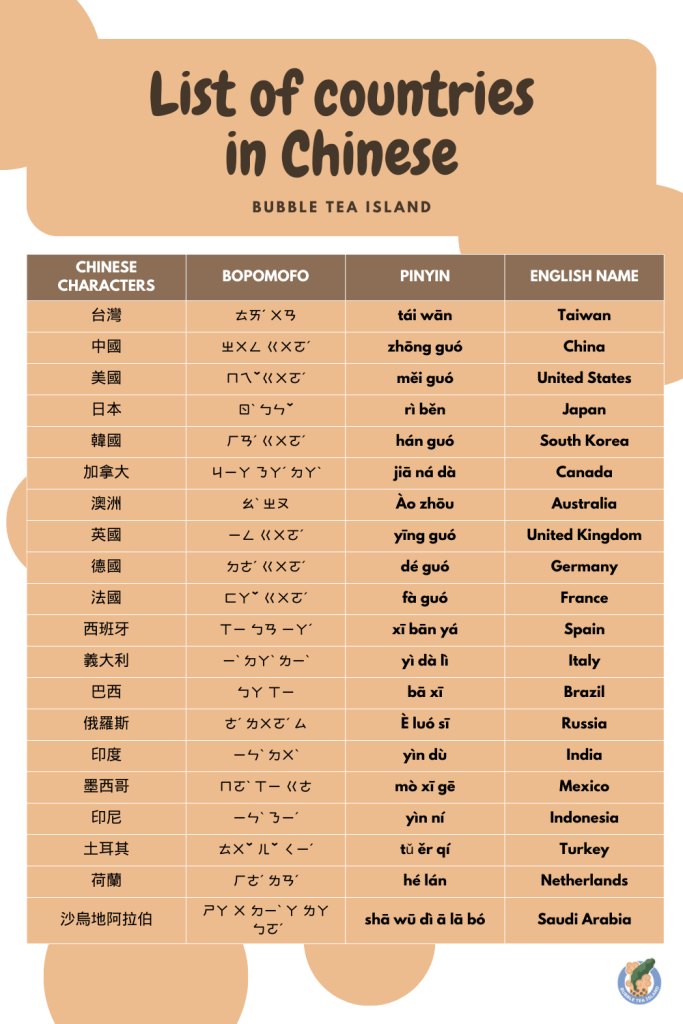
Here is a short list of common countries in Chinese, including their Bopomofo, Pinyin, and Chinese characters:
Summary of the vocabulary
| Chinese Characters | Bopomofo | Pinyin | English |
|---|---|---|---|
| 人 | ㄖㄣˊ | rén | Person |
| 哪 | ㄋㄚˇ | nǎ | Which |
| 來自 | ㄌㄞˊ ㄗˋ | lái zì | Come from |
| 但是 | ㄉㄢˋ ㄕˋ | dàn shì | But |
| 住 | ㄓㄨˋ | zhù | To live |
| 在 | ㄗㄞˋ | zài | In, at, on |
| 哪裡 | ㄋㄚˇ ㄌㄧˇ | nǎ lǐ | Where |
By stating your nationality and where you live, you can immediately establish a connection with your Taiwanese or Chinese counterparts and spark conversations about your background and experiences.

Join our Substack “Mandarin Zest“, where we regularly share intermediate to advanced Chinese learning content. Make sure to subscribe!
 Bubble Tea Island