
Learning Chinese can be an exciting and immersive experience, especially when you combine it with activities you enjoy. One such activity that can accelerate your learning while having fun is playing Mahjong (麻將), a traditional Chinese game enjoyed by people across the Chinese-speaking world. Not only will you learn key vocabulary and phrases, but you’ll also get a deeper understanding of Chinese culture.
Why Learn Chinese by Playing Mahjong?
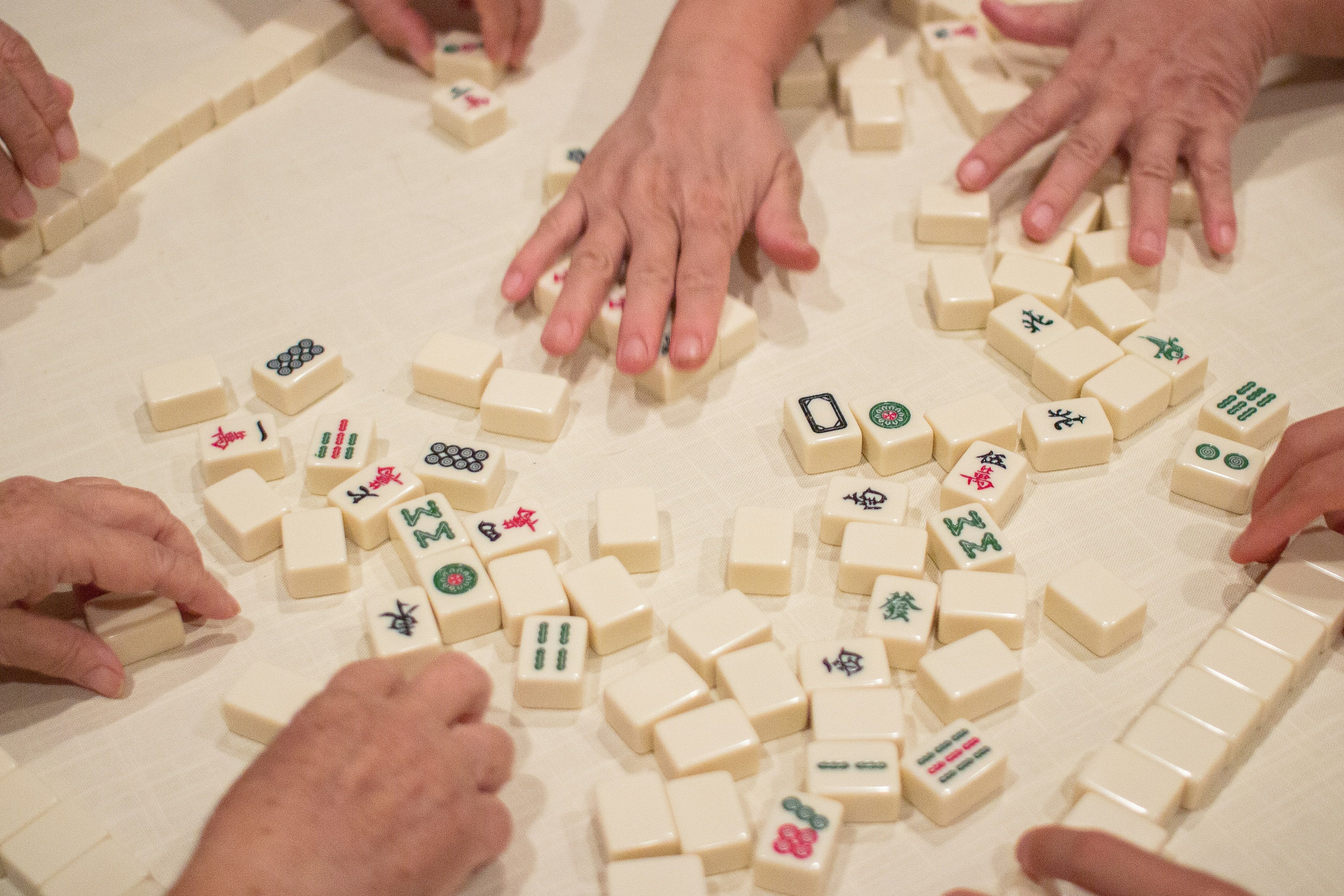
Learning Chinese by playing Mahjong is effective because it combines language learning with a social, engaging activity. Mahjong, a game that dates back to the Qing Dynasty, involves using a set of 144 tiles, and the gameplay includes drawing, discarding, and forming specific combinations. Whether you’re playing with Chinese-speaking friends or using an app, the game offers a practical way to use Chinese in context.
For beginners, Mahjong introduces key concepts like numbers and basic actions (such as drawing or discarding tiles), which form the foundation of your Chinese vocabulary. More advanced players will be exposed to even richer vocabulary as they advance in the game, including the specific terminology used to describe various actions and strategies.
Basic Vocabulary for Learning Chinese Through Mahjong
To get started, let’s look at some essential vocabulary that you’ll encounter in a game of Mahjong. Whether you’re using simplified or traditional Chinese characters, knowing these terms will help you communicate and understand the game.
Numbers (1-9)
Mahjong involves a lot of counting, especially when you’re dealing with tiles from different suits. Here’s how you say the numbers in Chinese:
| Chinese | Bopomofo | Pinyin | English Meaning |
|---|---|---|---|
| 一 | ㄧ | yī | one |
| 二 | ㄦˋ | èr | two |
| 三 | ㄙㄢ | sān | three |
| 四 | ㄙˋ | sì | four |
| 五 | ㄨˇ | wǔ | five |
| 六 | ㄌㄧㄡˋ | liù | six |
| 七 | ㄑㄧ | qī | seven |
| 八 | ㄅㄚ | bā | eight |
| 九 | ㄐㄧㄡˇ | jiǔ | nine |
General Game Vocabulary
| Chinese | Bopomofo | Pinyin | English Meaning |
|---|---|---|---|
| 洗牌 | ㄒㄧˇ ㄆㄞˊ | xǐpái | shuffle tiles |
| 出牌 | ㄔㄨ ㄆㄞˊ | chūpái | play a tile |
| 摸牌 | ㄇㄛ ㄆㄞˊ | mōpái | draw a tile |
| 自摸 | ㄗˋ ㄇㄛ | zìmō | to draw a tile yourself (often to win) |
| 和了 | ㄏㄨˊ ㄌㄜ˙ | húle | I’ve won! |
Tiles and Suits
There are several types of tiles in Mahjong, and each has a name that you’ll need to recognize:
| Chinese | Bopomofo | Pinyin | English Meaning |
|---|---|---|---|
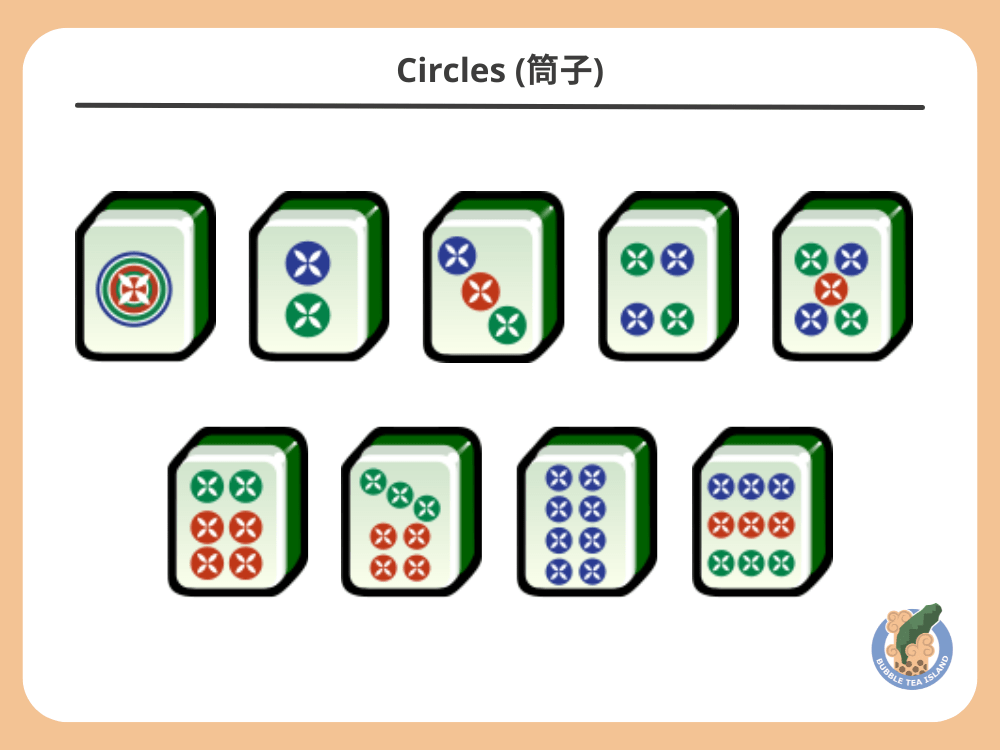
| 筒 | ㄊㄨㄥˇ | tǒng | circle (suite) |
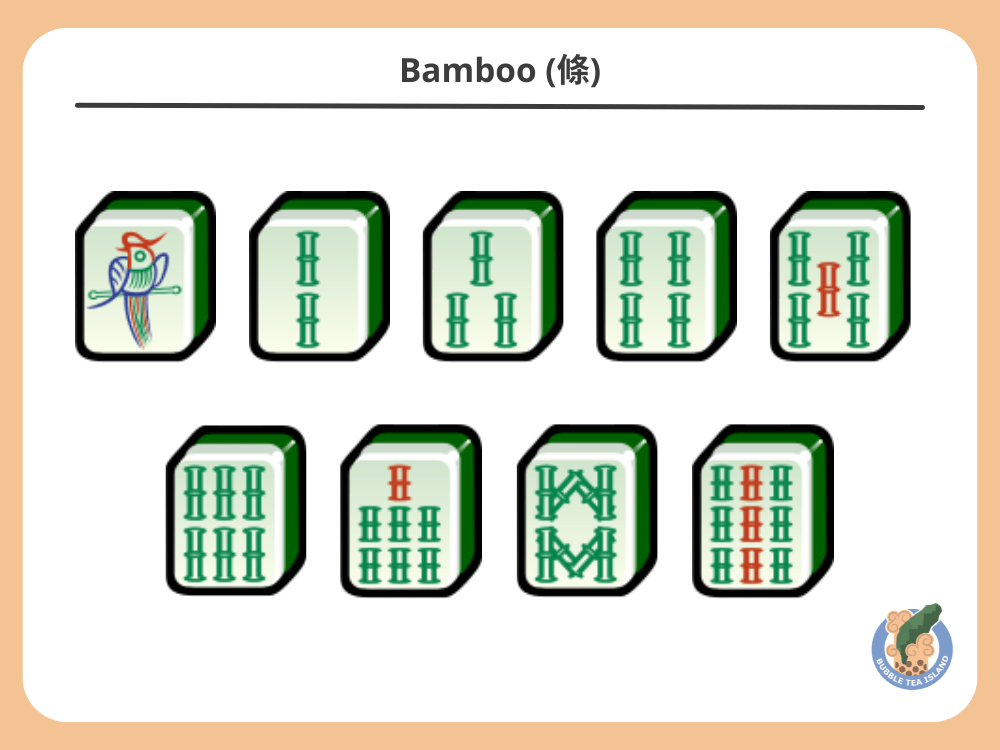
| 條 | ㄊㄧㄠˊ | tiáo | bamboo (suite) |
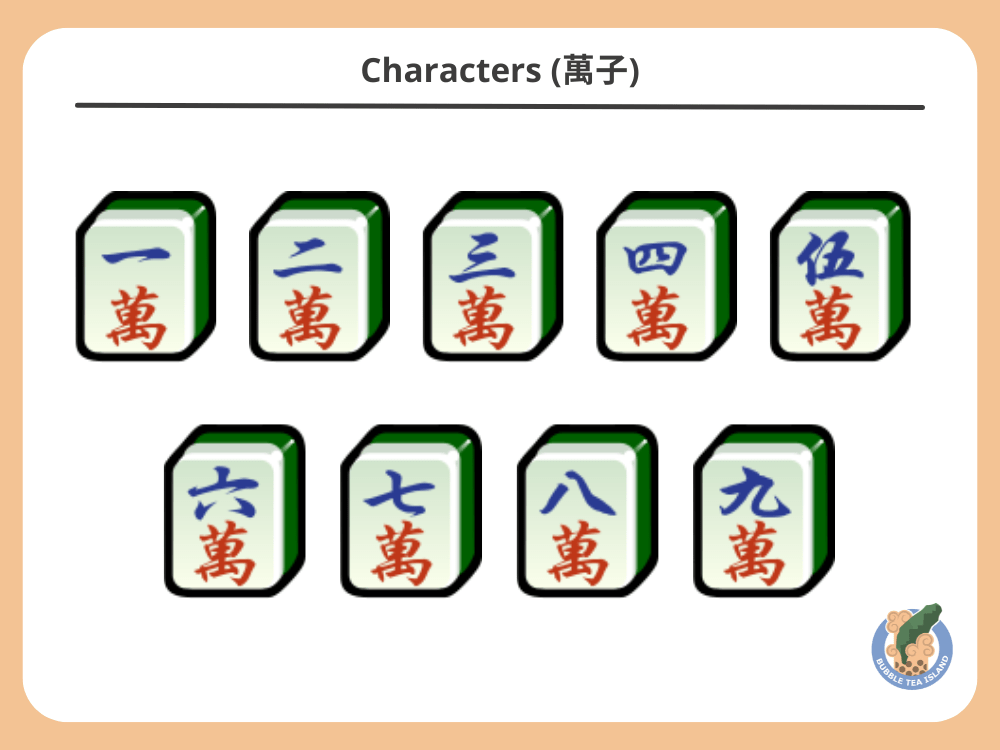
| 萬 | ㄨㄢˋ | wàn | characters (suite) |
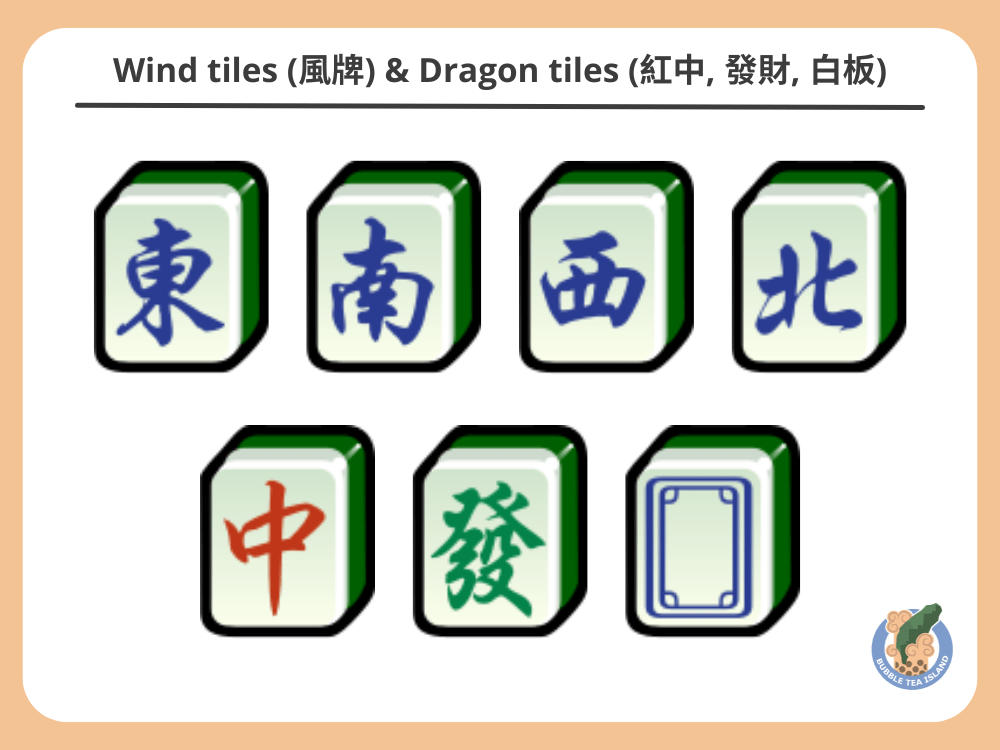
| 東風 | ㄉㄨㄥ ㄈㄥ | dōngfēng | east wind |
| 南風 | ㄋㄢˊ ㄈㄥ | nánfēng | south wind |
| 西風 | ㄒㄧ ㄈㄥ | xīfēng | west wind |
| 北風 | ㄅㄟˇ ㄈㄥ | běifēng | north wind |
| 紅中 | ㄏㄨㄥˊ ㄓㄨㄥ | hóngzhōng | red dragon |
| 發財 | ㄈㄚ ㄘㄞˊ | fācái | green dragon |
| 白板 | ㄅㄞˊ ㄅㄢˇ | báibǎn | white dragon |
Bonus Tiles
Bonus tiles add a fun element to the game:
| Chinese | Bopomofo | Pinyin | English Meaning |
|---|---|---|---|
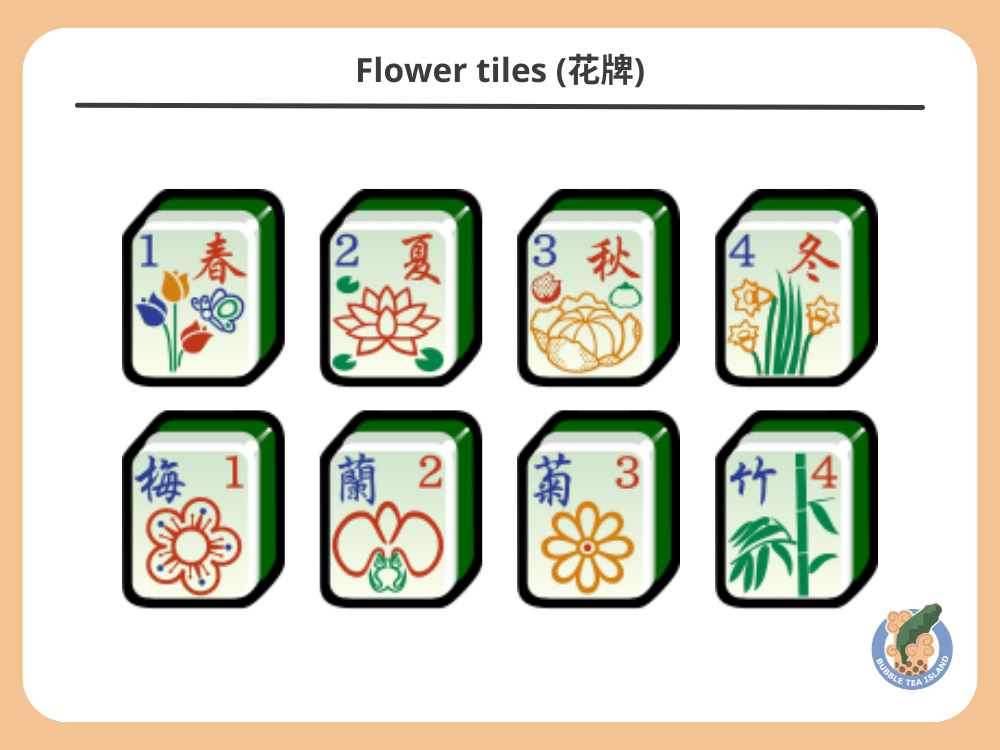
| 春 | ㄔㄨㄣ | chūn | spring |
| 夏 | ㄒㄧㄚˋ | xià | summer |
| 秋 | ㄑㄧㄡ | qiū | autumn |
| 冬 | ㄉㄨㄥ | dōng | winter |
| 梅 | ㄇㄟˊ | méi | plum blossom |
| 蘭 | ㄌㄢˊ | lán | orchid |
| 菊 | ㄐㄩˊ | jú | chrysanthemum |
| 竹 | ㄓㄨˊ | zhú | bamboo |
How Playing Mahjong Helps You Learn Chinese
- Repetition and Practice: Mahjong involves repeated actions, such as calling out tiles, discarding, and drawing. By doing this, you will reinforce the vocabulary you learn, helping to solidify it in your memory.
- Contextual Learning: The best way to retain a new language is by using it in context. Playing Mahjong offers a great opportunity to practice new words and phrases in a meaningful and practical setting. Instead of memorizing vocabulary from a list, you’ll be learning in the context of a real activity.
- Social Interaction: One of the greatest benefits of Mahjong is that it’s often played in a social setting, either with friends or family. This creates opportunities for more casual, conversational practice as people chat while playing. This real-time communication will help you learn natural phrasing and expressions used in daily life.
Basic Rules of Mahjong
Objective:
The goal of Mahjong is to form a complete hand consisting of four sets and one pair. A set is either three identical tiles (Pong) or three consecutive tiles of the same suit (Chi), and a pair consists of two identical tiles (often called eyes). To win, a player must complete their hand and shout “Mahjong!”
The Mahjong Set
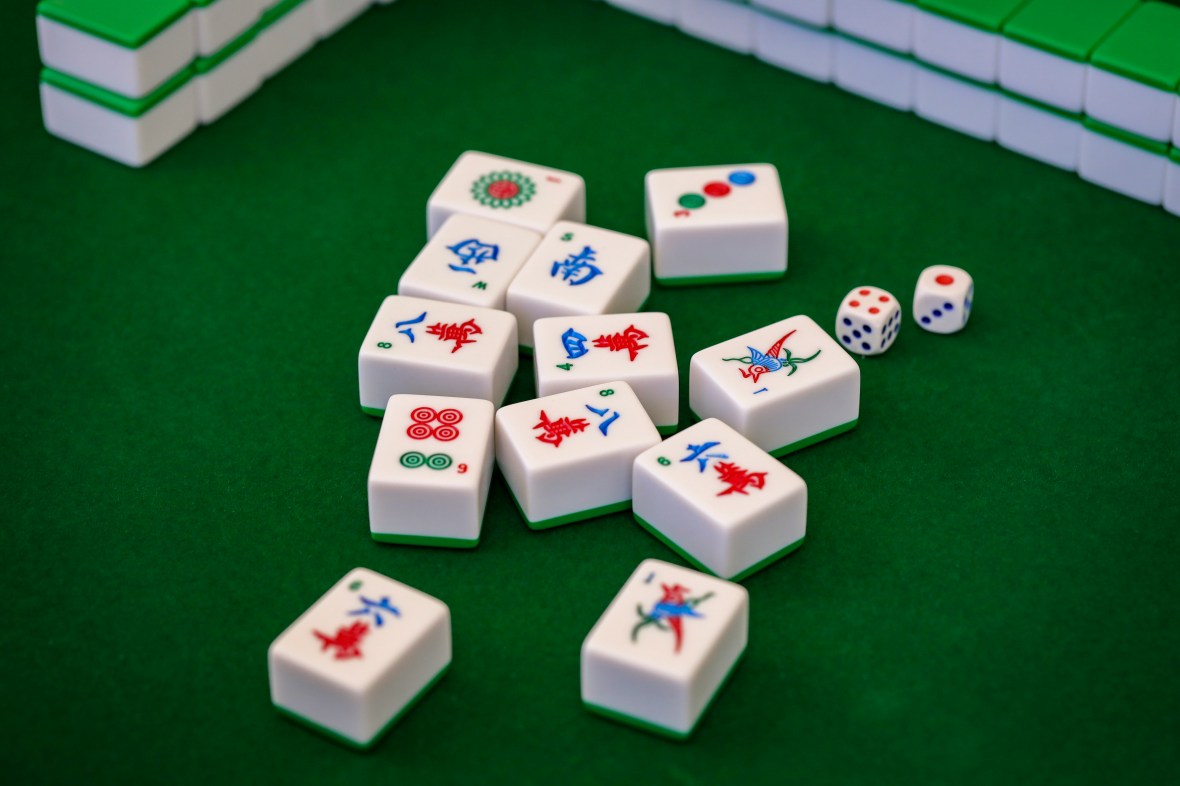
A complete Mahjong set includes 144 tiles, with various categories:
- Suits:
- Circles (筒子): Tiles numbered 1-9 in a circle pattern.
- Bamboos (條子): Tiles numbered 1-9 with a bamboo design.
- Characters (萬子): Tiles numbered 1-9 with Chinese characters.
- Honor Tiles:
- Wind Tiles (風牌): East (東), South (南), West (西), North (北).
- Dragon Tiles (箭牌): Red (紅中), Green (發財), White (白板).
- Bonus Tiles:
- Flower Tiles (花牌): Four types of flower tiles.
- Season Tiles (季節牌): Four types of season tiles.
Setting Up the Game
- Players: Mahjong is typically played with four players, each assigned a wind direction (East, South, West, North).
- Dice Roll: Players roll the dice to determine the dealer. The player with the highest roll becomes the dealer (East).
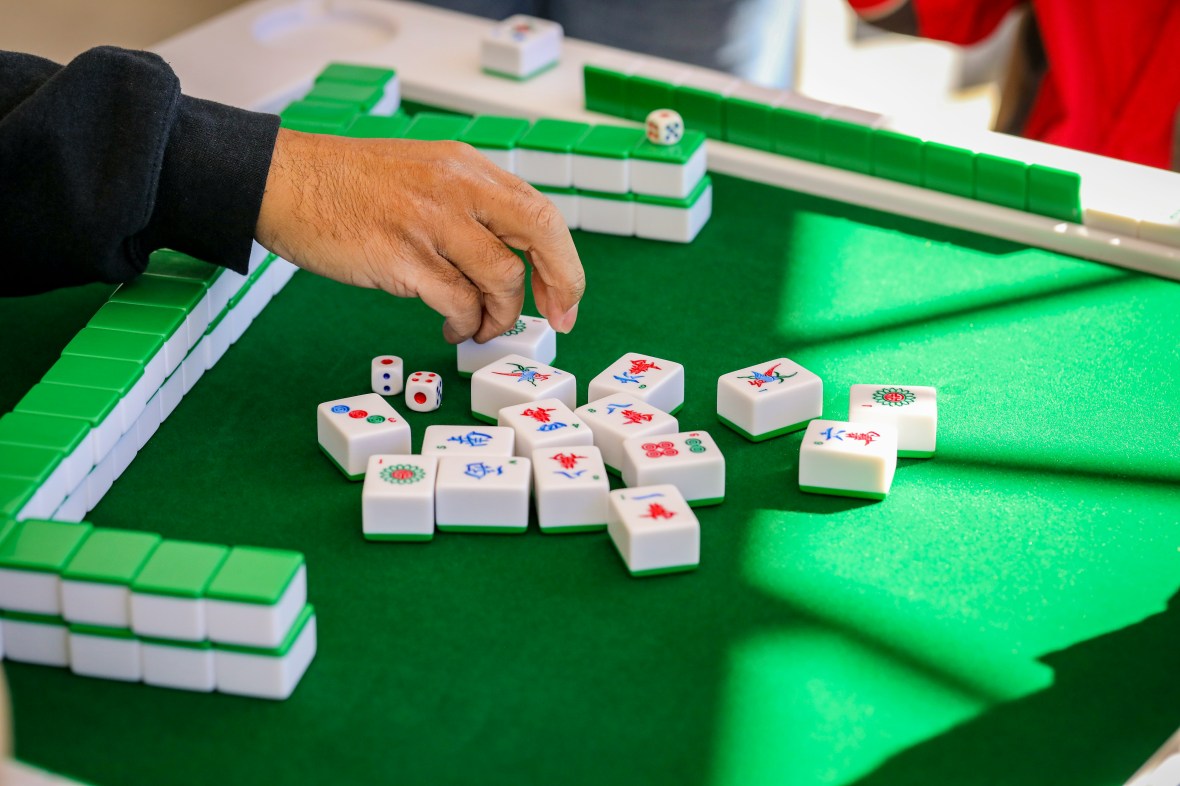
- Wall Setup: Players shuffle the tiles face down and form a wall (a 17-tile long stack for each player).
- Drawing Tiles: The dealer draws 14 tiles while the other players draw 13 tiles.
- Game Start: The dealer discards one tile, and the game begins. The player to the right of the dealer starts.
Playing the Game
- Taking Turns: Players take turns in a clockwise direction. Each turn consists of two steps:
- Draw: A player draws a tile, either from the wall (the remaining stack of tiles) or by claiming a discarded tile from another player.
- Discard: After drawing, the player must discard a tile from their hand.
- Making Sets: During their turn, players can form the following sets:
- Pong (碰): Three identical tiles. A player may claim a discarded tile to complete a Pong.
- Chi (吃): A sequence of three consecutive tiles from the same suit. Players can only claim discarded tiles from the player directly to their left to form a Chi.
- Gang (杠): Four identical tiles. A player can claim a discarded tile to complete a Gang if they already have a Pong.
- Claiming Discards: A player can claim a discarded tile and call out the appropriate word:
- Pong! (碰): When forming a set of three identical tiles.
- Chi! (吃): When forming a sequence of three consecutive tiles of the same suit.
- Gang! (杠): When forming a set of four identical tiles.
- Ending the Game: A player wins when they complete their hand with four sets and a pair and calls out “Mahjong!” They must have formed their hand with tiles either from their own draws or by claiming discarded tiles.
Winning the Game
To win the game (and call “Mahjong!”), a player must have a complete hand with:
- Four sets: These could be a combination of Pongs, Chis, or Kongs.
- One pair: Two identical tiles that form the pair (also called eyes).
Scoring
Scoring varies by regional rules, but generally, players earn points based on:
- Complete Hand: The hand formed by four sets and a pair.
- Special Hands: Certain hands, such as a pure hand (using only one suit), may give additional points.
- Bonus Tiles: If a player has flower or season tiles, they may earn extra points.
How to Get Better at Playing Mahjong and Learning Chinese
To improve both your Mahjong skills and Chinese vocabulary, here are a few tips:
- Play with Native Speakers: The best way to learn Mahjong and Chinese at the same time is to play with native speakers. As you play, try to follow the conversation and pick up words and phrases they use. Don’t be afraid to ask questions or have them slow down if you’re unsure about something.
- Use Mahjong Apps: If you don’t have anyone to play with, there are plenty of Mahjong apps available that can help you practice. These apps often include instructions and translations, making them a great tool for learning both the game and the language.
- Learn the Variations: Different regions have their own variations of Mahjong. If you play with people from different parts of the Chinese-speaking world, you may encounter different rules and terminology. This diversity will expose you to even more vocabulary and cultural nuances.
Learning Chinese by playing Mahjong is an effective and enjoyable way to immerse yourself in the language. The game’s repeated use of essential vocabulary, social context, and opportunity for real-life practice makes it a fun and rewarding activity for Chinese learners of all levels. So next time you have a chance, grab a Mahjong set, invite some friends, and start learning Chinese while playing this classic game!
Join our Substack “Mandarin Zest“, where we regularly share intermediate to advanced Chinese learning content. Make sure to subscribe!
 Bubble Tea Island
What a great article! My friend from Taiwan taught me Mahjong a few years ago and I will be forever grateful. Our group has grown, and I show new players the game all the time. We love this way to play – the original way. One player is from Beijing and I would love to surprise her by saying the words in her native language. Thank you again!
LikeLike
Glad you liked it! Mahjong is such a fun game, and it’s even nicer when you can play it in Chinese 🙂
LikeLike