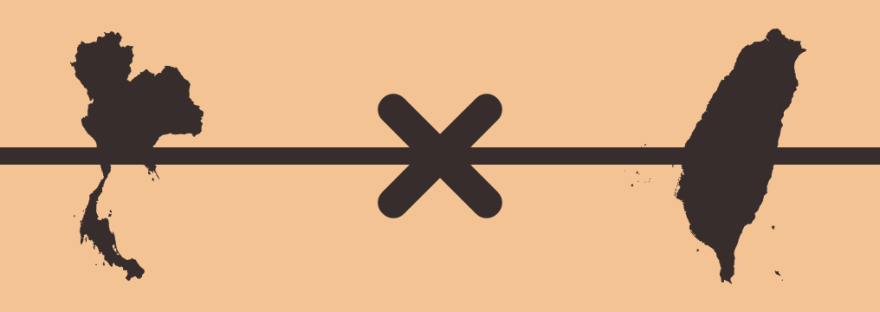
When it comes to Asia, two countries that are often confused due to their similar-sounding names are Taiwan and Thailand. Despite this similarity, the two nations are distinct in many ways, including geography, culture, language, and government. In this article, we’ll explore the differences between Taiwan and Thailand to help you better understand these unique destinations. Whether you’re planning to visit or simply want to learn more, this comprehensive guide will highlight key facts and insights.
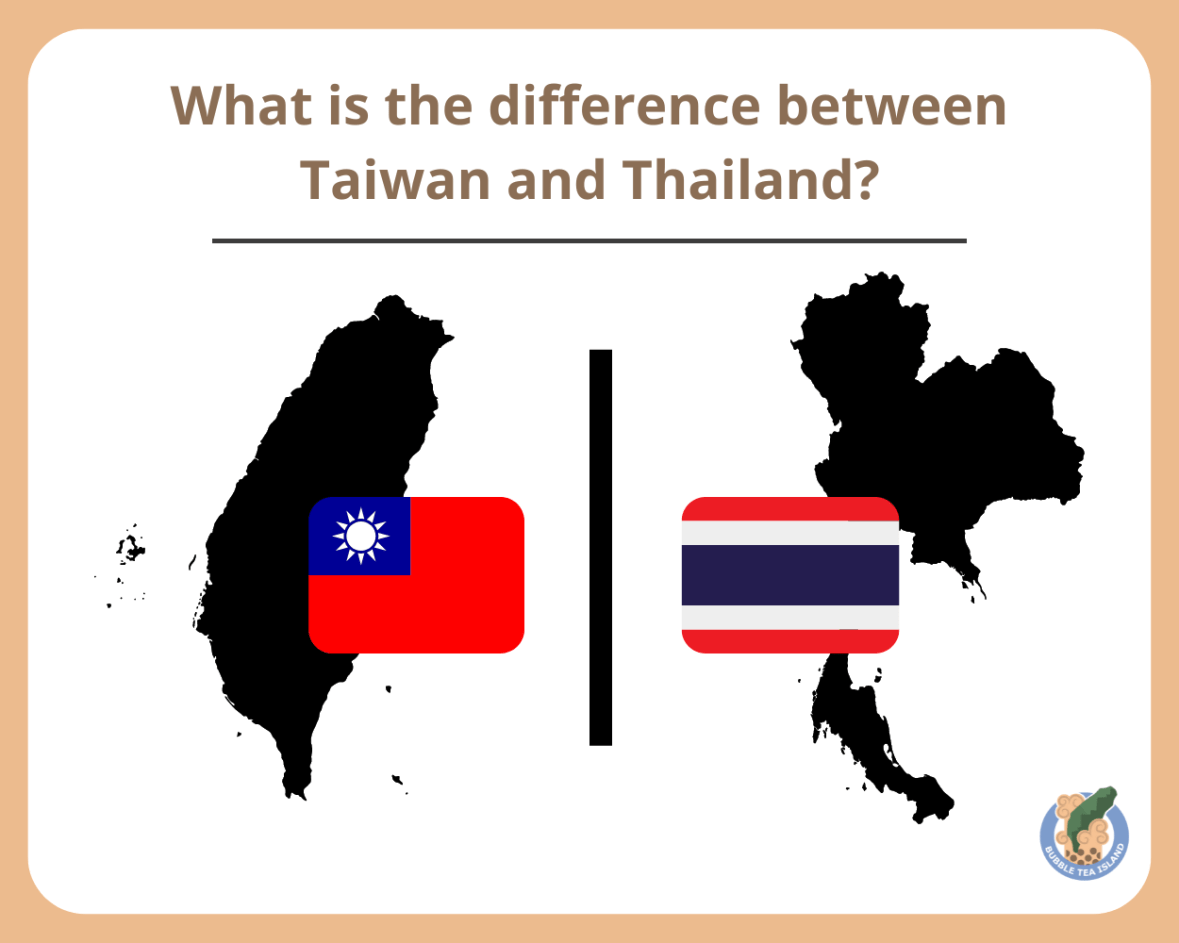
Taiwan vs. Thailand in a Nutshell
While Taiwan and Thailand share a similar “tai” sound in their names, they are vastly different in culture, geography, and history. Here’s a quick overview of the main differences between these two fascinating countries:
| Difference | Taiwan | Thailand |
|---|---|---|
| Official Name | Republic of China | Kingdom of Thailand |
| Official Language | Mandarin Chinese | Thai |
| Most Known For | TSMC, High-Tech Manufacturing | Beaches, Thai Food |
| Currency | New Taiwan Dollar (TWD) | Thai Baht (THB) |
| Government Type | Democracy | Constitutional Monarchy |
| Population | 23 million | 71.9 million |
| Capital City | Taipei | Bangkok |
| Climate | Subtropical | Tropical |
| Popular Cuisine | Beef Noodle Soup, Gua Bao, Lu Rou Fan | Pad Thai, Tom Yum Goong, Green Curry |
| Driving Side | Right | Left |
| Power Plugs & Sockets | Type A, B | Type A, B, C, F |
| Calling Code | +886 | +66 |
Geography and Location
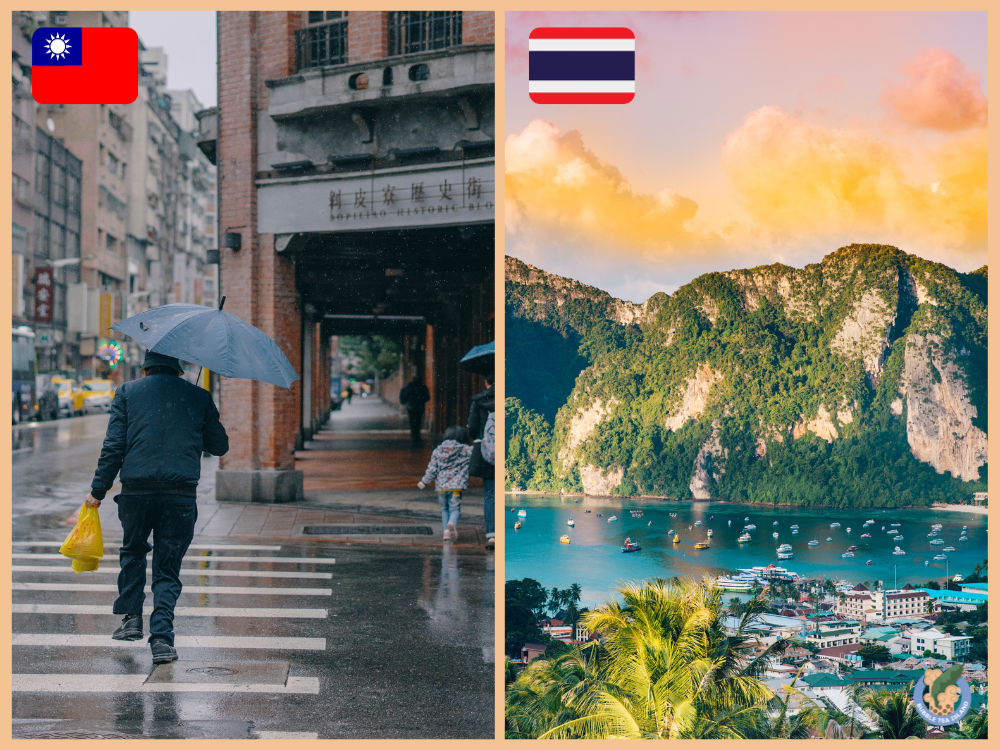
Taiwan and Thailand are both located in Asia, but they are in different regions, offering vastly different landscapes and geographical experiences.
- Taiwan: Situated off the southeastern coast of mainland China, Taiwan is an island nation in East Asia. It is known for its mountainous terrain, which makes it a haven for outdoor enthusiasts. The island’s total land area is approximately 36,000 square kilometers.
- Thailand: Located on the Indochinese Peninsula in Southeast Asia, Thailand shares borders with Myanmar, Laos, Cambodia, and Malaysia. Thailand is a larger country with a total land area of around 513,000 square kilometers, making it nearly 14 times bigger than Taiwan.

Climate and Seasons
The climate in Taiwan and Thailand varies significantly, offering different experiences for travelers depending on the time of year.
- Taiwan: Taiwan has a subtropical climate, characterized by distinct seasons. Summers can be hot and humid, with occasional typhoons, while winters are relatively mild. Spring and autumn are considered the best times to visit due to pleasant temperatures.
- Thailand: Thailand enjoys a tropical climate, with high humidity and temperatures year-round. It has three main seasons:
- Hot season (March-May) with soaring temperatures.
- Rainy season (June-October), characterized by heavy rains.
- Cool season (November-February), when temperatures are milder and tourism peaks.
Capital Cities: Taipei & Bangkok
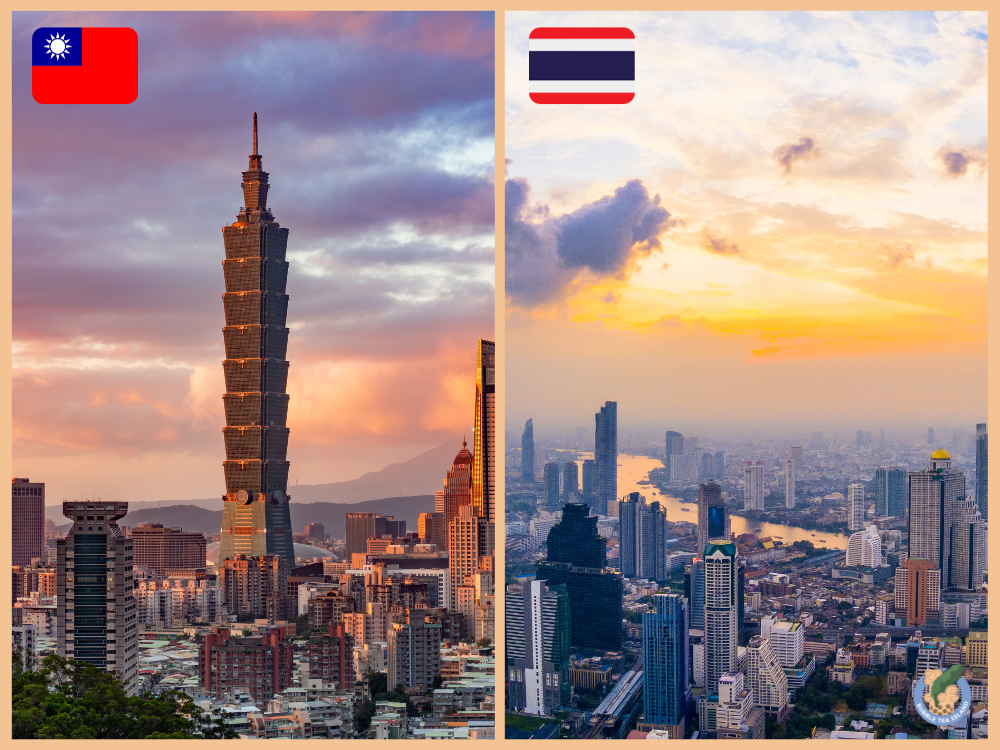
Both Taipei (Taiwan) and Bangkok (Thailand) serve as bustling capitals, but they offer different urban experiences.
- Taipei: The capital of Taiwan is known for its modern skyline, including the famous Taipei 101 skyscraper, once the tallest building in the world. The city offers a blend of tradition and innovation, with rich cultural attractions like night markets, historical temples, and museums.
- Bangkok: As the capital of Thailand, Bangkok is a vibrant metropolis known for its dynamic nightlife, historic temples, and modern shopping malls. The Chao Phraya River runs through the city, adding a scenic dimension to the urban landscape. Visitors can explore a mixture of ancient culture and contemporary living.
Population & Demographics
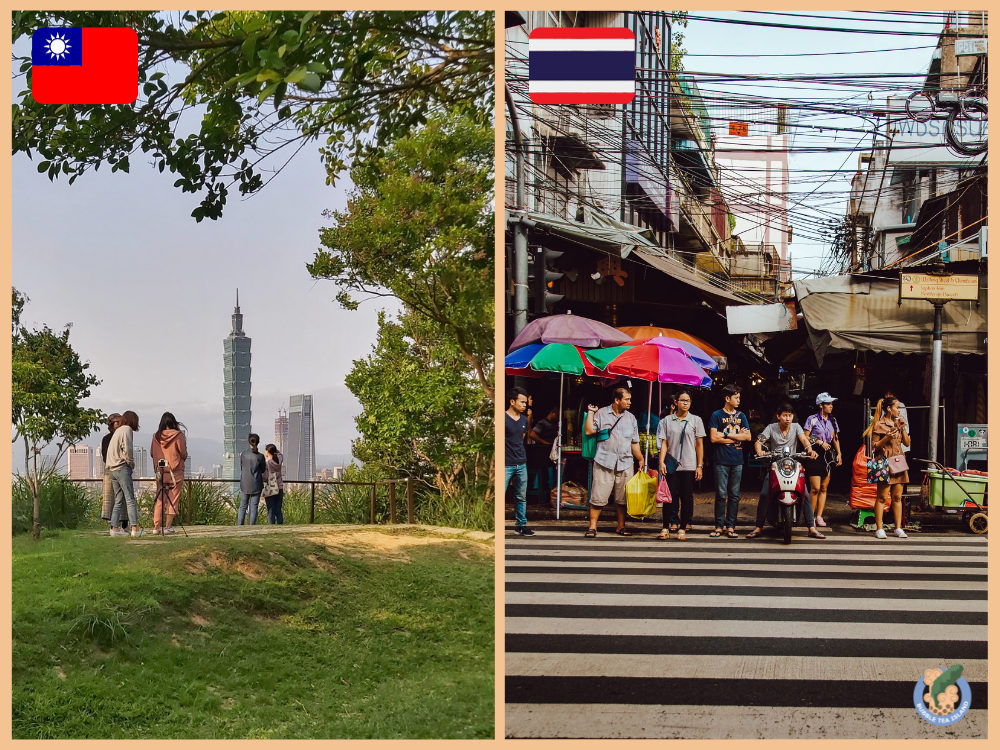
Taiwan and Thailand also differ in terms of population size and density, with Thailand having a larger population.
- Taiwan: The population is about 23 million people, with most residents living in urban areas. Taiwan has a relatively high population density, especially in cities like Taipei and Kaohsiung.
- Thailand: With a population of approximately 70 million people, Thailand has a larger population that is more spread out due to its vast rural areas. While Bangkok is the largest urban center, Thailand also has significant rural and agricultural regions.
Languages Spoken
The official language spoken in each country is very different, which can be an essential factor for travelers and expats.
- Taiwan: The official language is Mandarin Chinese, although Taiwanese and Hakka are also widely spoken. English is increasingly common in urban areas but is less widely understood in rural regions.
- Thailand: Thai is the official language, and it is the primary language spoken by the majority of the population. English is also taught in schools, but it’s more commonly spoken in tourist areas and major cities like Bangkok.
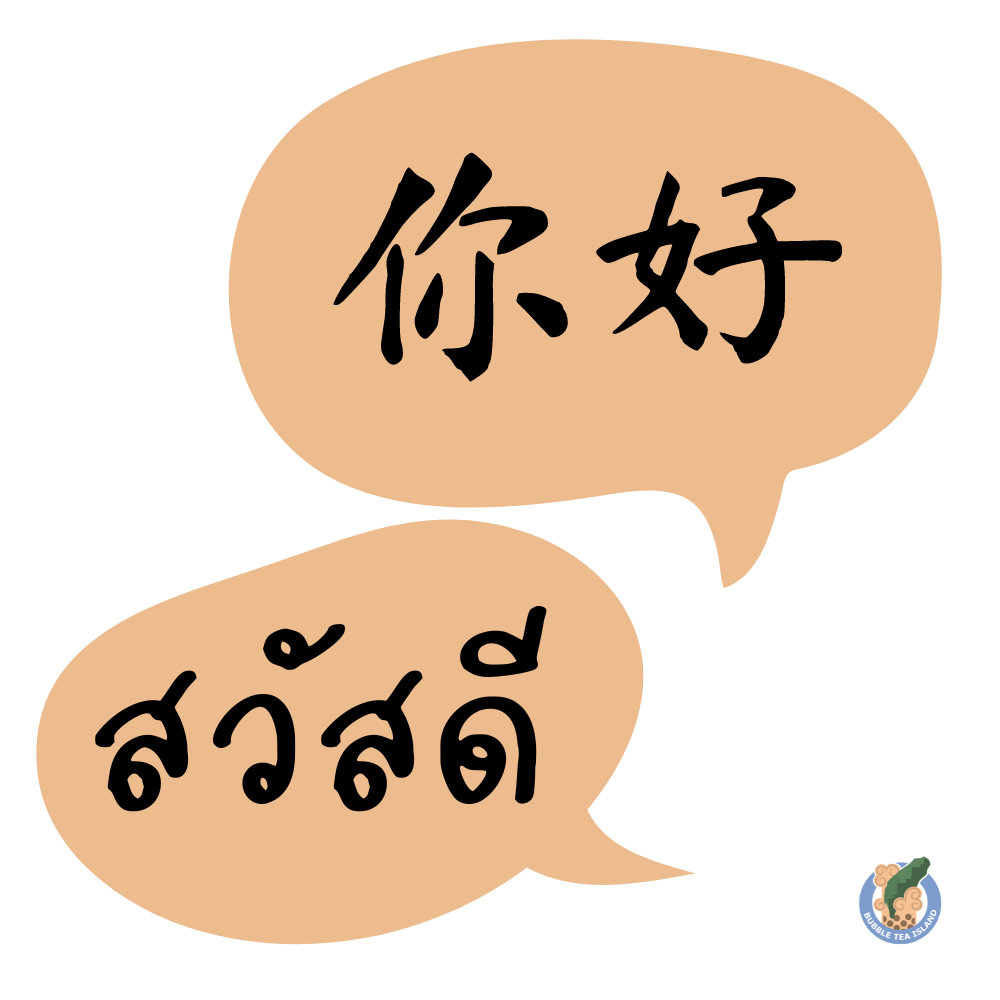
Hello in Mandarin Chinese: 你好 (Nǐ hǎo)
Hello in Thai: สวัสดี (S̄wạs̄dī)
| English | Mandarin Chinese | Thai |
|---|---|---|
| Hello | 你好 (Nǐ hǎo) | สวัสดี (S̄wạs̄dī) |
| Goodbye | 再見 (Zài jiàn) | ลาก่อน (Lā k̀xn) |
| Taiwan | 台灣 (Tái wān) | ไต้หวัน (Tị̂h̄wạn) |
| Thailand | 泰國 (Tài guó) | ประเทศไทย (Pratheṣ̄thịy) |
Culture and Religion
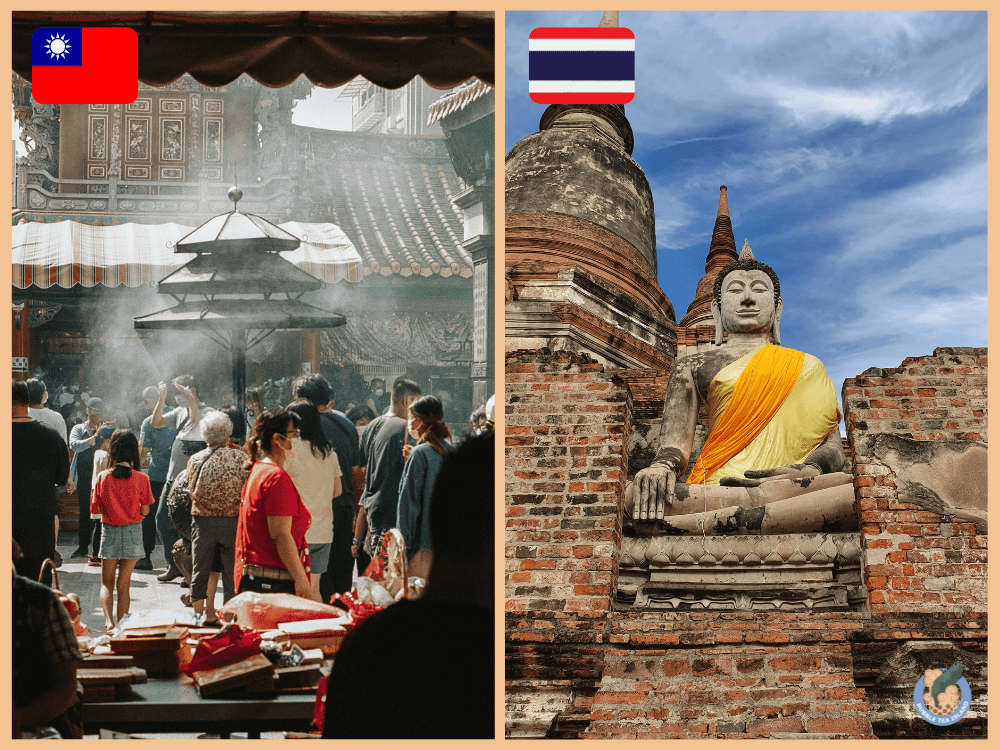
The cultures of Taiwan and Thailand are both influenced by their respective histories, but they have distinct differences in religious practices and customs.
- Taiwan: Taiwanese culture has been shaped by centuries of Chinese influence, with a mix of indigenous, Japanese, and Chinese traditions. Religion in Taiwan is diverse, with many people practicing Buddhism, Taoism, and Confucianism. Food plays a significant role in daily life, with Taiwanese cuisine known for its night markets and street foods.
- Thailand: Thailand’s culture is predominantly influenced by Buddhism, and the country is home to over 30,000 Buddhist temples (Wats). The culture also reflects Chinese and Indian influences. Thai cuisine is internationally recognized for its balance of sweet, sour, salty, and spicy flavors.
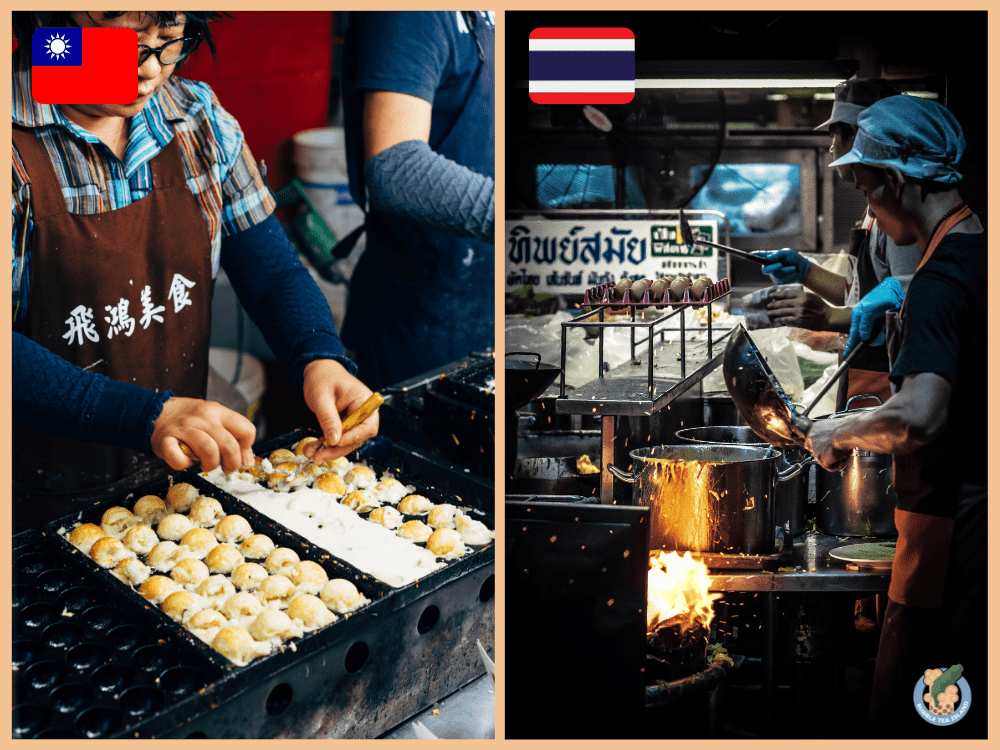
Cuisine and Street Food
Both Taiwan and Thailand are famous for their vibrant street food scenes, each offering distinct flavors and culinary experiences.
- Taiwanese Cuisine: Taiwan is known for its diverse food scene, including xiao long bao (soup dumplings), beef noodle soup, stinky tofu, and bubble tea. The island’s cuisine reflects a mix of Chinese, indigenous, and Japanese influences.
- Thai Cuisine: Thai food is renowned for its bold flavors. Signature dishes include pad Thai, green curry, tom yum soup, and mango sticky rice. Thai cuisine is especially noted for its use of fresh herbs and spices such as lemongrass, galangal, and chili peppers.
Travel and Tourism
While both Taiwan and Thailand attract millions of tourists each year, they are famous for different types of attractions.
- Taiwan: Known for its scenic landscapes, Taiwan offers stunning natural beauty, such as Taroko Gorge, Sun Moon Lake, and Alishan National Scenic Area. The island also has a rich cultural heritage, with historical temples, night markets, and modern cities like Taipei.
- Thailand: Famous for its pristine beaches and islands like Phuket, Pattaya, and Koh Samui, Thailand is a top destination for beach lovers. In addition, the country is home to world-renowned temples and vibrant cities like Bangkok, which offer a mix of cultural experiences, shopping, and nightlife.
Politics and Governments
Taiwan and Thailand have very different political systems, reflecting their unique histories.
- Taiwan: Taiwan is a democratic republic with a multiparty system. The country is known for its free elections, a presidential system, and a strong emphasis on human rights. Taiwan’s political landscape is shaped by its complicated relationship with China.
- Thailand: Thailand is a constitutional monarchy, where the king serves as the ceremonial head of state, and the Prime Minister is the head of government. The country has experienced political instability and military coups in its history, leading to intermittent civilian and military rule.

Taiwan and Thailand are both beautiful countries with unique characteristics. Taiwan is an island nation with a smaller land area, Mandarin Chinese as its primary language, and a focus on technology and outdoor experiences. Thailand, on the other hand, is a larger country with tropical beaches, Buddhist temples, and a rich culinary tradition. Understanding these differences can help you choose which country aligns with your travel interests and cultural preferences.
By learning about these distinctions, you will be better prepared to appreciate the unique experiences each destination has to offer.
FAQs
Why are Taiwan and Thailand often confused?
Taiwan and Thailand share a similar phonetic similarity in their names, especially with the “tai” sound. However, they are distinct countries with unique cultures, languages, and histories. Taiwan is officially the Republic of China, while Thailand is the Kingdom of Thailand.
Is Thailand Richer Than Taiwan?
No, Taiwan is wealthier than Thailand. In 2021, Taiwan’s GDP reached $774.7 billion, while Thailand’s was $505.9 billion. This indicates that Taiwan has a higher overall economic output, largely driven by its high-tech industry and export-driven economy.
Is Taiwan Cheaper to Visit Than Thailand?
Generally, Thailand is cheaper to visit than Taiwan across most categories, including accommodation, food, and transportation. However, Taiwan is still more affordable than many developed countries and offers a great value for travelers, particularly in terms of public transportation and affordable local cuisine.
What Languages Are Spoken in Thailand and Taiwan?
In Thailand, the official language is Thai (also known as Siamese). In Taiwan, the official language is Mandarin Chinese. Additionally, many Taiwanese speak Hakka or Taiwanese Hokkien, and Indigenous Taiwanese communities speak various Formosan languages.
 Bubble Tea Island